
Historical Evidence
Search within this section
Jump directly to historical evidence articles.
The Bible is one of the most well-documented writings from the ancient world. Its kings, cities, and customs have been recovered by the spade; its text is preserved through thousands of manuscripts and ancient witnesses spanning more than two thousand years; and Jesus, its central figure, is attested not only by those who followed Him, but by Roman officials, Jewish historians, and pagan critics writing outside the Church.
When these lines of historical evidence are considered together, they form a powerful cumulative case. Archaeology, ancient inscriptions, manuscript evidence, and outside testimony repeatedly converge on the same people, places, events, and historical setting described in Scripture. The sections below lay out that broader case, while the individual articles examine the evidence, objections, and scholarly debates behind each part of it.
📌 The Case at a Glance
The Bible describes a world firmly rooted in ancient history. Egyptian, Aramean, Moabite, Assyrian, Babylonian, and Persian records independently preserve Israel's people, kings, cities, wars, and political setting, often from the nations that fought against them.
The Hebrew Scriptures were preserved across more than two thousand years of transmission. Surviving biblical text stretches from the seventh-century BC Ketef Hinnom scrolls, through the Dead Sea Scrolls, and into the later Masoretic Text. Across that span, the Hebrew text shows an extraordinary degree of stability and consistency.
The historical setting described in the Gospels is repeatedly confirmed by archaeology. The Pilate Stone, the Caiaphas Ossuary, and the excavated pools of Bethesda and Siloam connect specific people, officials, and locations in the Gospel accounts with the world uncovered by archaeology.
The New Testament has an unparalleled manuscript record among ancient writings. Roughly 29,000 manuscripts survive across Greek and other ancient languages, with several early papyri reaching back within generations of the originals. These manuscripts give scholars an enormous body of evidence for comparing copies and tracing how the text was transmitted.
Jesus is documented well beyond the writings of His followers. Tacitus, Josephus, Pliny, Suetonius, Lucian, Celsus, and the Talmud preserve testimony about Jesus or the movement built around Him from outside the Church, including sources openly hostile to Christianity.
The central facts of Jesus' life are accepted across the scholarly spectrum. Historians agree that Jesus lived in first-century Judea, taught publicly, was baptized by John, and was crucified under Pontius Pilate. This includes Christian, Jewish, agnostic, and skeptical scholars who strongly disagree over what those facts ultimately mean.
The resurrection claim goes back to the earliest years of Christianity. In 1 Corinthians 15, Paul preserves an early creed naming Peter, James, the apostles, and other witnesses, while also appealing to more than 500 people, many of whom he says were still alive. The resurrection was not a belief added generations later; it stood at the center of the apostles' message from the beginning. Their willingness to suffer and die for that testimony strongly suggests they genuinely believed what they were proclaiming. Who willingly suffers and dies for something they know to be a lie?
🏺 Kings, Sieges, and Cities Confirmed
The Old Testament names real kingdoms, rulers, wars, and cities, and many of them appear independently in the records and ruins of the ancient world.
| Evidence | What It Shows | Biblical Connection |
|---|---|---|
| Merneptah Stele | Egypt names Israel in Canaan by ~1208 BC | Earliest known reference to Israel outside the Bible |
| Tel Dan Stele | An Aramean inscription refers to the “House of David” | Independent evidence for a recognized Davidic dynasty |
| Mesha Stele | Moab records its revolt against Israel from its own perspective | Closely parallels the conflict described in 2 Kings 3 |
| Taylor Prism | Sennacherib records his 701 BC invasion of Judah and Hezekiah's confinement in Jerusalem, yet never claims to have captured the city | Corresponds closely with the Assyrian campaign described in 2 Kings 18–19 |
| Hezekiah's Tunnel & Siloam Inscription | The tunnel and its inscription preserve Hezekiah's Jerusalem water project | Matches the project described in 2 Kings 20:2020 The rest of the deeds of Hezekiah and all his might and how he made the pool and the conduit and brought water into the city, are they not written in the Book of the Chronicles of the Kings of Judah? |
| Lachish Letters | Judean correspondence records the final days before Babylon's conquest | Fits the historical setting described in Jeremiah |
| Cyrus Cylinder | Persia records a policy of restoring displaced peoples and their religious institutions | Provides the imperial setting behind the return described in Ezra |
The Old Testament describes a world that is well-attested by its neighbors. Carved by Egyptians, Arameans, Moabites, Assyrians, and Persians to celebrate their own victories, these monuments preserve the same kings, cities, and campaigns found in Scripture.
📜 How the Hebrew Text Survived
Archaeology can test the world the Bible describes, while the manuscripts let us ask a different question: how faithfully was the biblical text preserved?
| Manuscript / Witness | Date | Why It Matters |
|---|---|---|
| Ketef Hinnom Silver Scrolls | 7th century BC | Preserve part of the priestly blessing from Numbers 6:24–2624 The Lord bless you and keep you; 25 the Lord make his face to shine upon you and be gracious to you;, giving us biblical wording from the time of Judah's kings |
| Septuagint | Beginning 3rd century BC | A Greek translation of the Hebrew Scriptures made before Christianity, showing that these books were already circulating centuries before Jesus |
| Nash Papyrus | 2nd–1st century BC | Preserves portions of the Ten Commandments and Shema, providing another early witness to the biblical text before Christianity |
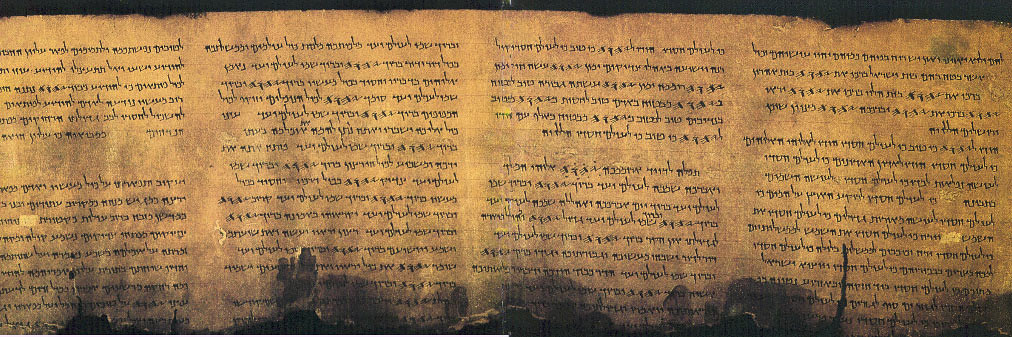
| Dead Sea Scrolls | 3rd century BC–1st century AD | Contain manuscripts or fragments from nearly every Old Testament book and pushed our surviving Hebrew copies roughly 1,000 years earlier |
| Masoretic Text | Medieval manuscripts | Preserves the Hebrew tradition behind most modern Old Testaments and allows direct comparison with copies written centuries earlier |
The table above highlights only a few of the major witnesses to the Hebrew Scriptures. The Dead Sea Scrolls were the most significant, pushing surviving Old Testament manuscripts back roughly a thousand years. These scrolls show that the Hebrew text had changed very little across that time span, with most differences limited to minor spelling and grammatical variants.
The Dead Sea Scrolls also provide crucial evidence for prophecy. Manuscripts of Isaiah and other prophetic books predate Jesus by centuries, proving that these passages existed long before their fulfillment. The early dating of these texts provides a reliable historical foundation for the messianic prophecies explored throughout our Prophetic Evidence section.
The same question of preservation becomes even easier to examine in the New Testament, where the manuscript record is far larger and reaches much closer to the time of writing.
📖 The New Testament Manuscript Record
When evaluating an ancient text, three things matter most: how many copies survive, how early they are, and how closely they agree. By all three measures, the New Testament stands apart from other works of antiquity.
| Work / Author | Date Written | Earliest Manuscript | Time Gap | Manuscript Count |
|---|---|---|---|---|
| New Testament | 50–100 AD | ~125 AD (𝔓52) | ~25–50 years | 29,000+ |
| Tacitus (Annals) | ~100 AD | ~850 AD | ~750 years | ~20 |
| Plato | ~380 BC | ~900 AD | ~1,280 years | ~210 |
| Herodotus | ~430 BC | ~900 AD | ~1,300 years | ~75 |
| Caesar (Gallic Wars) | ~50 BC | ~850 AD | ~900 years | ~10 |
| Thucydides | ~400 BC | ~900 AD | ~1,300 years | ~8 |
| Homer (Iliad) | ~700 BC | ~400 BC (partial) | ~300–400 years | ~1,800 |
The New Testament survives in roughly 29,000 manuscripts and fragments, with several of the earliest papyri reaching back within generations of the original writings. By comparison, most other works of antiquity survive in far fewer manuscripts, often copied centuries after the originals, giving the New Testament an unusually strong basis for establishing its original text.
Additionally, the manuscript record is further reinforced by early Christian writers, who quoted or alluded to the New Testament Scriptures more than a million times in their letters, sermons, and commentaries. These citations are so extensive that the New Testament could be substantially reconstructed from those quotations alone, even if every manuscript vanished. The Muratorian Fragment also shows that a recognizable collection of New Testament books was already circulating in the second century.
🏛️ The World of the Gospels, Excavated
The Gospel writers named specific officials and locations, and archaeology has repeatedly confirmed those details. To name a few examples, the Pilate Stone names Pontius Pilate and confirms his official role in Judea, while the Caiaphas Ossuary is widely associated with the high priest involved in Jesus' trial. The pools of Bethesda and Siloam, once dismissed by some critics of John's Gospel, were later uncovered by excavation, with Bethesda matching John's unusual description of five covered colonnades.
🔍 What Outsiders Wrote About Jesus
Roman historians, government officials, Jewish writers, and pagan critics also preserve details about His execution, His followers, their beliefs, and the rapid spread of Christianity.
| Source | What It Records |
|---|---|
| Tacitus | Records that Christus was executed under Pontius Pilate during the reign of Tiberius and that the movement spread from Judea to Rome, where Christians were later persecuted under Nero |
| Josephus | Refers to Jesus and the movement surrounding Him, and separately identifies James as “the brother of Jesus, who was called Christ” |
| Pliny the Younger | Describes Christians gathering before dawn, singing hymns to Christ as to a god, and refusing to renounce Him even under interrogation |
| Suetonius | Records unrest connected with the early Christian movement in Rome and later Roman punishment of Christians |
| Lucian of Samosata | Mocks Christians while acknowledging their crucified founder, devotion to one another, generosity, and willingness to face death |
| Celsus | Attacks Jesus directly but often disputes the explanation of His works rather than denying them, attributing them instead to sorcery |
| Mara bar Serapion | Writing from prison with no stake in defending Christianity, refers to the execution of the “wise king of the Jews” and the calamity that followed |
| The Talmud | Preserves hostile Jewish traditions that associate Jesus with execution, sorcery, and leading Israel astray |
Together, these sources preserve far more than the simple fact that Jesus existed. From outside the Church, we find His execution under Pilate, the rapid growth of His following, early worship of Him as divine, and even hostile attempts to explain His works. Several of these writers were openly attacking Christianity, making what they concede especially significant.
⚖️ What Historians Agree On
When all of the evidence is considered together, several central facts about Jesus are accepted across Christian, Jewish, agnostic, and skeptical scholarship alike.
Jesus was a real first-century Jewish teacher. His existence is accepted by virtually every historian working in the field.
He was baptized by John the Baptist. The baptism belongs to the earliest traditions about His public ministry and is widely regarded as historical.
He was crucified under Pontius Pilate. This is one of the best-established facts of His life, supported by both Christian and non-Christian sources. The medical details preserved in the Gospel accounts align closely with what is known of Roman scourging and crucifixion, and several ancient writers also record an unusual darkness at the time of His death.
His followers sincerely believed they had seen Him alive after His death. Whatever explanation someone gives for those experiences, the resurrection claim appears at the very beginning of Christianity. 1 Corinthians 15 preserves an early creed naming Peter, James, the apostles, and other witnesses while also appealing to more than 500 people.
The apostles continued proclaiming the resurrection despite persecution, imprisonment, and, in several well-attested cases, death. Their willingness to suffer for their testimony makes deliberate fabrication increasingly difficult to explain.
🤔 Honest Questions About the Evidence
The evidence is extensive, but a few broader objections are worth addressing before moving on:
Does having more manuscripts actually mean the text is reliable?
Not by itself. Their value comes from being able to compare thousands of copies from different periods and regions, identify where they differ, and work back toward the earlier text. The vast majority of New Testament variants involve spelling, word order, or other minor differences, and none conflict with any major Christian doctrine.
Aren't most of our sources about Jesus Christian?
The earliest and most detailed sources are Christian, as we would expect from the people closest to the movement. However, Roman, Jewish, and pagan sources independently preserve many of the same basic facts, including Jesus' execution under Pilate, the spread of Christianity, and the early worship of Christ.
Does archaeology prove everything the Bible says?
Archaeology cannot excavate a miracle, but it can test the historical world surrounding the biblical accounts. Kings, cities, officials, wars, customs, and locations once known only from Scripture repeatedly appear in inscriptions and excavation, giving us a reliable historical setting in which the Bible's larger claims can be examined.
🧭 Where to Start
Explore the evidence visually in the Historical Evidence Atlas, which maps every artifact, manuscript, and outside source by place, date, and confidence level. Or start with the path that best matches your question:
If you are skeptical, start with the outside sources. Begin with Tacitus, then Josephus, Pliny the Younger, and Celsus, and see how much is conceded by people arguing against Christianity.
If your question is whether the text changed, start with transmission. Work through the Dead Sea Scrolls, the Masoretic Text, New Testament manuscript reliability, and the patristic citations.
If you want to see the Bible's world confirmed, start with archaeology. The Tel Dan Stele, the Taylor Prism, the Pilate Stone, and the pools of Bethesda and Siloam are the clearest places to begin.
From here, the Prophetic Evidence section builds directly on this historical foundation. The manuscript evidence flows naturally into the prophecy section, as they place the messianic prophecies firmly before the time of Jesus.
If you would rather follow the entire case in order, our Recommended Reading Guide organizes the major articles on the site into a single path from the beginning.
All Historical Articles32
- The Taylor Prism and the Bible’s Record of Sennacherib’s Invasion
- The Lachish Letters and Jeremiah: Archaeology from Judah’s Final Day
- Hezekiah’s Tunnel and the Siloam Inscription
- The Cyrus Cylinder
- The Merneptah Stele: The First Mention of Israel in History
- The Mesha Stele (Moabite Stone)
- The Tel Dan Stele: From Myth to History
- The Talmud on Jesus: Evidence from Early Jewish Sources
- Celsus’ Critique of Christianity: Early Non-Christian Testimony
- Lucian of Samosata on the Early Church
- Mara bar Serapion: An Overlooked Historical Reference to Jesus
- Suetonius on Early Christianity
- Apostles’ Martyrdom: Evidence of Early Conviction
- The Ketef Hinnom Silver Scrolls: Earliest Biblical Text
- New Testament Manuscript Reliability: Comparison to Other Ancient Works
- The New Testament: A Text with Over a Million Ancient Citations
- The 500 Eyewitnesses: Paul’s Early Testimony in 1 Corinthians 15
- Earliest Papyrus Fragments (P52, P66, P75, P46): Evidence for the Gospels
- The Muratorian Fragment: Early Evidence for the New Testament Canon
- The Masoretic Text: The Standard Hebrew Bible
- The Septuagint (LXX): The Greek Translation of the Hebrew Bible
- The Caiaphas Ossuary: Archaeological Evidence of the High Priest
- The Pilate Stone: Archaeological Evidence of Pontius Pilate
- Excavating Jerusalem's Miraculous Pools: Bethesda & Siloam
- Josephus and Jesus: New Evidence for the Testimonium Flavianum
- Medical and Historical Corroboration of the Crucifixion of Jesus
- The Nazareth Decree
- Pliny the Younger
- Darkness at the Crucifixion
- Tacitus on Jesus
- The Antiquities of the Jews by Josephus
- Dead Sea Scrolls