
The New Testament: Quoted Over a Million Times by the Church Fathers
When considering the reliability of the New Testament, one of the most overlooked but powerful pieces of evidence comes from the writings of the early church fathers, often called the Patristic citations. These early Christian leaders and apologists cited and alluded to the New Testament so extensively in their sermons, letters, and theological works that textual critic Bruce Metzger judged them sufficient, on their own, to reconstruct practically the entire New Testament.1
📖 The Scope and Significance of Patristic Citations
This vast network of citations and allusions demonstrates not only the widespread use of the New Testament across the ancient world but also its early acceptance as authoritative Scripture. By studying these citations, historians gain a window into how the earliest Christians read, preserved, and trusted the writings of the apostles. In fact, New Testament scholar Daniel Wallace reports that more than one million New Testament quotations by the church fathers have been catalogued, from the late 1st century into the Middle Ages.2 Catalogs like these count allusions as well as direct quotations, and independent databases confirm the scale: BiblIndex, a scholarly database that is still incomplete, already catalogs more than 650,000 quotations and allusions to the Bible in early Christian literature.3 This body of work, alongside the tens of thousands of manuscripts, makes the Bible the best-attested document from the ancient world.4
However, Patristic citations function differently from manuscript evidence, since early writers sometimes paraphrased, harmonized, or loosely alluded to passages rather than quoting verbatim. Nevertheless, when analyzed collectively, they provide a geographically diverse and chronologically early witness to the transmission of the New Testament text.
📅 Century-by-Century Citations of the NT
| Century | Key Fathers & Writers | Running Total of NT Citations | Coverage of NT Books |
|---|---|---|---|
| 1st | Clement of Rome (1 Clement), Didache | Not formally counted | Gospels, Paul’s letters (esp. Corinthians, Romans) |
| 2nd | Ignatius of Antioch, Polycarp, Justin Martyr, Irenaeus, Athenagoras, Theophilus, Clement of Alexandria | ~4,500 (three writers counted) | Every section of the NT: Gospels, Acts, Paul’s letters, general letters, Revelation |
| 3rd | Tertullian, Hippolytus, Cyprian, Origen | ~31,000 (six writers counted) | Every section of the NT |
| 4th–5th | Eusebius, Athanasius, Basil, Chrysostom, Jerome, Augustine, Cyril of Alexandria | 86,000+ | Every section of the NT |
| 6th century onward | Gregory the Great, Bede, and later writers into the Middle Ages | 1,000,000+ | Practically the entire NT |
Running totals compiled from several sources, so they are estimates. The 2nd- and 3rd-century rows count only the writers tabulated by Geisler and Nix, so they are minimums.5 The 4th–5th-century figure is John Burgon's 19th-century index of New Testament passages quoted or referred to by the Fathers. Most of its sixteen volumes cover writers from the Apostolic Fathers through Augustine and Cyril of Alexandria. It also indexes church councils, catenae (collections of excerpts from earlier commentators) and some later Greek writers, so part of its count comes from after the 5th century.6,7,8 The final figure is Daniel Wallace's.2
📜 Earliest Quotations and Dating
The New Testament began circulating in the mid-to-late 1st century, and almost immediately, early Christian writers began referencing it.
-
Clement of Rome (c. 95 AD): In his letter 1 Clement, written to the Corinthians, Clement echoes themes and phrases from Paul’s letters, particularly 1 Corinthians and Romans. This makes him one of the earliest external witnesses to the New Testament.9
-
Ignatius of Antioch (c. 110 AD): On his way to martyrdom in Rome, Ignatius wrote seven letters, quoting or alluding to the Gospels (especially Matthew and John) and Paul’s letters.4
-
Polycarp of Smyrna (c. 110–135 AD): A disciple of the apostle John, Polycarp quoted extensively from the Gospels, Acts, and Paul’s epistles in his letter to the Philippians.4
These writings place the earliest external citations of the New Testament within one generation of the apostles themselves.
📊 Key Early Witnesses
The sheer volume of citations and allusions is staggering, and a handful of prolific writers account for much of the early total.5 Key figures include:
-
Justin Martyr (c. 150 AD): Frequently refers to “the memoirs of the apostles” (the Gospels), treating them as Scripture alongside the Old Testament.9
-
Irenaeus of Lyons (c. 180 AD): In Against Heresies, Irenaeus quotes nearly every book of the New Testament, affirming the fourfold Gospel and Pauline letters.1
-
Clement of Alexandria (c. 200 AD): Extensively cites the Gospels, Acts, Paul’s letters, Hebrews, and Revelation.
-
Tertullian (c. 200 AD): Over 7,200 quotations of the New Testament survive in his works.5
-
Origen (c. 230 AD): The most prolific of the early writers, with nearly 18,000 New Testament citations.5
📖 Why This Matters for Reliability
These citations are historically significant because they:
-
Confirm the Early Circulation of the NT: Within decades of being written, the Gospels and Paul’s letters were already being cited across the Roman Empire.
-
Provide a Cross-Check for Manuscripts: The quotations of the fathers allow us to compare and confirm the biblical text.
-
Show the Early Canon: Writers like Irenaeus and Origen already treat the Gospels and epistles as authoritative Scripture, countering the claim that the New Testament was invented centuries later.
-
Distinguish Canonical from Apocryphal Texts: The four canonical Gospels emerge within patristic writings as uniquely and consistently treated as authoritative Scripture. While apocryphal gospels were known and occasionally referenced, they were cited far less frequently, typically without the same scriptural status, and were often explicitly rejected.
-
Demonstrate Textual Stability: Despite minor spelling or word-order variations, the substance of the NT message is consistent from the earliest fathers onward.
⚖️ Strengths and Limits of Patristic Evidence
Patristic citations don't replace the manuscripts, and textual critics don't use them that way. The fathers paraphrased, quoted from memory, and adapted wording, and we can only recognize their quotations because we already have the New Testament text.1,8 Their real value is as a cross-check on the manuscripts. When a verse has a variant reading in surviving manuscripts, the patristic citations can often help textual critics determine the most likely original reading by showing which variant was in widespread use in a particular time and place. Overall, the fathers’ quotations align closely with the New Testament text preserved in the manuscripts.
It's important to note that the scholarly disagreement is not about the overwhelming volume of evidence, but about the nature and implications of the textual variants. By Daniel Wallace's estimate, less than 1% of all textual variants are both meaningful and viable, and even among those, "no cardinal belief is at stake."2 We look at the variants themselves in New Testament Manuscript Reliability. On the sheer extent of the patristic evidence, renowned textual critic Bruce Metzger observed:
“So extensive are these citations that if all other sources for our knowledge of the text of the New Testament were destroyed, they would be sufficient alone for the reconstruction of practically the entire New Testament.”1 (The Text of the New Testament, 2005, p. 126).
That speaks to the sheer volume of the evidence; in practice, the citations serve as a cross-check on the manuscripts rather than a substitute for them.
📖 Conclusion: A Powerful Historical Witness
The overwhelming evidence from the early church fathers is not merely a footnote in biblical studies; it is a foundational pillar of textual reliability. The immense volume of their citations and allusions, beginning just decades after the original writings, provides an independent, parallel line of evidence that corroborates the New Testament manuscripts themselves. This body of evidence dispels the notion that the New Testament text was corrupted or invented centuries later. Instead, it powerfully demonstrates a continuous, unbroken chain of transmission from the apostles to the earliest Christian communities, and from them to the Church Fathers. Ultimately, the patristic citations provide a compelling and robust witness to the textual accuracy and stability of the New Testament, solidifying the Bible as the best-attested document from the ancient world.
📚 References
Metzger, Bruce M., and Bart D. Ehrman. The Text of the New Testament: Its Transmission, Corruption, and Restoration, 4th ed. Oxford University Press, 2005.
- The definitive textbook on how the New Testament was copied, including a detailed history of scribal errors and corrections.
Wallace, Daniel B. "An Interview with Daniel B. Wallace on the New Testament Manuscripts." Interview by Justin Taylor. The Gospel Coalition, March 22, 2012.
- Source for the "more than one million" patristic quotations and for the estimate that less than 1% of textual variants are both meaningful and viable.
BiblIndex. "Overview of the Project." Sources Chrétiennes (HiSoMA, Lyon). Accessed 2026.
- A scholarly index of biblical quotations and allusions in early Christian literature, building on the printed Biblia Patristica.
Bruce, F. F. The New Testament Documents: Are They Reliable? Eerdmans, 1981.
- A short but powerful work that addresses common skeptical objections regarding the historical accuracy of the Gospels and Epistles.
Geisler, Norman L., and William E. Nix. A General Introduction to the Bible. Rev. and expanded ed. Moody Press, 1986.
- Source of the widely cited counts of New Testament quotations by seven writers from Justin Martyr to Eusebius (36,289 in all).
Heuer, Mark H. "An Evaluation of John W. Burgon's Use of Patristic Evidence." Journal of the Evangelical Theological Society 38, no. 4 (1995): 519–530.
- Reports Burgon's unpublished index of 86,589 patristic quotations, held in the British Museum.
Burgon, John William. "Index of Texts of the New Testament Quoted, or Referred to, by the Greek and Latin Fathers." Manuscript in 16 vols., 1872–1888. British Library, Add MS 33421–33436.
- Burgon's unpublished index itself. The British Library catalogue lists the Fathers, councils and catenae covered in each volume.
Blaski, Andrew. "Myths About Patristics: What the Church Fathers Thought About Textual Variation." In Myths and Mistakes in New Testament Textual Criticism, edited by Elijah Hixson and Peter J. Gurry. IVP Academic, 2019.
- An evangelical textual critic's assessment of popular claims about patristic citations, including what they can and cannot show.
Habermas, Gary. The Historical Jesus: Ancient Evidence for the Life of Christ. College Press, 1996.
- Surveys the ancient evidence for Jesus, both Christian and non-Christian.
Comfort, Philip W., and David P. Barrett. The Text of the Earliest New Testament Greek Manuscripts. Tyndale House, 2001.
- Provides transcriptions and detailed analysis of the oldest surviving papyrus fragments, essential for proving the early date of the texts.
Hurtado, Larry W. The Earliest Christian Artifacts: Manuscripts and Christian Origins. Eerdmans, 2006.
- A unique look at the physical manuscripts as archaeological objects, explaining why the "codex" (book) format was so important to early Christians.
Greenlee, J. Harold. Introduction to New Testament Textual Criticism. Rev. ed. Hendrickson, 1995.
- A clear and accessible introduction to the methods scholars use to determine the original wording of the New Testament.
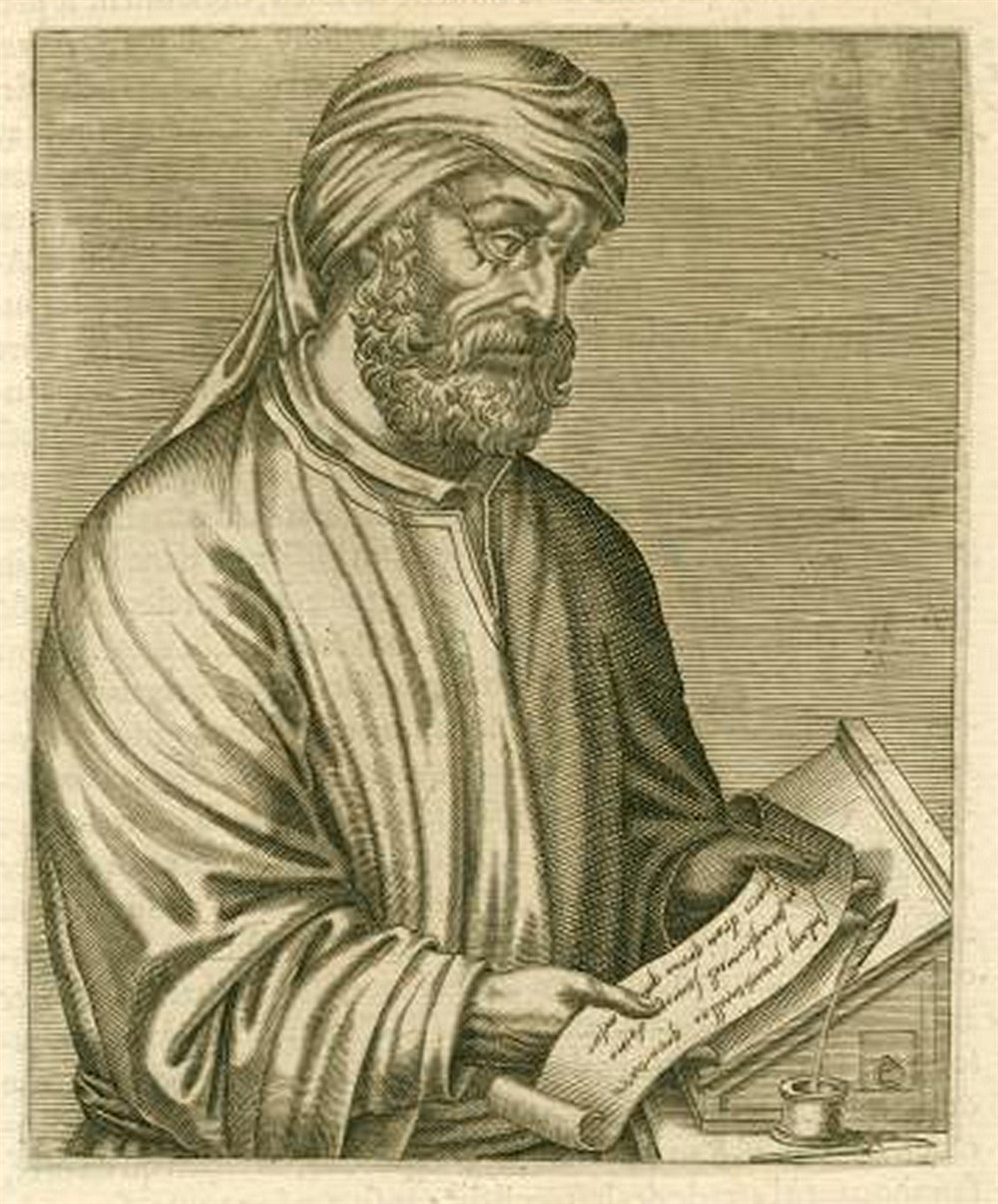
Image Credits: Allegorical wood engraving of Tertullian from André Thevet’s Vrais pourtraits et vies des hommes illustres grecz, latins et payens (Lyons, 1584), via Wikimedia Commons. Public domain.
Comments
No comments yet. Be the first to share your thoughts.