
Lucian of Samosata on the Early Church

Lucian of Samosata was a Syrian-Greek satirist and writer during the second century AD. Famous for his sharp wit and eloquent satire, Lucian's works often targeted and mocked philosophers and emerging religions, including Christianity.
In The Passing of Peregrinus (c. AD 165), Lucian ridicules the Cynic philosopher Peregrinus Proteus, who, at one point, converted to Christianity. In doing so, Lucian provides one of the earliest and most detailed descriptions of Christians from a critical, hostile, and non-Christian source.
📜 Lucian's Account of Early Christianity
Lucian’s satire presupposes several core facts about Christianity that were evidently common knowledge in the Roman world:
| Lucian on Christians (Quotations) | Inferred Facts |
|---|---|
| “…whom they still worship, the man who was crucified in Palestine because he introduced this new cult into the world.” (Peregrinus, 11) | Jesus was Crucified and Worshipped: Christianity centered on a crucified founder who was executed in the region of Palestine. |
| “The poor wretches have convinced themselves, first and foremost, that they are going to be immortal and live for all time, in consequence of which they despise death and even willingly give themselves into custody; most of them.” (Peregrinus, 13) | Belief in Immortality: Christians were known for their profound belief in the afterlife and willingness to face martyrdom. |
| “Their first lawgiver persuaded them that they are all brothers of one another after they have transgressed once for all by denying the Greek gods and by worshipping that crucified sophist himself and living under his laws.” (Peregrinus, 13) | Exclusive Brotherhood: Their community was defined by strong ties of brotherhood and a rejection of traditional Greco-Roman deities. |
| “Therefore they despise all things indiscriminately and consider them common property.” (Peregrinus, 13) | Communal Sharing: Christians were known for sharing their possessions with one another. |
Lucian’s description of Jesus as a “crucified sophist” is a deliberate insult. While sophist can mean philosopher or teacher, Lucian uses it derisively — mocking Jesus as a mere teacher who ended up on a cross. In the same passage, he calls Christians “simple folk” who are easily exploited by any charlatan who comes among them.
Yet, even through the sarcasm, Lucian highlights striking truths about early Christians: their devotion to Jesus, their belief in immortality, their communal brotherhood, and their willingness to endure persecution.
Moreover, he notes their extraordinary charity and mutual care, describing how they would “lavish their all” on imprisoned brethren, including sending delegations and bribing the guards, as shown in the following excerpt from sections 12 and 13:
"Well, when he had been imprisoned, the Christians, regarding the incident as a calamity, left nothing undone in the effort to rescue him. Then, as this was impossible, every other form of attention was shown him, not in any casual way but with assiduity, and from the very break of day aged widows and orphan children could be seen waiting near the prison, while their officials even slept inside with him after bribing the guards."
"Indeed, people came even from the cities in Asia, sent by the Christians at their common expense, to succour and defend and encourage the hero. They show incredible speed whenever any such public action is taken; for in no time they lavish their all. So it was then in the case of Peregrinus; much money came to him from them by reason of his imprisonment..."
Though Lucian ridicules their generosity as gullibility, claiming Peregrinus exploited it for profit, his testimony provides one of the earliest secular descriptions of Christian charity, devotion, and brotherhood.
🏛️ The Historical Significance of Lucian's Satire
Historians value Lucian not for his opinions, but because his mockery confirms core facts about Christianity from a hostile source.
Lucian's primary intent was to expose the supposed foolishness of Christians. However, by providing this testimony, his satire ironically confirms several facts of the early church:
-
Jesus's Execution and Status: Lucian confirms that Jesus was a real person, crucified in Palestine, yet worshipped as divine by His followers — not merely a sage, but a god-like lawgiver.
-
Radical Social Ethics: He highlights the Christians' radical social behavior: their brotherhood, servant-heartedness, and communal sharing, which sharply distinguished them from the self-focused Roman world.
-
The Paradox of the Cross: Lucian's scorn over a "crucified sophist" inadvertently captures the central theological paradox that Paul articulated a century earlier:
"But God chose what is foolish in the world to shame the wise; God chose what is weak in the world to shame the strong." (1 Corinthians 1:2727 But God chose what is foolish in the world to shame the wise; God chose what is weak in the world to shame the strong;)
In essence, Lucian wanted to show his sophisticated audience that Christianity was built on a foundation of foolishness, worshiping a criminal executed on a cross. Ironically, by articulating the cause of the mockery (crucifixion, worship, brotherhood, contempt of death), Lucian provides critical confirmation of the very historical data that defined and powered the early Christian movement. His sarcasm, therefore, becomes an unintended historical witness to the remarkable faith, servant-heartedness, and communal devotion that characterized early Christianity.
📚 References
Lucian of Samosata. The Passing of Peregrinus, sections 11–13. Translated by A. M. Harmon. Loeb Classical Library, Lucian, vol. 5. Cambridge, MA: Harvard University Press, 1936. Available at tertullian.org.
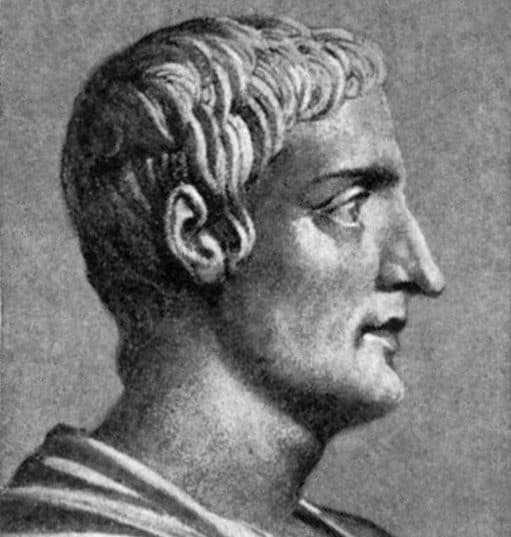
Image Credits: Lucian of Samosata. Wikimedia Commons. Public Domain. Available here.

Comments
No comments yet. Be the first to share your thoughts.