
The Talmud on Jesus: Evidence from Early Jewish Sources

When examining the earliest non-Christian accounts of Jesus, a notable pattern emerges: when hostile sources address His miracles, they do not dismiss them outright but reinterpret them as sorcery or magic. Jewish and pagan critics alike attribute His works to illicit power rather than deny that remarkable acts were being reported. This mirrors the Gospel accounts, where Jesus’s critics respond in the same way: not by denying His works, but by reattributing their source, accusing Him of casting out demons by the power of Beelzebul (Matthew 12:2424 But when the Pharisees heard it, they said, “It is only by Beelzebul, the prince of demons, that this man casts out demons.”; Mark 3:2222 And the scribes who came down from Jerusalem were saying, “He is possessed by Beelzebul,” and “by the prince of demons he casts out the demons.”; Luke 11:1515 But some of them said, “He casts out demons by Beelzebul, the prince of demons,”).
These accusations appear in multiple early traditions. Pagan writers like Celsus claimed Jesus picked up magical tricks in Egypt, while Jewish tradition, preserved in the Talmud, described Him as a sorcerer who led Israel astray. In both cases, the miracles were not brushed aside as inventions; they were reinterpreted as sorcery or dangerous works of magic. In this article, we will examine the Talmudic references to Jesus and consider what they contribute to the historical discussion of His life and influence.
📜 Context of the Talmud
The Talmud is a vast collection of Jewish writings, consisting of two main components:
-
The Mishnah (c. AD 200): The earliest written record of Jewish oral traditions.
-
The Gemara (c. AD 200–500): Rabbinic commentary on the Mishnah, which forms the Babylonian and Jerusalem Talmuds.
While the full Talmud was compiled in later centuries, many of the traditions it preserves may go back to the first and second centuries AD, the period immediately following Jesus’s life.
Scholars debate how much of this material preserves early memory. Some, like Peter Schäfer, argue that these passages are later rabbinic responses to the Gospels, written by rabbis who knew the Christian story well.1 Either way, these rabbis never denied that Jesus lived, gathered disciples, and was executed. Rather, they disputed what those events meant.
Furthermore, the sorcery charge itself is far older than the Talmud. Around AD 155, Justin Martyr wrote that Jesus’s opponents saw His works but “dared to call Him a magician, and a deceiver of the people.”2 About twenty years later, the pagan critic Celsus used a Jewish spokesman to argue that Jesus had learned magic in Egypt.3 This spokesman also called Jesus the son of a man named Panthera, the name that appears in the Talmud as “son of Pandira.” The Gospels trace the charge back even further, to the religious leaders who watched Him cast out demons. The Talmud, then, preserved an answer His opponents had been giving from the very beginning.
✡️ Main References to Jesus in the Talmud
Medieval censorship removed Jesus’s name from many printed editions of the Talmud. The passages below follow the older manuscripts, which preserve it.1,4
| Talmudic Passage | Key Concession | Historical Significance |
|---|---|---|
| Sanhedrin 43a | Says “Jesus the Nazarene” was hanged on the eve of Passover. A herald first announced that He would be stoned for practicing sorcery and leading Israel astray. The passage also names five of His disciples. | Confirms Jesus’s execution at Passover, the same timing John gives (John 19:1414 Now it was the day of Preparation of the Passover. It was about the sixth hour. He said to the Jews, “Behold your King!”). The New Testament also describes the crucifixion as “hanging him on a tree” (Acts 5:3030 The God of our fathers raised Jesus, whom you killed by hanging him on a tree.). The sorcery charge explains His works rather than denying them. |
| Sanhedrin 107b / Sotah 47a | Says Jesus fled to Egypt with His teacher, Rabbi Joshua ben Perahiah, who later rejected Him. It ends by saying Jesus “performed sorcery, incited Jews to engage in idolatry, and led Israel astray.” | Repeats the same charges found in Sanhedrin 43a. The story misplaces Jesus in the reign of King Alexander Jannaeus, about a century too early, so it is best read as a later legend. Regardless, it shows how the rabbis remembered Him. |
| Shabbat 104b | Says a man called Ben Stada brought magic spells out of Egypt in a cut on his skin. The Talmud also calls him “son of Pandira” and names his mother Miriam, the Hebrew form of Mary. | Matches the claim of Celsus’s Jewish spokesman that Jesus learned magic in Egypt. Origen noted that Celsus built this charge from Matthew’s account of Jesus’s childhood in Egypt (Matthew 2:13–1513 Now when they had departed, behold, an angel of the Lord appeared to Joseph in a dream and said, “Rise, take the child and his mother, and flee to Egypt, and remain there until I tell you, for Herod is about to search for the child, to destroy him.” 14 And he rose and took the child and his mother by night and departed to Egypt). |
| Gittin 57a | In a legend, a nephew of the Roman emperor Titus summons the spirit of “Jesus the Nazarene” from the dead. Jesus says He is punished in the afterlife for mocking the words of the Sages. | Shows the rabbis remembered Jesus as a teacher who openly challenged their authority. The Gospels record the same conflict, where Jesus accuses the Pharisees of “making void the word of God” by their tradition (Mark 7:1313 thus making void the word of God by your tradition that you have handed down. And many such things you do.”). |
🏛️ What This Tells Us Historically
The weight of these passages lies in where they come from: rabbis who were openly opposed to Jesus and Christianity. Yet even in their criticism, they concede core historical claims:
-
They do not deny Jesus existed or was executed. His execution on the eve of Passover is treated as established history.
-
They do not deny that He performed miracles. Instead, they reframe them as sorcery — the same accusation preserved in the Gospels (Matthew 12:2424 But when the Pharisees heard it, they said, “It is only by Beelzebul, the prince of demons, that this man casts out demons.”; Mark 3:2222 And the scribes who came down from Jerusalem were saying, “He is possessed by Beelzebul,” and “by the prince of demons he casts out the demons.”; Luke 11:1515 But some of them said, “He casts out demons by Beelzebul, the prince of demons,”).
-
The charge of sorcery itself implies real deeds occurred. If nothing remarkable had occurred, critics could have dismissed Jesus’s miracles entirely. Instead, they were forced to explain them away, a tacit admission that His remarkable deeds were too widely known to deny.
-
They admit His influence was dangerous. Claims that Jesus “led Israel astray” show His following was significant enough to worry and threaten the authority of Jewish leadership.
-
His memory persisted for centuries. Centuries later, rabbis still wrestled with how to explain Jesus, showing the lasting impact of His ministry.
Taken together, these concessions show that even adversaries of Christianity could not ignore Jesus’s works or influence. They confirm that the debate was not about whether He did remarkable things, but rather about the source of His power.
📝 Conclusion: Reliability, Authenticity, and Testimony
The Talmud’s references to Jesus, though hostile, provide an unexpected confirmation of the Gospel record. They affirm Jesus's existence, execution, and widespread influence while conceding that His works were real — only explained away as sorcery. This very charge mirrors the exact accusations recorded in the New Testament itself, showing remarkable consistency between friend and foe.
What’s most revealing is that denial was never an option. Neither Jewish nor pagan critics dismissed Jesus or His miracles as a myth; instead, they felt compelled and struggled to explain Jesus and His deeds. The ongoing struggle to account for His life and influence, even in hostile terms, serves as an unintended witness to the reality of His ministry.
Hostile witnesses such as the Talmud indicate that early critics of Christianity were forced to engage with the claims surrounding Jesus’s life, miracles, and influence, even while rejecting the conclusions drawn about His identity.
In this way, the Talmud stands as an unintended testimony and piece of circumstantial evidence to the historical reality and reliability of Jesus and the enduring effect of His ministry.
📚 References
Schäfer, Peter. Jesus in the Talmud. Princeton, NJ: Princeton University Press, 2007.
Justin Martyr. Dialogue with Trypho, chapter 69. Written c. AD 155.
Origen. Contra Celsum. Book I, chapters 28, 32, and 38. New Advent. Accessed September 26, 2025.
The Babylonian Talmud. Sanhedrin 43a, 107b; Sotah 47a; Shabbat 104b; Gittin 57a. William Davidson Edition. Available at sefaria.org
Celsus. On the True Doctrine: A Discourse Against the Christians. Translated by R. Joseph Hoffmann. Oxford University Press, 1987.
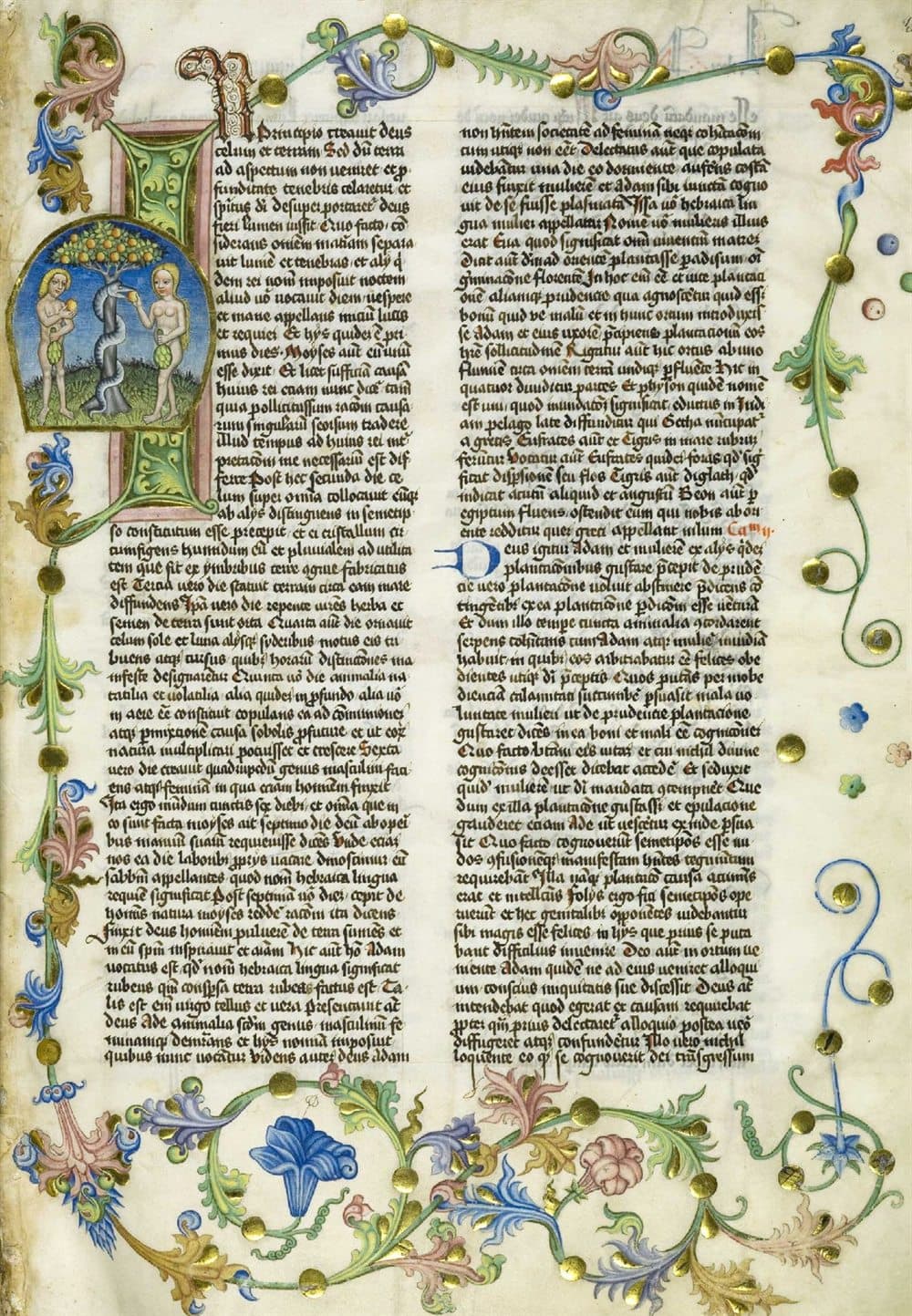
Image Credit: Brigade Piron. Page from the Bomberg Talmud, British Library. Wikimedia Commons. CC BY-SA 4.0. Available here.
Comments
No comments yet. Be the first to share your thoughts.