
New Testament Manuscript Reliability: Comparison to Other Ancient Works
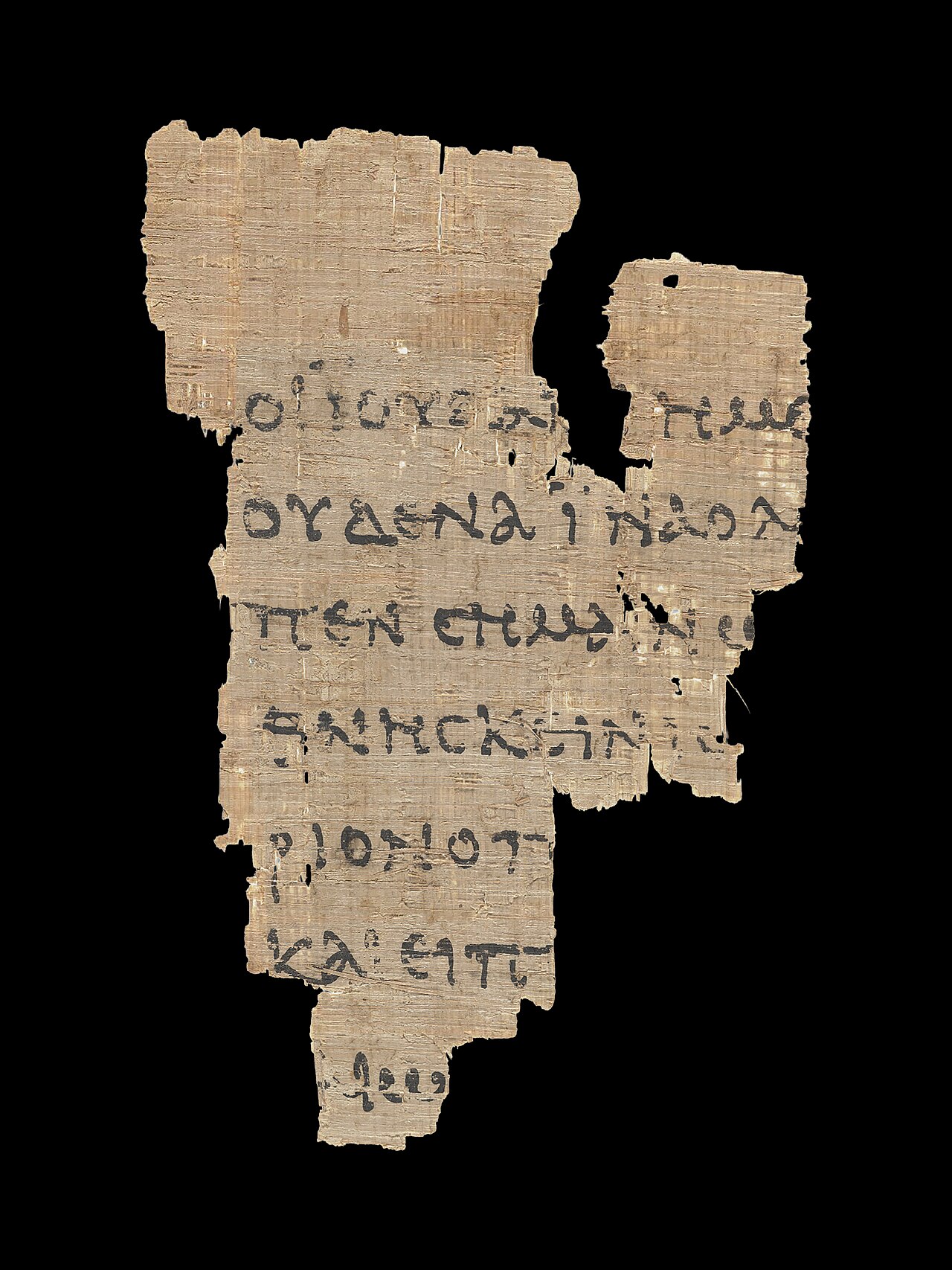
When historians evaluate the reliability of ancient writings, they use textual criticism to determine how reliably a surviving copy represents the original. In this process, historians typically ask three main questions:
-
How many manuscripts do we have?
-
How close in time are the earliest manuscripts to the originals?
-
How accurate are those manuscripts compared to one another?
By these standards, the Bible, especially the New Testament, surpasses every other ancient work.1
📚 Manuscript Comparison: New Testament vs. Classical Works
| Work / Author | Date Written | Earliest Copies | Time Gap | Manuscript Count |
|---|---|---|---|---|
| New Testament | 50–100 AD | ~90–150 AD (𝔓52 fragment); substantial papyri ~200 AD | ~25–50 years (fragment); ~100–150 years (substantial copies) | 5,800+ Greek |
| Tacitus (Annals) | ~116 AD | ~850 AD | ~750 years | 2 primary (+31 later copies) |
| Plato | ~380 BC | 895 AD | ~1,280 years | 210 |
| Herodotus | ~430 BC | 10th century AD (plus 49 papyrus fragments) | ~1,400 years | ~109 |
| Caesar (Gallic Wars) | ~50 BC | 9th century AD | ~900 years | 251 |
| Thucydides | ~400 BC | 10th century AD (papyrus fragments from the 3rd century BC) | ~1,350 years (~200 for fragments) | 8 primary, plus papyrus fragments |
| Homer (Iliad) | ~700 BC | 3rd century BC (papyrus fragments) | ~450 years | 1,757 |
Classical figures are from Clay Jones's 2012 update of these comparisons.1 Some classical works also survive in early papyrus fragments, noted above; the New Testament's earliest fragment, 𝔓52, dates to the 2nd century.7
🌿 Papyrus: The Writing Material of the New Testament
All 27 books of the New Testament were originally written on papyrus, a writing material made from the pith of the papyrus plant.2 Papyrus has the consistency of a grocery bag and decays readily unless it is kept very dry. In extremely dry environments, however, it can survive for many centuries, which is why we still have fragments of New Testament manuscripts today.
Nearly all of the earliest New Testament manuscripts have come from Egypt, whose dry climate preserves papyrus.2
Considering how fragile papyrus is, the survival of these manuscripts at all is remarkable.
📝 Ancient Manuscripts: Greek, Latin, and Other Translations
The New Testament is preserved in thousands of manuscripts across several languages. Key facts include:
Greek Manuscripts
-
Original language of the New Testament
-
More than 5,800 catalogued Greek manuscripts, of which 61 contain the entire New Testament3,4
Latin Manuscripts
-
First translations into Latin as early as the second century
-
At least 10,000 manuscripts5
Other Language Translations
- Over 9,000 manuscripts in Coptic, Syriac, Armenian, Ethiopic, Slavonic, Georgian, Arabic, and other languages.6
Altogether, counting Greek manuscripts, early translations, and lectionaries, the New Testament survives in more than 25,000 manuscripts, depending on how fragments and duplicates are counted.6 This sheer volume of manuscripts is unparalleled in the ancient world.
⚖️ Comparing the New Testament with Other Ancient Historical Works
When placed alongside other ancient works, the New Testament’s preservation is extraordinary. Roman historians like Livy, Tacitus, and Suetonius wrote foundational histories, yet their works survive in far fewer manuscripts, and the copies that exist often appear centuries later.1
Roman Historians:
-
Livy: Wrote 142 books, of which 35 survive. The earliest copy, a partial one, dates to the early 5th century, about 400 years after he wrote.1
-
Tacitus: His Annals and Histories descend from just two manuscripts, copied around 850 and in the mid-11th century, roughly 750 years after he wrote.1
-
Suetonius: De Vita Caesarum survives in over 200 manuscripts, but the earliest copies are 700–800 years after he lived.6
Greek Historians:
-
Herodotus – Histories written around 430 BC; the earliest surviving manuscript is from the 10th century AD (~1,400 years later), alongside 49 papyrus fragments.1
-
Thucydides – History of the Peloponnesian War written around 400 BC; the earliest complete manuscripts date to the 10th century AD (~1,350 years later), though a few papyrus fragments go back to the 3rd century BC.1
By contrast, the earliest New Testament fragments, such as Papyrus P52, date to around AD 90–150, within a few decades after John’s Gospel was written.7 Remarkably, these early fragments are copies, yet they are far closer in time to the originals than the surviving copies of the Roman or Greek historians.
⏳ Addressing the "Early Manuscript" Critique
Critics often lead with a statistic that sounds devastating: 94% of Greek New Testament manuscripts date from the ninth century or later, and we don't have the originals, or copies of the originals, or even copies of copies of the originals.8 The numbers are accurate, but the framing is deeply misleading. Used this way, the statistic steers attention toward late medieval copies and away from the early evidence that actually settles the question. More than 300 Greek manuscripts date from before the 9th century, roughly 100 of them from before the 5th.9 Fragments reach back to the 2nd century, and arguably to the late 1st. Two nearly complete Bibles, Codex Sinaiticus and Codex Vaticanus, survive from the 4th. No other work of ancient literature comes close to this depth of early evidence.1 And Bart Ehrman himself, in the very post that cites the 94% figure, concedes what matters most: "no matter which manuscript of the NT a person chooses, she or he will have the same theology."8
The strength of the New Testament's case isn't just about the sheer number of manuscripts; it's about the existence of early manuscripts at all. Even a small number of early manuscripts provides a critical link to the original writings. As we have stated previously, from a historical perspective it is remarkable that we even have a manuscript likely within 25–50 years of the original texts! For instance, Papyrus P52, dated to around AD 90–150, is a copy of a portion of John's Gospel.7 No other ancient text has manuscripts anywhere near as close to the original composition, while many classical works have gaps exceeding 1,000 years. This abundance of early evidence makes the New Testament the best-attested ancient work in existence.1
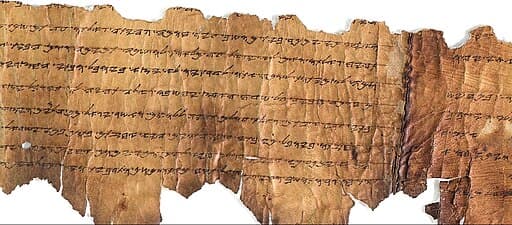
Furthermore, both Jews and Christians treated their Scriptures with great seriousness. Jewish scribes guarded the Hebrew Bible meticulously, even counting letters and lines to catch mistakes. The early church, born out of Judaism, carried this reverence forward. Christian copies borrowed Jewish layout features for reading Scripture aloud, and scribes wrote sacred names like God, Lord, and Jesus in a special form, honoring them as Jewish scribes honored God's name.2,10 As early as the late 2nd century, they also checked their work in great detail, sometimes with a second scribe reviewing the first, resulting in a remarkably stable text.10
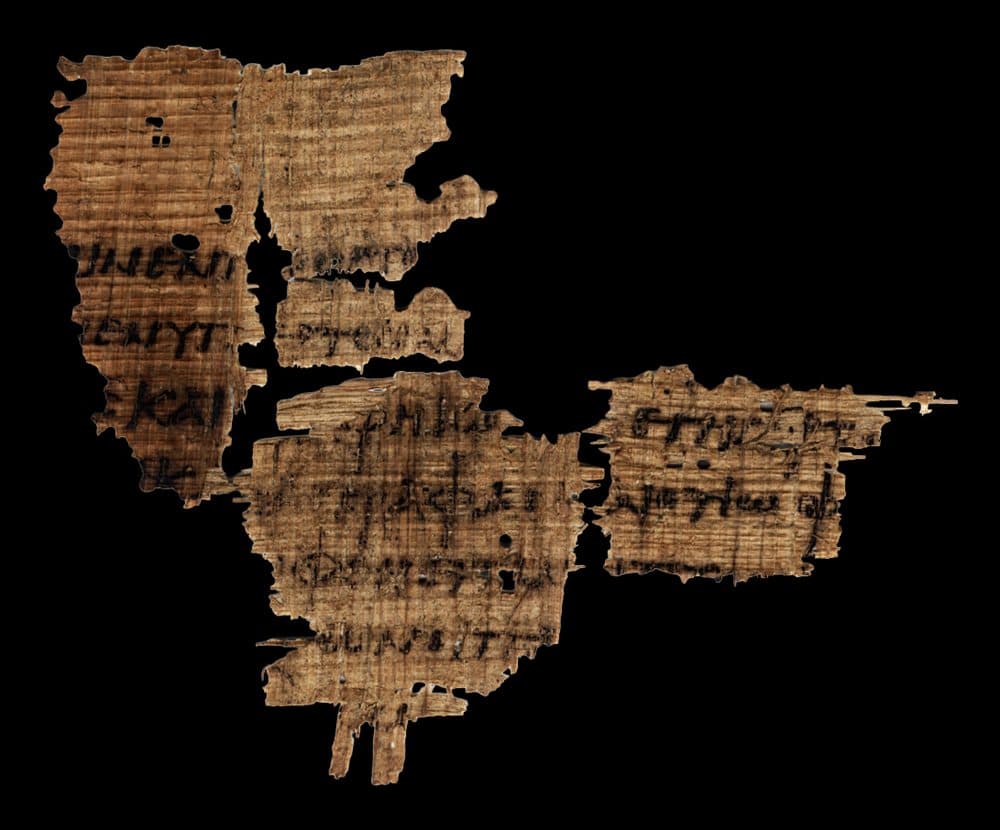
To give a specific example, Papyrus 75, copied around AD 200, closely matches Codex Vaticanus, copied more than a century later.11 And because copies spread so widely, one copyist's mistake stands out against the many other manuscripts, letting scholars spot it and recover the original wording.11
The differences that do exist are overwhelmingly minor, consisting of spelling variations, word order, or simple slips of the pen. None of these alter the substance of the text, and no doctrine of the Christian faith depends on a disputed passage.3 In fact, the consistency across thousands of manuscripts demonstrates careful preservation over time. When combined with the sheer number of witnesses, this gives scholars strong confidence that the New Testament we hold today faithfully reflects the original writings.
📊 Why Manuscript Abundance Matters
Scholars estimate there are at least 400,000 textual variants across all New Testament manuscripts.12,13 With only about 138,000 words in the New Testament, that works out to roughly three variants per word. At first glance, this might sound alarming. But the high number of variants is actually a sign of textual richness rather than weakness. More manuscripts naturally produce more differences, and these variations give scholars the tools they need to reconstruct the original text with precision.
Part of the reason is how variants are counted. A variant is any difference in wording from a standard text, however small: a misspelled word, a change in word order, a dropped "the."12 The total is high because so many manuscripts survive, each adding its own small slips, and nearly all of them are trivial. They fall into a few broad groups:
-
Most are trivial. The vast majority are spelling errors, slips of the pen, or differences in word order that do not affect meaning.8
-
Less than 1% are meaningful and viable.3 These are variants that could plausibly reflect the original text and would make a difference in meaning. For example, the earliest manuscripts of the Gospel of John do not include the famous story of the woman caught in adultery (John 7:53–8:11).11
-
No Christian doctrine is at stake. Even in places with significant variants, such as John 7:53–8:11, no essential teaching of the Christian faith depends on a disputed passage. Bart Ehrman himself agrees: his position, he writes, "does not actually stand at odds with Prof. Metzger's position that the essential Christian beliefs are not affected by textual variants in the manuscript tradition of the New Testament."14
Thanks to the abundance of manuscripts, the text is remarkably secure. Westcott and Hort, whose 1881 critical edition shaped the modern study of the New Testament text, estimated that substantial variation "can hardly form more than a thousandth part of the entire text": more than 99.9% of the New Testament is free of any substantial variation.15
🔠 Understanding Textual Variants
Variants in the New Testament can be grouped into four main categories:
-
Spelling Differences – Simple variations like Iōanēs versus Iōannēs (two spellings of “John”), accounting for roughly 70% of all variants.
-
Untranslatable Greek Alterations – Changes in word order or particles that do not affect meaning. For example, “Jesus loves Paul” could appear in multiple orders and still convey the same sense.
-
Meaningful but Not Viable Variants – Differences that change the meaning but have no realistic chance of being original. In 1 Thessalonians 2:99 For you remember, brothers, our labor and toil: we worked night and day, that we might not be a burden to any of you, while we proclaimed to you the gospel of God., for example, one late medieval manuscript reads “the gospel of Christ” instead of “the gospel of God.” The meaning shifts, but with one late copy against the entire manuscript tradition, it cannot be original, and since Paul uses both phrases elsewhere (Romans 1:11 Paul, a servant of Christ Jesus, called to be an apostle, set apart for the gospel of God,; 15:19), no teaching hangs on it.
-
Meaningful and Viable Variants – Extremely rare, but could plausibly reflect the original text, such as the debated number of the beast in Revelation 13:1818 This calls for wisdom: let the one who has understanding calculate the number of the beast, for it is the number of a man, and his number is 666. (616 vs. 666).
Even with thousands of manuscripts and hundreds of thousands of variants, no core Christian doctrine is affected, and scholars are able to recover the original text of the New Testament with extraordinary precision.
🏛️ Conclusion
By the established standards of textual criticism, the New Testament stands apart from all other ancient literature. Its remarkable number of manuscripts, the short time gap between the originals and surviving copies, and the exceptional accuracy of these texts collectively provide a level of historical reliability unmatched in the ancient world.
While critics often highlight the thousands of textual variants, these differences are overwhelmingly minor and do not affect the core message or essential teachings of Christianity. In fact, the abundance of manuscripts gives scholars the tools to reconstruct the New Testament with astonishing precision: by Westcott and Hort's estimate, substantial variation touches hardly a thousandth of the text. That makes the New Testament the best-attested work from the ancient world.
Even the smallest fragments, such as Papyrus P52, offer a direct connection to the original writings. No other ancient text has surviving manuscripts anywhere near as close to the originals, whereas many classical works have gaps exceeding a thousand years. This combination of quantity, proximity, and quality makes the New Testament uniquely reliable for understanding the life, teachings, and claims of Jesus.
📚 References
-
Jones, Clay. “The Bibliographical Test Updated.” Christian Research Journal 35, no. 3 (2012).
-
Roberts, C.H. Manuscript, Society and Belief in Early Christian Egypt. Oxford University Press, 1979.
-
Wallace, Daniel B. “An Interview with Daniel B. Wallace on the New Testament Manuscripts.” Interview by Justin Taylor. The Gospel Coalition, March 22, 2012.
-
Center for the Study of New Testament Manuscripts. “Manuscripts 101: Manuscript Contents.” CSNTM, June 21, 2022.
-
Metzger, Bruce M. The Early Versions of the New Testament: Their Origin, Transmission, and Limitations. Oxford: Clarendon Press, 1977.
-
McDowell, Josh, and Sean McDowell. Evidence That Demands a Verdict: Life-Changing Truth for a Skeptical World. Thomas Nelson, 2017.
-
Roberts, C.H. An Unpublished Fragment of the Fourth Gospel in the John Rylands Library. Manchester University Press, 1935.
-
Ehrman, Bart D. “What I Do Argue in Misquoting Jesus.” Bart Ehrman Blog, April 28, 2020.
-
Aland, Kurt, and Barbara Aland. The Text of the New Testament: An Introduction to the Critical Editions and to the Theory and Practice of Modern Textual Criticism. 2nd ed. Translated by Erroll F. Rhodes. Eerdmans, 1995.
-
Hurtado, Larry W. “The ‘Meta-Data’ of Earliest Christian Manuscripts.” In Identity and Interaction in the Ancient Mediterranean: Jews, Christians and Others, edited by Zeba A. Crook and Philip A. Harland, 149–163. Sheffield Phoenix Press, 2007.
-
Metzger, Bruce M., and Bart D. Ehrman. The Text of the New Testament: Its Transmission, Corruption, and Restoration, 4th ed. Oxford University Press, 2005.
-
Wallace, Daniel B. “The Number of Textual Variants: An Evangelical Miscalculation.” September 9, 2013.
-
Gurry, Peter J. “The Number of Variants in the Greek New Testament: A Proposed Estimate.” New Testament Studies 62, no. 1 (2016): 97–121.
-
Ehrman, Bart D. Misquoting Jesus: The Story Behind Who Changed the Bible and Why. HarperSanFrancisco, 2005. Paperback edition, “P.S.” interview, 252–253.
-
Westcott, B. F., and F. J. A. Hort. The New Testament in the Original Greek. Vol. 2, Introduction and Appendix. Macmillan, 1882.
-
Wallace, Daniel B. “A Review Article of Misquoting Jesus by Bart Ehrman.” Journal of the Evangelical Theological Society 49, no. 2 (2006): 327–349.
-
Bruce, F. F. The New Testament Documents: Are They Reliable? Eerdmans, 1981.
-
Pontani, Filippomaria. “Textual Variants in Homer: An Overview.” In Variants and Variance in Classical Textual Cultures, edited by Glenn W. Most, 231–256. De Gruyter, 2024.
Image Credits: Papyrus 52 (John Rylands Library, Ms Greek P 457), recto with John 18:31-3331 Pilate said to them, “Take him yourselves and judge him by your own law.” The Jews said to him, “It is not lawful for us to put anyone to death.” 32 This was to fulfill the word that Jesus had spoken to show by what kind of death he was going to die.. Via Wikimedia Commons. Public domain.
Comments
No comments yet. Be the first to share your thoughts.