
The Antiquities of the Jews by Josephus

One of the most compelling arguments for the historical existence of Jesus is the documentation from non-Christian sources. The most significant source is the work of the Jewish historian Flavius Josephus, particularly his extensive chronicle The Antiquities of the Jews, written around 93–94 AD.
🧭 Introduction
During the writing of The Antiquities of the Jews, Josephus was living in Rome under the patronage of the Flavian emperors. Josephus stood in a unique position between Jewish and Roman historical traditions, writing for a Roman audience while drawing on his background as a Jewish priest and eyewitness to many first-century events. This dual perspective contributes to the historical value scholars often attribute to his work.1,2
Because of this, Josephus’s writings are widely regarded as authentic and largely undisputed by historians (with the exception of debate surrounding the Testimonium Flavianum). They provide non-Christian, first-century confirmation of key facts about Jesus’s life, His crucifixion under Pontius Pilate, and the emergence of early Christianity, making them among the most significant extra-biblical sources recognized by scholars across the ideological spectrum.2
📜 The Testimonium Flavianum
In Book 18, Chapter 3, Section 3 of Antiquities, Josephus includes a highly cited reference to Jesus:
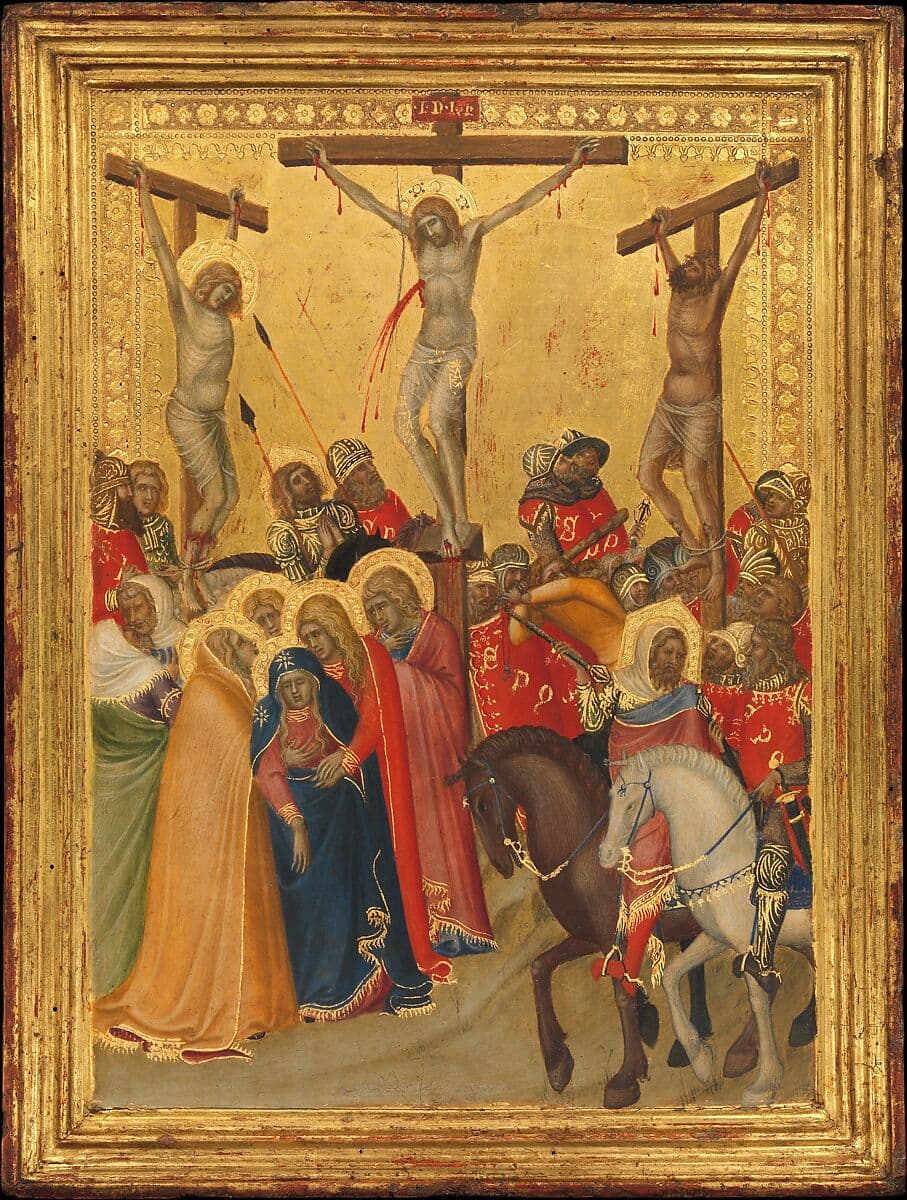
“Now there was about this time Jesus, a wise man, if it be lawful to call him a man; for he was a doer of wonderful works, a teacher of such men as receive the truth with pleasure. He drew over to him both many of the Jews and many of the Gentiles. He was [the] Christ. And when Pilate, at the suggestion of the principal men amongst us, had condemned him to the cross, those that loved him at the first did not forsake him; for he appeared to them alive again the third day, as the divine prophets had foretold these and ten thousand other wonderful things concerning him. And the tribe of Christians, so named from him, are not extinct at this day.” — Josephus 18.3.3
This passage, commonly known as the Testimonium Flavianum, has been the subject of extensive scholarly debate. While the great majority of historians accept the core of the passage as authentic, many argue that later Christian scribes may have modified certain portions, especially the parts where Josephus appears to affirm Jesus as the Messiah.2
However, recent research by Tom Schmidt has brought new evidence to light, showing that key phrases and stylistic features of the Testimonium Flavianum align closely with Josephus’s authentic writing. These findings are renewing scholarly discussion on how scholars view the passage’s authenticity, which is explored further in our article: Josephus and Jesus: New Evidence for the Testimonium Flavianum.3
Importantly, the central historical assertion that Jesus was crucified under Pontius Pilate is consistently affirmed across Christian and non-Christian sources alike, and remains virtually undisputed among modern historians, regardless of religious affiliation.
🧱 The Reference to James, Brother of Jesus
Another notable mention comes from Antiquities Book 20, Chapter 9, where Josephus discusses the martyrdom of James:
“Festus was now dead, and Albinus was but upon the road; so he assembled the Sanhedrin of judges, and brought before them the brother of Jesus, who was called Christ, whose name was James, and some others… he delivered them to be stoned.” — Josephus 20.9.1
This passage is nearly universally accepted by scholars (both secular and religious) as authentic and original. Its reference to James as “the brother of Jesus, who was called Christ” is clear, specific, and embedded in a larger narrative that bears all the marks of historical credibility.2 The account of James’s stoning in 62 AD is corroborated by its alignment with known political and religious dynamics of the time. As such, this text stands as one of the most compelling extra-biblical attestations of both Jesus’s historical existence and His familial ties, providing a strong anchor point for the historical Jesus within first-century Jewish records.
💧 Reference to John the Baptist
Josephus also writes about John the Baptist in Antiquities Book 18, Chapter 5:
“Herod slew him, who was a good man, and commanded the Jews to exercise virtue… Now when many others came in crowds about him… Herod… thought it best, by putting him to death, to prevent any mischief he might cause... Accordingly he was sent a prisoner… and was there put to death. Now the Jews had an opinion that the destruction of this army was sent as a punishment upon Herod…” — Josephus 18.5.2
This account is nearly universally accepted as authentic by both Christian and non-Christian scholars. Notably, Josephus provides a more detailed political analysis of John’s execution than the New Testament provides, as he cites Herod’s fear of a general uprising rather than the specific incident involving Herodias’s daughter recorded in the Gospels.
This "independent source" logic is a vital pillar of historicity. Because Josephus includes unique details — such as identifying the specific location of the execution at the fortress of Machaerus — it shows he was not merely "parroting" Christian tradition. Instead, he was drawing on independent Jewish sources. This provides a powerful outside corroboration that John was a prominent historical figure whose influence posed a genuine threat to the authorities, further anchoring the New Testament era in secular history.2
🏛️ Conclusion: Scholarly Consensus and Historical Significance
Together, these three references from Josephus’s Antiquities form a strong body of non-Christian testimony to the existence and influence of Jesus, His family, and His followers. While debate continues regarding the extent of possible Christian influence in the Testimonium Flavianum, the core historical facts — Jesus's crucifixion under Pilate, James's execution, and John the Baptist's death — are affirmed by scholars across the ideological spectrum.
Josephus's testimony is significant because he confirms several key details of the Gospels. Alongside other independent sources such as Tacitus, the Pilate Stone, and the Caiaphas Ossuary, he shows that the Gospel writers accurately recorded the people and events surrounding Jesus. Whether one follows Gary Habermas's minimal facts approach or Lydia McGrew's maximal data approach,4,5 Josephus, though not a believer himself, provides key evidence for the cumulative case that Jesus truly rose from the dead.
📚 References
Josephus, Flavius. Antiquities of the Jews. Translated by William Whiston. Written c. 93–94 AD.
- Key passages (Whiston translation, via Perseus): Book 18.3.3 (Testimonium Flavianum), Book 20.9.1 (James, brother of Jesus), Book 18.5.2 (John the Baptist).
Meier, John P. A Marginal Jew: Rethinking the Historical Jesus, Vols. 1–2. New York: Doubleday, 1991–1994.
- A detailed and widely respected critical examination of Jesus in historical context, including discussion of non-Christian sources like Josephus. Meier affirms the authenticity of the James passage (20.9.1), and Vol. 2 (Mentor, Message, and Miracles) examines the John the Baptist passage (18.5.2).
Schmidt, T. C. Josephus and Jesus: New Evidence for the One Called Christ. Oxford University Press, 2025. Open-access PDF
- A recent groundbreaking study that utilizes advanced linguistic and stylistic analysis to argue for the overall authenticity of the Testimonium Flavianum.
Habermas, Gary R. The Historical Jesus: Ancient Evidence for the Life of Christ. Joplin, MO: College Press Publishing, 1996.
- A foundational work outlining the “minimal facts” approach, which emphasizes historically accepted events surrounding Jesus's life, death, and the early Christian movement.
McGrew, Lydia. Testimonies to the Truth: Why You Can Trust the Gospels. DeWard Publishing, 2023.
- Lays out the evidence for the Gospels' reliability, including outside confirmation of their details, on which McGrew's maximal data approach to the resurrection is built.
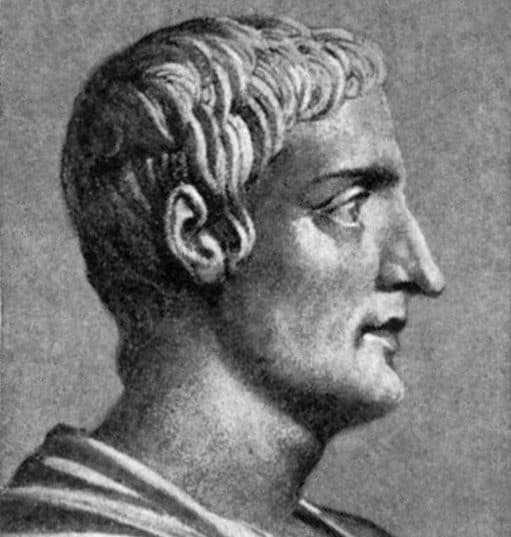
Image Credits: Unknown artist. Engraving of Flavius Josephus from The Works of Flavius Josephus (1854), translated by William Whiston. Wikimedia Commons. Public Domain. Available here.

Comments
No comments yet. Be the first to share your thoughts.