
Prophetic Evidence
Search within this section
Jump directly to prophetic evidence articles.
✨ The Prophetic Case
Centuries before Jesus, the Old Testament described a coming Messiah through a series of promises, patterns, and specific prophecies. His lineage, birthplace, ministry, rejection, suffering, death, and ultimate victory were written about long before the first century. When these passages are analyzed together, they form a detailed prophetic pattern that aligns precisely with the life of Jesus of Nazareth.
What makes the case so compelling is that these details come from different books, authors, and centuries, yet converge on the same fulfillment.
The case below unfolds in five steps, each building on the one before it. It begins with whether these texts truly predate Jesus, then follows what the prophecies say and how closely they align with His life. Each step links to the individual articles where the evidence is examined in full.
🏺 Step 1: Were the Prophecies Written Before Jesus?
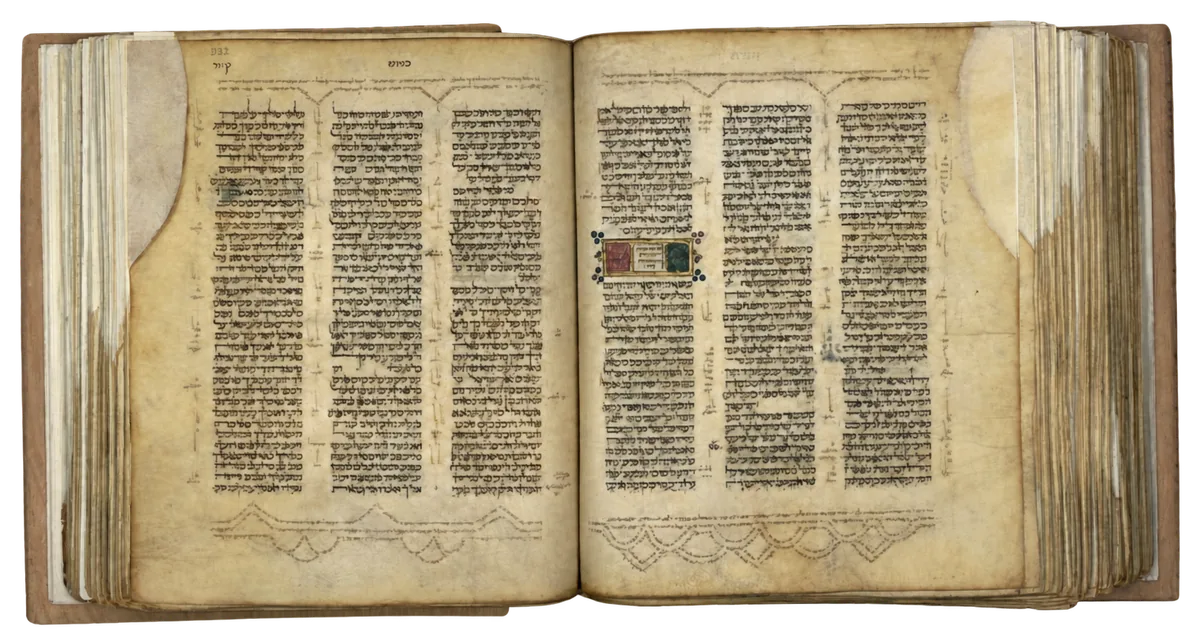
Yes. Surviving manuscripts and ancient translations date key messianic texts centuries before the life of Jesus.
The case begins here, because a prophecy only carries weight if it predates the events it describes. The manuscript evidence directly establishes that these texts were already in place before their fulfillment.
📜 The Great Isaiah Scroll
The Great Isaiah Scroll was copied roughly a century before Jesus and discovered among the Dead Sea Scrolls. It preserves the entire book of Isaiah, including Isaiah 53 in full, giving us a pre-Christian copy of one of the most important messianic passages.
Isaiah 53 was therefore already part of the Jewish Scriptures before Jesus was born, with its description of the suffering servant already fixed in writing.
📜 The Septuagint
The Septuagint pushes the evidence even further. Centuries before Jesus, Jewish scholars translated the Hebrew Scriptures into Greek, producing what became known as the Septuagint. This preserved many of the same messianic passages in a second language before Christianity began.
That includes Micah 5:2, which names Bethlehem in connection with a future ruler, along with major messianic passages throughout Isaiah and other books. By the first century, these texts had already been written, copied, and translated throughout the Jewish world.
By the time Jesus was born, the texts were already there. The question is no longer whether the prophecies were written afterward, but whether their descriptions are fulfilled in Him.
See the evidence: The Dead Sea Scrolls · The Septuagint · The Masoretic Text · Manuscript reliability
⚖️ Step 2: What Makes a Fulfillment Convincing?
A strong fulfillment should be early, specific, outside the person's control, and supported by evidence we can examine.
Once we know the prophecy came first, the next question is whether the fulfillment is actually meaningful. A vague prediction, or something a person could deliberately arrange, should carry less weight than a specific event outside their control.
A strong case should answer four questions:
- Was it written first? Can the text be dated independently of the event it describes?
- Is it specific? Does it describe something distinctive enough to meaningfully compare with history?
- Was it outside His control? Could Jesus have deliberately arranged the fulfillment Himself?
- How well is it supported? What historical sources preserve the event, and what can be corroborated independently?
| Prophecy | Written first? | Specific? | Outside His control? | Evidence for the fulfillment |
|---|---|---|---|---|
| Daniel 9 timeline | ✅ Yes | ✅ Yes | ✅ Yes | The dates and historical events can be checked independently, though interpretation of the timeline remains debated |
| Micah 5:2, born in Bethlehem | ✅ Yes | ✅ Yes | ✅ Yes | Matthew and Luke both place Jesus' birth in Bethlehem |
| Psalm 22, suffering and death | ✅ Yes | ✅ Yes | ✅ Yes | All four Gospels record the crucifixion, including details that closely parallel the psalm; Jesus' execution under Pilate is independently confirmed by Tacitus and Josephus |
| Unbroken bones, pierced side | ✅ Yes | ✅ Yes | ✅ Yes | John records both details, while Jesus' crucifixion itself is independently established |
| Isaiah 53, the suffering servant | ✅ Yes | ✅ Highly detailed | ✅ Yes | The Gospels consistently record Jesus' rejection, suffering, execution, and burial, while Tacitus and Josephus independently confirm His execution |
| Isaiah 40:3, a forerunner | ✅ Yes | 🟡 Broader | ✅ Yes | All four Gospels identify John the Baptist as the forerunner, and Josephus independently confirms John's ministry |
| Isaiah 7:14, the virgin birth | ✅ Yes | 🟡 Wording disputed | ✅ Yes | Matthew and Luke both record the virgin birth, though the Hebrew wording of the prophecy remains debated |
| Zechariah 9:9, the donkey | ✅ Yes | ✅ Yes | ❌ Could be arranged | All four Gospels record Jesus entering Jerusalem on a donkey, though this is something He could have deliberately fulfilled |
Most of the major examples satisfy all four criteria and cover very different parts of the Messiah's life: His birthplace, His forerunner, the timing of His arrival, His rejection, His suffering, His death, and ultimate victory. Step 3 brings those pieces together and looks at the larger pattern they form.
🧵 Step 3: Six Threads, One Story
The individual prophecies become even more significant when they are placed within the larger story of the Old Testament. Across centuries, the same themes continue to develop and add detail to the Messiah who was still to come.
The story begins in Genesis 3:15, with the promise of a descendant who would ultimately defeat the serpent while being wounded Himself. From there, the promised line becomes increasingly specific.
The promise narrows from humanity to Abraham, then to Judah, then to the house of David. By the prophets, the expected Messiah belongs to a specific people, tribe, and royal line.
The pattern of substitution runs throughout the Old Testament: the ram provided for Isaac, the Passover lamb, and the sacrifices offered for sin. Together they establish the expectation of an innocent substitute who bears the cost for others.
God promises David a descendant whose kingdom will endure. The prophets add further details, including His connection to Bethlehem, His righteous rule, and a kingdom that reaches far beyond Israel.
Isaiah 53 and Psalm 22 add another dimension: the Messiah is rejected, suffers, bears the sins and iniquities of others, and dies before being vindicated. These passages provide some of the most detailed parallels with the death of Jesus.
The prophets also look forward to a new covenant marked by forgiveness, an inward transformation of the heart, and the outpouring of God's Spirit. In the New Testament, these promises are tied directly to the work of Jesus and the covenant established through His death and resurrection.
Together, these threads form one continuous storyline from Genesis through the prophets. The Messiah is the promised descendant, the substitute, the Davidic King, the suffering servant, and the one through whom the new covenant comes. In Jesus, those threads come together in one life.
Trace the threads: Open the Prophecy Atlas · Genesis 3:15, the first prophecy · The New Covenant
🔎 Step 4: Five of the Strongest Prophecies
Step 3 showed how the prophecies form one larger story. These five stand out for their specificity, timing, and details that were outside Jesus' control:
Isaiah 53 brings many of the central messianic themes together in a single passage. The servant is rejected, suffers willingly, bears the sins and iniquities of others, is killed, buried, and ultimately vindicated.
The parallels with Jesus extend across the entire passage rather than resting on one phrase. His rejection, suffering, silence before His accusers, death, burial, and the purpose given for His suffering all correspond closely with the Gospel accounts.
Psalm 22 describes a suffering figure surrounded by mockers, physically exhausted, with His garments divided and lots cast for His clothing. It also contains the well-known reference to His hands and feet being pierced, with the textual question surrounding that wording examined in the full article.
Written centuries before Jesus, the psalm closely parallels the events surrounding His crucifixion.
Daniel 9 lays out a timeline leading to an anointed one who is "cut off," followed by the destruction of Jerusalem and the sanctuary. Rome destroyed Jerusalem and the Temple in 70 AD, placing the anointed figure before that event.
Interpretations differ over the exact calculation of the seventy weeks, but the central sequence remains: the Messiah appears, is cut off, and the Temple is later destroyed. Daniel was already written and circulating long before those first-century events occurred.
The prophecy · Interpretations compared · The Maccabean objection
Micah 5:2 names Bethlehem as the birthplace of a future ruler from Israel. The town was small enough that Micah calls it "too little to be among the clans of Judah," yet it is identified specifically centuries before Jesus.
A person's birthplace is entirely outside their control. The expectation was also well known within Judaism: when Herod asked where the Messiah was to be born, the chief priests and scribes pointed directly to Micah.
Psalm 34:20 says that His bones would be preserved, while Zechariah 12:1010 “And I will pour out on the house of David and the inhabitants of Jerusalem a spirit of grace and pleas for mercy, so that, when they look on me, on him whom they have pierced, they shall mourn for him, as one mourns for an only child, and weep bitterly over him, as one weeps over a firstborn. speaks of one who would be pierced. During Jesus' crucifixion, both details came together through decisions made by the Roman soldiers.
The soldiers broke the legs of the men crucified beside Him, but when they reached Jesus, He was already dead. They left His legs unbroken and pierced His side with a spear instead.
These five passages place concrete expectations on the Messiah: where He would be born, when He would appear, why He would suffer, how He would die, and even details surrounding His death. Jesus fits each of them.
🛡️ Step 5: Common Objections
Here are some of the most common objections to the prophetic case, with direct responses and links to the deeper articles that examine the evidence in full.
“The prophecies are vague enough to fit anybody.”
This is simply not true, as six of the eight major prophecies in Step 2 are highly specific. Bethlehem names a particular town. Daniel gives a historical timeline. Isaiah 53 describes a servant who suffers and dies for the sins of others, stays silent before His accusers, is numbered with the transgressors, is buried with the rich, and is ultimately vindicated. Psalm 22 describes a man mocked in His suffering, with His garments divided and lots cast for His clothing.
These are concrete details that can be compared directly with the life of Jesus.
“Jesus simply arranged the fulfillments Himself.”
Seven of the eight major examples in Step 2 involve events outside Jesus' control. He could not choose His birthplace, the historical period in which He was born, how Rome would execute Him, whether His legs would be broken, or whether a soldier would pierce His side.
Zechariah 9:9 is different because Jesus could intentionally enter Jerusalem on a donkey. The strongest fulfillments instead involve His birth, the timing of His life, and the actions of others surrounding His death.
“The Gospel writers shaped the story to match the prophecies.”
The Gospels preserve most of the specific fulfillment details, but the historical record extends beyond them. Tacitus independently records Jesus' execution under Pontius Pilate. Josephus records Jesus, James, and John the Baptist. Hostile Jewish traditions also preserve Jesus' execution, while other Roman sources confirm the rapid growth and beliefs of the early Christian movement.
Together, these outside sources independently support key people, events, and historical circumstances surrounding the Gospel accounts, strengthening the historical framework in which the fulfillments are recorded.
“Isaiah 53 is about Israel, not the Messiah.”
In other chapters, Isaiah does call Israel God’s servant, which is why some interpreters apply Isaiah 53 to the nation. In Isaiah 53, however, the servant is distinguished from the people He suffers for. “We” have gone astray, while “he” is pierced for our transgressions and “cut off” for the transgression of “my people.” The servant is also described as innocent, having done no violence and spoken no deceit, while Isaiah repeatedly describes Israel as sinful.
Jewish interpreters have understood the passage in different ways. The Targum Jonathan and the Talmud (Sanhedrin 98b) contain partial messianic readings, while Origen records Jewish interpreters of his day identifying the servant with Israel in debate with Christians. The question has a genuine history on both sides.
The text itself, though, favors the messianic reading. Reading the servant as Israel has to explain how the nation can be both the servant and the sinful people it suffers for. The messianic reading fits every detail without that strain, as the full article shows.
“Daniel was written after the events it predicts.”
Some scholars date Daniel to the second century BC rather than the traditional sixth-century date. Even using that later date, Daniel was already written roughly two centuries before Jesus and more than two centuries before Rome destroyed Jerusalem and the Temple in 70 AD.
While the debated later dating may affect some of Daniel's other prophecies, it has no impact on any of the prophecies discussed on this hub page, including Daniel 9.
📖 Where to Start
There are two good ways to explore the prophetic case, depending on how you prefer to work through the evidence.
If you want a guided path, start with these three articles:
- The Dead Sea Scrolls to see how we know the prophetic texts existed before Jesus.
- Isaiah 53 for one of the clearest and most detailed messianic passages, followed by Messiah or Israel? for the major competing interpretation.
- Daniel 9 for the prophecy that places the Messiah within a defined historical timeline.
If you would rather explore visually, open the Prophecy Atlas. It lets you follow the individual prophetic threads across Scripture and see how they develop over time.
The strength of the prophetic case comes from the accumulation of detail: texts written across centuries that identify the Messiah’s lineage, birthplace, timing, ministry, rejection, suffering, death, and ultimate victory. When those pieces are brought together, they converge with extraordinary precision on the life of Jesus of Nazareth.
All Prophetic Articles14
- Daniel 9: The Maccabean Interpretation Examined
- Isaiah 53: Messiah or Israel?
- Prophecy of the Humble King: Zechariah 9:9
- The Second Return of Israel: A Prophecy in Motion?
- The Prophecy of the Unbroken Bones
- The Sign of Isaiah 7:14 – Prophecy of a Virgin Birth
- The Prophecy of the Messiah’s Birthplace in Bethlehem
- Genesis 3:15 - The First Prophecy?
- John the Baptist Prophecy: Preparing the Way for the Messiah
- Daniel 9
- Daniel 9: Exploring Interpretations
- Fulfillment of the New Covenant
- Psalm 22 and the Messiah's Suffering
- Isaiah 53 and Jesus: Prophetic Parallels in the New Testament