
The Septuagint (LXX): The Greek Translation of the Hebrew Bible
The Septuagint (LXX) is the ancient Greek translation of the Hebrew Bible, created in Alexandria, Egypt between the 3rd and 2nd centuries BC. It was originally produced so that Greek-speaking Jews, especially those living outside Israel, could read the Scriptures in their everyday language.
It’s important to note that the Septuagint is not a single ancient manuscript. Rather, it refers to the first major Greek translation of the Hebrew Bible, which was copied and circulated over centuries. Today, we have thousands of Septuagint manuscripts and fragments, ranging from small papyrus scraps to nearly complete codices. Each copy confirms the text’s consistency over time, demonstrating how faithfully the translation and the underlying Hebrew Scriptures have been preserved.
By the time of Jesus, the Septuagint was the common version of the Old Testament used throughout the Jewish world.1 In fact, when Jesus and the apostles quote the Old Testament in the Gospels, they often use the Septuagint wording. The survival of these manuscripts and fragments across centuries highlights the enduring reliability and preservation of the biblical text.
📜 Discovery and Manuscript Evidence
How Many Manuscripts Survive Today?
-
Scholars estimate we have over 2,000 surviving Septuagint manuscripts and fragments, ranging from tiny scraps to nearly complete Bibles.2
-
Together, these manuscripts preserve almost the entire Old Testament in Greek, though no single copy contains everything perfectly intact.
Earliest Septuagint Fragments (Pre-Christian Era)
The earliest surviving Septuagint fragments date to the 2nd century BC, well before the time of Jesus.
-
Papyrus Rylands 458 (2nd century BC): Portions of Deuteronomy
-
Papyrus Fouad 266 (1st century BC): Portions of Deuteronomy, notable for writing the divine name (YHWH) in Hebrew square-script letters within the Greek text
These fragments demonstrate that the Greek Old Testament was already in circulation centuries before Christianity, ruling out any claim that it was a later Christian creation.
Major Codices (Big Bound Manuscripts)
-
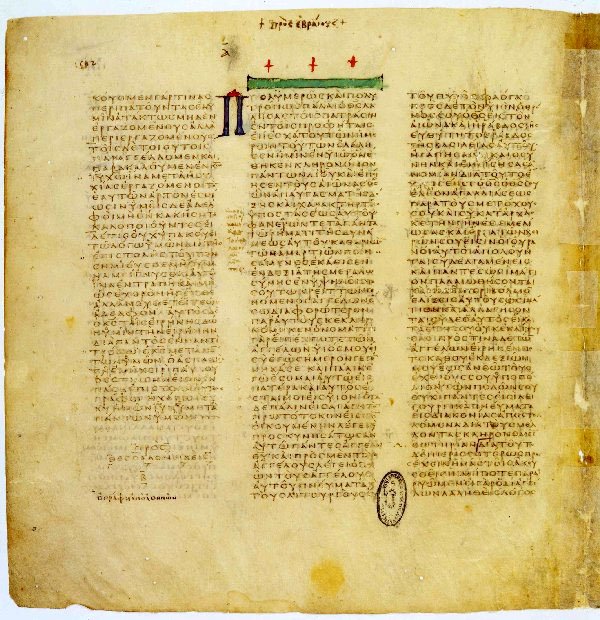
Codex Vaticanus (B) – 4th century AD
-
Codex Sinaiticus (א) – 4th century AD
-
Codex Alexandrinus (A) – 5th century AD
These are the three great ancient Bibles that give us nearly complete copies of the Greek Old Testament.
Dead Sea Scrolls (Qumran):
-
Found in caves near the Dead Sea (1947 onward).
-
Most are in Hebrew or Aramaic, but a few are in Greek, including pieces of Exodus, Leviticus, Numbers, Deuteronomy, and the Letter of Jeremiah.2
-
This shows that Greek translations of the Bible were even read in Judea itself during the Second Temple period (~516 BC - 70 AD).
Why this matters: These manuscripts and fragments show that the Septuagint was widely read by both Jews and the first Christians. Together, they preserve the text of the Old Testament in Greek with remarkable consistency, confirming how carefully the Scriptures were copied and passed down through history.
📖 Biblical Significance
The Septuagint became the version of Scripture most often quoted in the New Testament. Scholars estimate that roughly two-thirds of Old Testament quotations in the NT follow the LXX wording rather than the later Masoretic Text.3 Importantly, these Greek translations were made by Jewish scholars before Christianity began, so their readings were part of the original translation, not later Christian additions.1
Examples include:
-
Isaiah 7:14 – LXX uses parthenos (“virgin”), quoted directly in Matthew 1:2323 “Behold, the virgin shall conceive and bear a son, and they shall call his name Immanuel” (which means, God with us). about the birth of Jesus.
-
Translated before Christianity: Jewish scholars translated Isaiah into Greek around 170–150 BC, more than a century before Jesus was born.4
-
A Jewish reading, not a Christian one: After Christians began citing this verse, second-century Jewish translators such as Aquila and Theodotion changed parthenos to neanis (“young woman”),5 and Justin Martyr records his Jewish debate partner Trypho insisting on the same reading.6 The revision came after the dispute began, which shows that parthenos was the established Jewish reading before Christians ever used it.
-
-
Psalm 22:16 – LXX reads “they pierced my hands and my feet,” echoing crucifixion imagery, while the Hebrew Masoretic Text reads “like a lion.”
-
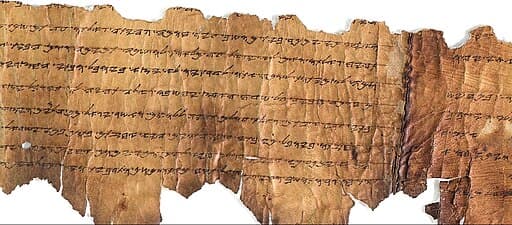
A Jewish Hebrew witness: A Hebrew Psalms scroll found at Nahal Hever near the Dead Sea, copied around AD 50–100, reads a verb meaning “they dug” or “pierced” where the Masoretic Text has “like a lion.”7 Together with the Greek translation, made by Jewish translators before Christianity, that gives two independent Jewish witnesses to the reading, neither of which a Christian could have edited.
-
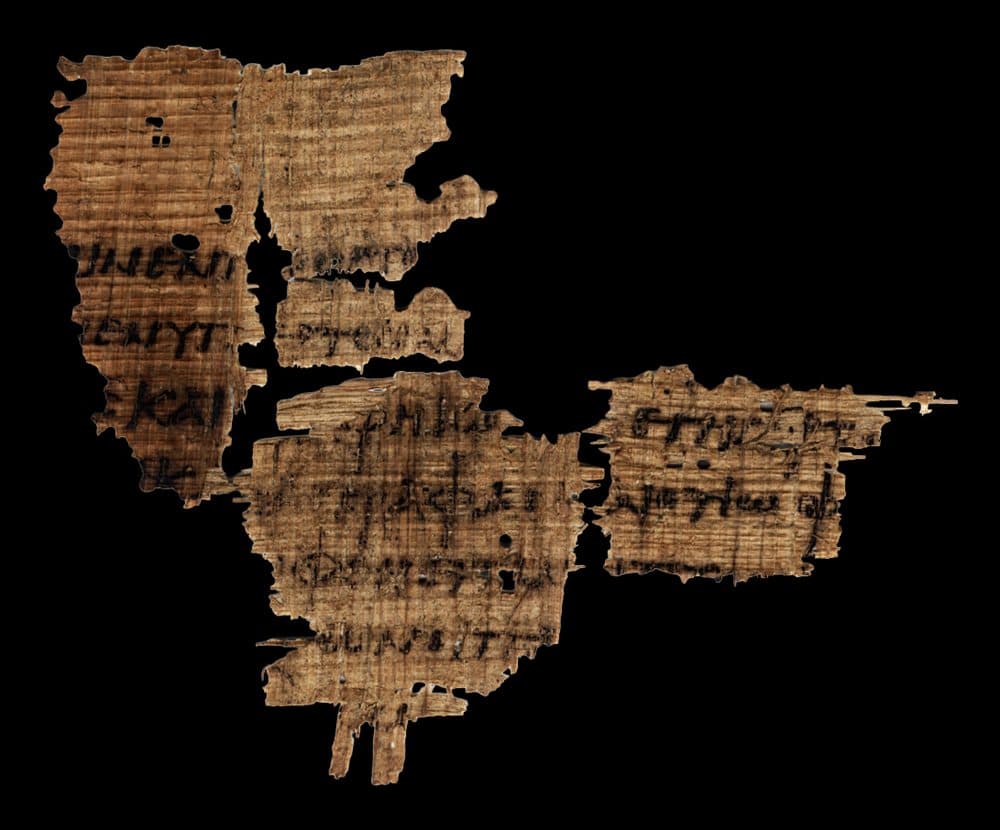
Earliest Greek copies: The verse survives in Greek in Papyrus Bodmer XXIV (c. AD 230–340) and Codex Vaticanus (4th century AD).8 The reading was part of the established Septuagint tradition well before the New Testament writers cited Psalm 22, and its presence in a Jewish Hebrew scroll completely rules out the claim that Christians invented it. This is further discussed in the Psalm 22 article.
-
-
Jeremiah – The LXX version of Jeremiah is shorter and arranged differently than the Masoretic Text.
- Earliest manuscript evidence: Hebrew fragments among the Dead Sea Scrolls (4QJerb and 4QJerd) preserve this shorter edition, showing that the Septuagint faithfully translated a real Hebrew text that existed long before Jesus.2
Thus, the Septuagint is not only a translation but also a witness to early Hebrew textual forms, providing insight into how Scripture was understood before and during the time of Jesus. This evidence demonstrates that the Greek Old Testament readings quoted in the New Testament were already circulating and authoritative in the Jewish world, long before Christian authors preserved them.
📜 Historical Significance
The Septuagint holds immense historical value. It was the Bible of the early church: the apostles, evangelists, and early church fathers all relied on it. At the same time, it preserves textual variants of the Hebrew Bible that would otherwise be lost, giving us a window into the diversity of Jewish texts before the Masoretic Text was standardized.2
The Septuagint also played a central role in shaping Christian theology. Many messianic prophecies and doctrinal interpretations in the New Testament are rooted in the LXX’s wording, showing that the Greek translation influenced how Scripture was understood and applied in the early church.
⚖️ Authenticity and Scholarly Debate
Scholars agree that the Septuagint represents a legitimate Jewish translation tradition. Most of the text aligns closely with the Hebrew Bible, but some books are more literal while others are paraphrastic or interpretive. A few passages have been debated, particularly sections involving a few of the many messianic or prophetic statements, such as parts of Psalms or Jeremiah, where scholars consider whether differences reflect older Hebrew readings or translator choices.
Importantly, these debated texts existed in Greek long before Jesus, translated by Jewish scholars. This means that even the passages critics sometimes highlight were already circulating in the Jewish world and cannot be explained as later Christian additions. The Dead Sea Scrolls further show that in several cases, the LXX preserves readings closer to earlier Hebrew traditions than the later Masoretic Text.
While minor debates remain about a few passages, the vast majority of the Septuagint is consistent with the Hebrew Bible, and the pre-Christian, Jewish origin of the translation strongly supports its historical reliability. This demonstrates that the Septuagint is not only a faithful translation but also a reliable witness to how Scripture was understood in the centuries leading up to the New Testament.
🏛️ Why This Matters: Historical Validation
The manuscript evidence demonstrates that the Septuagint was a widely circulated and authoritative Greek translation of the Hebrew Scriptures well before the rise of Christianity. Pre-Christian papyri, Greek fragments from Qumran, and major codices collectively show that the Scripture cited by the New Testament authors was already established within the Jewish world.
Furthermore, these findings place clear historical limits on claims that the Septuagint or its messianic readings were later Christian inventions. Instead, the evidence shows continuity between Jewish Scripture traditions of the Second Temple period and the texts used by the earliest Christians. The Septuagint therefore stands as a critical witness not only to the transmission of biblical texts, but also to how Scripture was read, translated, and understood in the centuries surrounding the emergence of Christianity.
📚 References
Jobes, Karen H., and Moisés Silva. Invitation to the Septuagint. 2nd ed. Baker Academic, 2015.
- A standard introduction to the Septuagint's origins, transmission, and use by Jews and early Christians.
Tov, Emanuel. Textual Criticism of the Hebrew Bible. 3rd ed. Fortress Press, 2012.
- The primary academic source for comparing the Septuagint with the Masoretic Text and the Dead Sea Scrolls; essential for understanding textual variants.
Britannica. "Septuagint." Encyclopedia Britannica.
- A foundational overview of the history of the translation, including its origins in Alexandria and its role in the Hellenistic world.
Seeligmann, Isac Leo. The Septuagint Version of Isaiah and Cognate Studies. Mohr Siebeck, 2004.
- The classic study dating the Greek translation of Isaiah to the middle of the 2nd century BC.
Irenaeus. Against Heresies 3.21.1. Written c. AD 180.
- Names Theodotion and Aquila, "both Jewish proselytes," as rendering Isaiah 7:1414 Therefore the Lord himself will give you a sign. Behold, the virgin shall conceive and bear a son, and shall call his name Immanuel. "a young woman shall conceive."
Justin Martyr. Dialogue with Trypho 71. Written c. AD 155.
- Records the Jewish objection that Isaiah 7:1414 Therefore the Lord himself will give you a sign. Behold, the virgin shall conceive and bear a son, and shall call his name Immanuel. should read "young woman" rather than "virgin."
Abegg, Martin, Jr., Peter Flint, and Eugene Ulrich. The Dead Sea Scrolls Bible. HarperSanFrancisco, 1999.
- A translation of the biblical Dead Sea Scrolls, including the Nahal Hever Psalms scroll's reading at Psalm 22:1616 For dogs encompass me; a company of evildoers encircles me; they have pierced my hands and feet —.
Museum of the Bible. "P.Bodmer XXIV (Rahlfs 2110)." Collections database.
- A Greek Psalms papyrus (Psalms 17–118 in Greek numbering) dated c. AD 230–340, one of the earliest witnesses to Psalm 22:1616 For dogs encompass me; a company of evildoers encircles me; they have pierced my hands and feet — in Greek.
Image Credits: Codex Vaticanus (B), 2 Thessalonians 3:11–1811 For we hear that some among you walk in idleness, not busy at work, but busybodies. 12 Now such persons we command and encourage in the Lord Jesus Christ to do their work quietly and to earn their own living. and Hebrews 1:1–2:2. Wikimedia Commons, public domain.
Further Resources
-
Codex Sinaiticus Project: high-resolution images of Codex Sinaiticus.
-
DigiVatLib, Vat.gr.1209: the Vatican Library's digital Codex Vaticanus.
-
Leon Levy Dead Sea Scrolls Digital Library: images of the Hebrew and Greek Dead Sea Scroll fragments, including Nahal Hever.
Comments
No comments yet. Be the first to share your thoughts.