Dead Sea Scrolls

Often hailed as the greatest archaeological discovery of the 20th century, the Dead Sea Scrolls not only bridge a historical gap of over a thousand years in biblical documentation, but they also refute the common narrative that the Bible has been tampered with over time. Instead, they show careful preservation, predictive prophecy, and deep insight into ancient Jewish faith and practice.
Let’s unpack why the Scrolls still matter historically, theologically, and apologetically.
📜 The Oldest Known Biblical Manuscripts
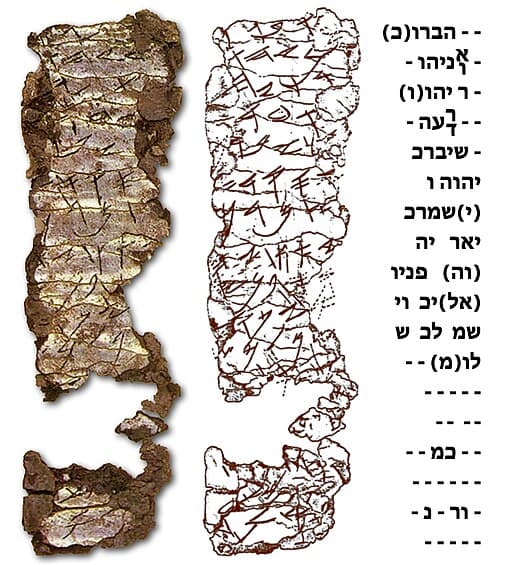
The Dead Sea Scrolls include the earliest known surviving copies of the Hebrew Bible, dating from the 3rd century BC to the 1st century AD. These scrolls are over a thousand years older than the Masoretic Text, which has served as the basis for most modern Old Testament translations.5
Before these scrolls were found, our earliest complete Hebrew manuscripts were from around 1000 AD, leaving uncertainty in the historical record for errors and manipulation to sneak in. But the Dead Sea Scrolls completely changed the landscape. They proved that much of the Old Testament as we know it today already existed centuries before Jesus, and with remarkable consistency.
✍️ Textual Accuracy Across Centuries
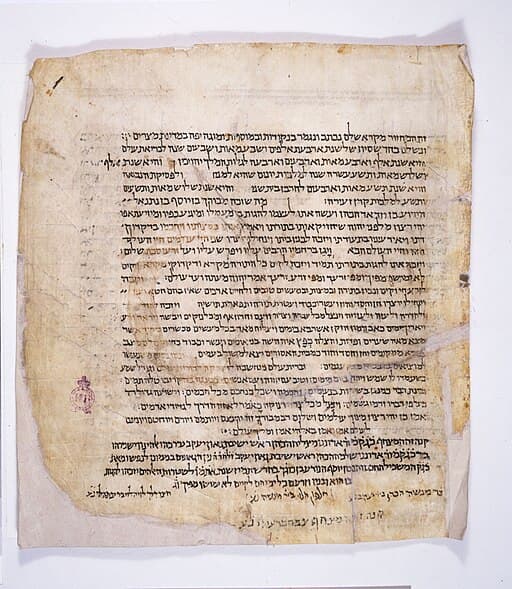
The Great Isaiah Scroll (1QIsaᵃ), dated around 125 BC, provides one of the clearest examples of this preservation. It was found to be more than 95% identical to the Masoretic Text we rely on today.7
This directly challenges the “Bible has been changed” objection, as there is now hard archaeological evidence showing Scripture has been faithfully copied across centuries.
📚 Volume, Variety & Canon Representation
Beyond their textual accuracy, the Scrolls also reveal the breadth of Jewish Scripture.
More than 900 manuscripts were discovered across 11 caves near Qumran, and among them were texts from 38 of the 39 Old Testament books.6 The distribution of these finds reveals which books were most central to their faith: Psalms was the most frequent (39 copies), followed by Deuteronomy (33 copies), and Isaiah (22 copies).6 The only book missing was Esther, possibly because it doesn’t mention God directly (which may have made it less favored by the Qumran sect).2
The discovery extended well beyond biblical manuscripts, as the Dead Sea Scrolls also included:
-
Deuterocanonical and pseudepigraphal texts (such as Tobit and 1 Enoch)
-
Sectarian documents (like the Community Rule)
-
Calendars, hymns, commentaries, and war scrolls
This treasure trove gives us a rare glimpse into Second Temple Judaism, showing how diverse and deeply theological this period was. It also confirms that many books we consider canonical were already revered hundreds of years before any council “decided” on them.
✨ Pre-Christian Prophecies Locked in Time
The dating of the Dead Sea Scrolls also has profound implications for biblical prophecy. The Great Isaiah Scroll preserves passages such as Isaiah 53, which describes a suffering servant who bears the sins of others, is led to slaughter, and is ultimately vindicated. These words were already in circulation centuries before Jesus was born.
This establishes an important historical fact: early Christians inherited these passages; they did not invent them. Their pre-Christian existence rules out the possibility that Christians later inserted them into Scripture to match Jesus’s life. Whether Jesus fulfilled these ancient prophecies is a question explored further in our Biblical Prophecy section.
🎥 Allen Parr’s 9-Minute Breakdown
For a closer look at the Dead Sea Scrolls and their historical significance, Allen Parr offers a nine-minute overview covering their discovery, preservation, and importance for understanding the Bible.
🎙️ Wes Huff and the Dead Sea Scrolls Controversy
The extraordinary consistency between the Dead Sea Scrolls and later biblical manuscripts became the subject of online controversy in 2025. During an appearance on the Joe Rogan Podcast, Wes Huff described the Great Isaiah Scroll as being “word for word” the same as what we have today, sparking a wave of criticism over his statement.
While his wording wasn't entirely accurate, his broader point about the preservation of Scripture remains well supported. The Great Isaiah Scroll is often described as being more than 95% identical to the Masoretic Text preserved over a thousand years later.7 Most differences involve spelling, grammar, and minor wording changes rather than significant changes to the meaning of the text. This level of consistency across more than a thousand years provides powerful evidence of how faithfully Scripture was preserved.
To his credit, Wes acknowledged the imprecision and followed up with an eight-minute video explaining the differences and clarifying his original point. His response is worth watching for anyone interested in what the Dead Sea Scrolls actually reveal about the reliability of biblical transmission.
🤔 Why It All Still Matters
The Dead Sea Scrolls provide some of the strongest archaeological evidence for the careful preservation of the Hebrew Scriptures. Across more than a thousand years, the biblical manuscripts show an extraordinary degree of stability and consistency, giving us great confidence that the Old Testament we read today closely reflects the texts known in ancient Judaism.
The Scrolls also establish that key passages Christians identify as messianic prophecy were already circulating centuries before Jesus, ruling out the claim that these texts were later invented to match His life. Together, these discoveries strengthen the historical foundation of Scripture and provide compelling evidence of its precise transmission across generations.
📚 References
Geza Vermes, The Complete Dead Sea Scrolls in English. Penguin Classics, 2004.
- A widely accessible collection providing the full translated text of the non-biblical scrolls.
Peter W. Flint and James C. VanderKam, The Meaning of the Dead Sea Scrolls. HarperOne, 2002.
- A comprehensive introduction to the discovery and its impact on both Judaism and Christianity.
Lawrence H. Schiffman, Reclaiming the Dead Sea Scrolls. Jewish Publication Society, 1994.
- Focuses on the Jewish context of the scrolls and their relationship to Rabbinic tradition.
F. F. Bruce, The Canon of Scripture. IVP Academic, 1988.
- A foundational work exploring how the biblical books were selected and recognized as authoritative.
Eugene Ulrich, The Dead Sea Scrolls and the Origins of the Bible. Eerdmans, 1999.
- Analyzes how the scrolls reveal the early development and "pluriformity" of the biblical text.
Emanuel Tov, Textual Criticism of the Hebrew Bible. Fortress Press, 3rd ed., 2012.
- The "Gold Standard" academic textbook for understanding the transmission and variants of the Hebrew text.
Gleason Archer, A Survey of Old Testament Introduction. Moody Press, 2007 (Revised Edition).
- Provides a detailed defense of the historical and textual reliability of the Old Testament from a conservative perspective.
Image Credits: Halevi, Shai / Israel Antiquities Authority. Paleo-Hebrew Leviticus Scroll. 2000. Wikimedia Commons. CC BY-SA 4.0.
Popular Sources
-
🎥 Allen Parr, “Why The Dead Sea Scrolls Are The Greatest Archaeological Discovery of ALL-TIME!” YouTube, Watch Here.
-
🎥 Wes Huff, “Wes Huff responds to... Wes Huff.” YouTube, Watch Here.
Comments
No comments yet. Be the first to share your thoughts.