
The Masoretic Text: The Standard Hebrew Bible
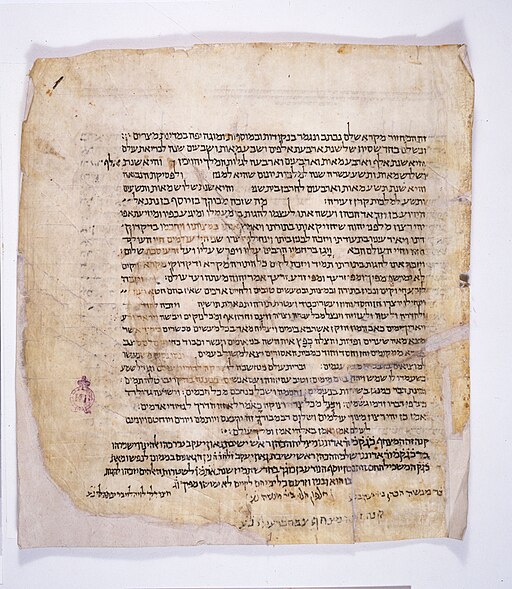
The Masoretic Text (MT) is the traditional Hebrew version of the Old Testament, carefully copied and standardized by Jewish scribes known as the Masoretes between the 6th and 10th centuries AD. While the Masoretic manuscripts themselves are relatively late, the text they preserve reflects Hebrew Scriptures written over roughly a thousand years before Christ. Unlike the Septuagint, which is a Greek translation of the Hebrew Bible, the Masoretic Text is not a translation. Instead, it is the standard Hebrew text of the Bible, meticulously preserved and transmitted by generations of scribes.1
🧭 Introduction
What makes the Masoretic Text unique is the system of vowel points, accents, and marginal notes added by the Masoretes. Ancient Hebrew, the original language of the Old Testament, was written with only consonants, which could leave words ambiguous.1 By adding vowels and detailed notes, the Masoretes helped ensure that the Scriptures would be read, pronounced, and understood consistently for all future generations. Without these markings, readers might misinterpret words or phrases, so the Masoretic system helped preserve the meaning of the text over centuries.
The Masoretic Text became the authoritative version of the Old Testament in Judaism. Even today, most modern Old Testament translations in Christianity are based primarily on it, making it one of the most influential texts in history.
📜 Discovery and Manuscript Evidence
How many manuscripts survive today?
Like the Septuagint, the Masoretic Text survives in thousands of copies. Scholars have compared more than 1,300 medieval Hebrew manuscripts,2,3 and the storeroom of a single Cairo synagogue has yielded over 24,000 more fragments.4 Their agreement shows just how carefully the Masoretes worked to preserve the Scriptures.
Major Manuscripts:
-
Aleppo Codex (c. 930 AD) – Once considered the most authoritative copy of the MT, though parts were lost in the 20th century.1
-
Leningrad Codex (1008 AD) – The oldest complete manuscript of the MT; it serves as the basis for most printed Hebrew Bibles today, including the Biblia Hebraica Stuttgartensia, a modern scholarly edition of the Masoretic Text used by most biblical scholars and translators.5
-
Cairo Codex of the Prophets (dated 895 AD in its colophon) – Contains much of the prophetic books and is among the earliest dated MT manuscripts.
Dead Sea Scrolls (Qumran, 250 BC – 70 AD):
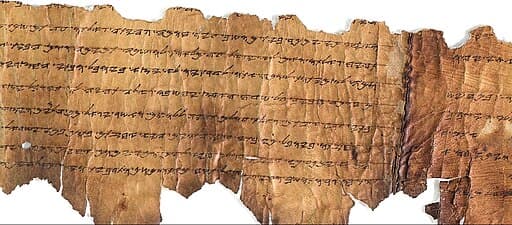
The Dead Sea Scrolls are much older than the Masoretic manuscripts but provide some of the strongest evidence for its antiquity and reliability.5 Among the biblical manuscripts discovered at Qumran, approximately 40–60% align closely with the proto-Masoretic textual tradition.5 This is remarkable because it shows that the same basic textual form later preserved by the medieval Masoretes was already being copied and used more than a thousand years earlier.
The remaining manuscripts do not represent a completely different Bible but reflect other known textual traditions discussed extensively in Emanuel Tov’s work, including Hebrew texts related to the Septuagint, “pre-Samaritan” harmonized forms, and some independent variations.5 Rather than suggesting instability, this diversity shows that several textual traditions circulated side by side before the Hebrew Bible became more standardized. Importantly, the proto-Masoretic tradition is the largest single textual group among the Dead Sea Scrolls, highlighting its early prominence and continuity.
The strong agreement between these ancient scrolls and later Masoretic manuscripts demonstrates a remarkable level of stability over many centuries and strengthens scholarly confidence in the careful preservation and transmission of the Hebrew Scriptures.
📖 Biblical Significance
-
Jewish Tradition: The Masoretic Text became the foundation of Rabbinic Judaism and remains the version used in synagogues today.
-
Christian Tradition: Most modern Bible translations (KJV, NIV, ESV, etc.) base their Old Testament primarily on the MT, while consulting the Septuagint and Dead Sea Scrolls to clarify differences.1
-
Textual Reliability: Scholars frequently highlight the precision of the Masoretes. Copying rules were so strict that Masoretic scribes would count every letter, word, and verse to ensure no errors were made.1,5 A Torah scroll with too many errors could not simply be corrected; it was retired from use and buried.6 This devotion preserved the Hebrew Scriptures with exceptional stability.
📜 Historical Significance
The Masoretic Text holds immense historical value. It represents the Jewish community’s determination to protect and standardize the Hebrew Bible after centuries of dispersion and textual diversity. While the Septuagint reflects how Jews translated Scripture for the Greek-speaking world, the MT represents how Jewish scribes preserved the original Hebrew language Scriptures with unparalleled care.
The Masoretes’ addition of vowels and notes was not a rewriting of the Bible but a safeguarding of its ancient meaning. Their work ensured that the Hebrew Bible could be read the same way in every generation, standardizing reading traditions, pronunciation, and interpretations.
⚖️ Authenticity and Scholarly Debate
The vast majority of scholars recognize the Masoretic Text as the authentic Hebrew Bible.1,5 The main debates focus not on its legitimacy but on how it relates to earlier Hebrew forms of the text preserved in the Dead Sea Scrolls or reflected in the Septuagint.5
For example:
-
Psalm 22:16 – The Masoretic Text reads “like a lion are my hands and feet,” while the Septuagint reads “they pierced my hands and my feet.” A Hebrew Psalms scroll found at Nahal Hever, near the Dead Sea, reads “they dug” or “pierced,” showing that this variation existed in Hebrew before the MT was finalized.7
-
Jeremiah – The MT version is longer than the Septuagint version, suggesting either expansions in the Hebrew tradition behind the MT or omissions in the tradition behind the LXX.5
These examples show that while the MT became the standard, it is part of a broader textual history. Importantly, the vast majority of the MT aligns with both earlier Hebrew manuscripts and the Septuagint, demonstrating the overall stability of the biblical text.
✍️ Differences with the Septuagint
While both traditions preserve the same core Scriptures and agree on the vast majority of wording and meaning, they are not identical.1,5 Differences tend to cluster around certain books:5
-
Books Included:
-
The Septuagint contains additional writings not in the Masoretic Text, such as Tobit, Judith, Sirach, Baruch, Wisdom of Solomon, and the books of Maccabees.
-
These books are considered Deuterocanonical by Catholics and Orthodox, but Apocrypha by Protestants.
-
-
Arrangement:
-
The Septuagint often groups and orders books differently.
-
Example: Jeremiah appears in a shorter, reorganized form; Psalms sometimes follow a different numbering system.
-
-
Textual Variations:
-
Jeremiah – The LXX version is about one-eighth shorter than the MT.
-
Daniel – The LXX contains extra sections (Susanna, Bel and the Dragon) absent from the MT.
-
These differences do not undermine either tradition but highlight the complex history of the biblical text and the value of comparing both traditions for accuracy.
🏛️ Why This Matters: Historical Validation
The Masoretic Text is more than a manuscript tradition; it is the reason we still have a unified Hebrew Bible today. It bridges the ancient Hebrew Scriptures with the medieval and modern worlds, ensuring that the text survived intact despite wars, exiles, and dispersions.
By comparing the Masoretic Text with the Septuagint and the Dead Sea Scrolls, scholars can trace the development of the Old Testament with extraordinary clarity. Far from undermining Scripture, these comparisons confirm its historical reliability, showing how carefully it was transmitted across languages, regions, and centuries.
📚 References & Image Credits
Britannica. “Masoretic Text.” Available here.
- An overview of the Masoretic Text's history, the work of the Masoretes, and its role as the standard Hebrew Bible.
Kennicott, Benjamin. Vetus Testamentum Hebraicum, cum variis lectionibus. 2 vols. Oxford, 1776–1780.
- Compared 615 medieval Hebrew Bible manuscripts and 52 early printed editions.
de Rossi, Giovanni Bernardo. Variae lectiones Veteris Testamenti. 4 vols. Parma, 1784–1788.
- Extended Kennicott's work with a further 731 manuscripts.
Davis, M. C., and B. Outhwaite. Hebrew Bible Manuscripts in the Cambridge Genizah Collections. 4 vols. Cambridge University Press, 1978–2003.
- Catalogues the 24,260 Hebrew Bible fragments from the Cairo Genizah held at Cambridge.
Tov, Emanuel. Textual Criticism of the Hebrew Bible. 3rd ed. Fortress Press, 2012.
- The primary academic source for comparing the Septuagint with the Masoretic Text and the Dead Sea Scrolls; essential for understanding textual variants.
Babylonian Talmud. Menachot 29b.
- Rules for correcting errors in a Torah scroll, and for retiring a scroll with too many.
Abegg, Martin, Jr., Peter Flint, and Eugene Ulrich. The Dead Sea Scrolls Bible. HarperSanFrancisco, 1999.
- A translation of the biblical Dead Sea Scrolls, including the Nahal Hever Psalms scroll's reading at Psalm 22:1616 For dogs encompass me; a company of evildoers encircles me; they have pierced my hands and feet —.
Image Credits: “Folio 001a of the Leningrad Codex.” Wikimedia Commons, 9 Dec. 2024, Available here. Public domain.
Further Resources
- Leon Levy Dead Sea Scrolls Digital Library: images of the Hebrew and Greek Dead Sea Scroll fragments, including Nahal Hever.
Comments
No comments yet. Be the first to share your thoughts.