
Medical and Historical Corroboration of the Crucifixion of Jesus
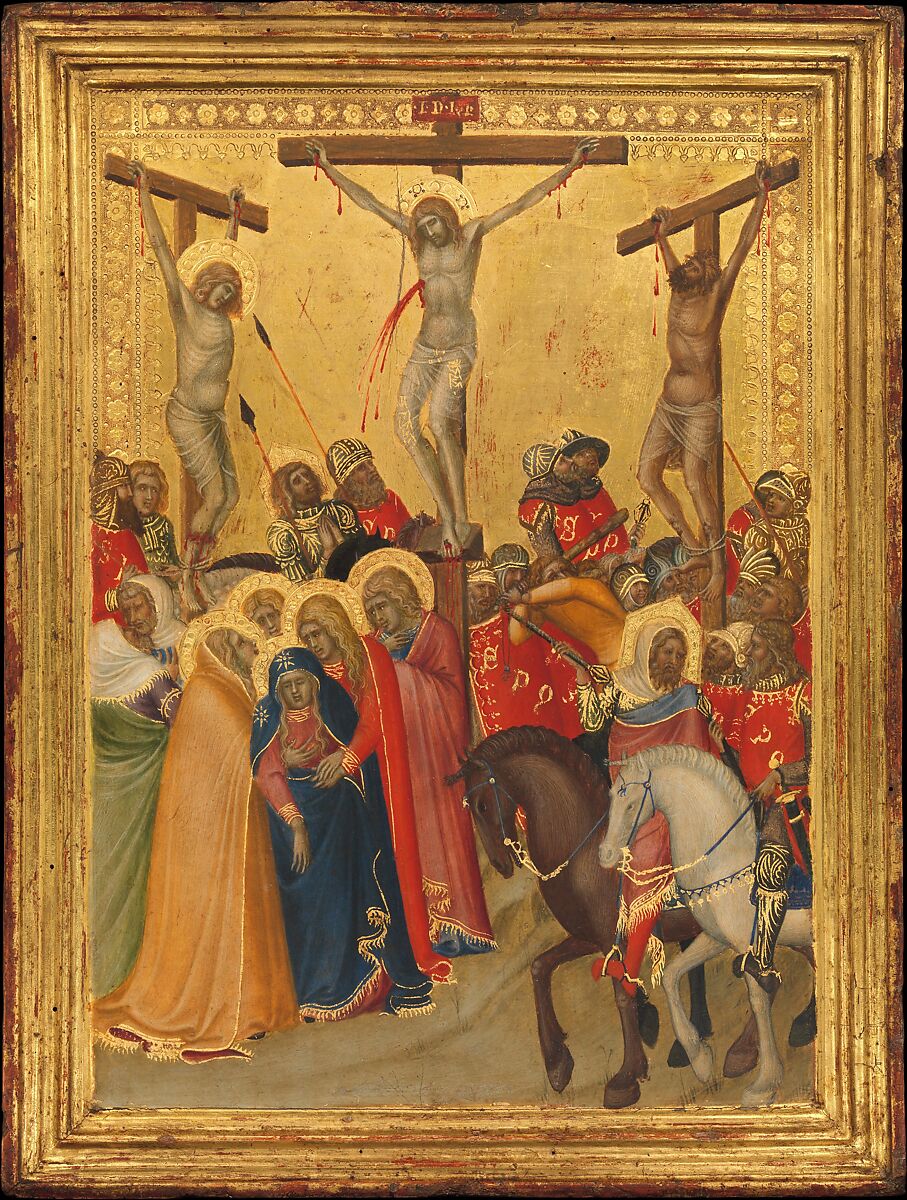
Modern medical analysis of the crucifixion of Jesus not only corroborates the physical realities of Roman execution practices but also reinforces the reliability of the Gospel accounts. By examining the physiological responses and injuries described in the Gospels, scholars and medical experts have found strong alignment with what we know today about human anatomy, trauma, and extreme stress.1 These insights provide a unique lens through which we can appreciate the historical and medical plausibility of the events surrounding Jesus’ death, showing that the Gospel writers recorded details with precise accuracy, even down to rare medical phenomena.
1️⃣ Hematidrosis – Sweating Blood Before Crucifixion
📖 Luke 22:4444 And being in agony he prayed more earnestly; and his sweat became like great drops of blood falling down to the ground. – “And being in anguish, he prayed more earnestly, and his sweat was like drops of blood falling to the ground.”
Medical Corroboration: Hematidrosis is an exceptionally rare condition in which extreme stress can cause a person to sweat blood.2 Luke, being a doctor, records that Jesus experienced this in the Garden of Gethsemane the night before His crucifixion. The Gospel accounts record the crushing weight of what lay ahead — the pain, the shame, and above all, bearing the sin of the world — that pressed down on Jesus so heavily that His body itself broke under the strain. Modern medicine recognizes that hematidrosis can occur under overwhelming fear or anticipation of trauma,2 aligning precisely with the Gospels’ description of Jesus’ anguish in Gethsemane.
2️⃣ Scourging and Blood Loss
📖 Matthew 27:2626 Then he released for them Barabbas, and having scourged Jesus, delivered him to be crucified., Mark 15:1515 So Pilate, wishing to satisfy the crowd, released for them Barabbas, and having scourged Jesus, he delivered him to be crucified. – Jesus was flogged prior to crucifixion.
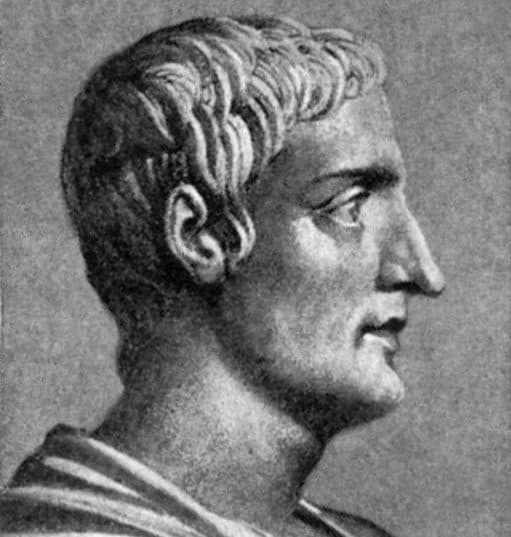
Historical Context: Roman executions often involved scourging with a flagrum: a whip with leather thongs embedded with metal or bone, designed to cause deep lacerations and significant bleeding.3 Ancient sources such as Josephus describe scourging before crucifixion, while Tacitus independently confirms that Jesus was executed under Pontius Pilate.4,5
3️⃣ Carrying the Cross – Physical Trauma
📖 John 19:1717 and he went out, bearing his own cross, to the place called The Place of a Skull, which in Aramaic is called Golgotha. – Jesus carried His cross to Golgotha.
Historical Considerations: The crossbeam (patibulum) likely weighed about 75–125 lbs. The exact route to Golgotha is uncertain, but it is commonly reconstructed as a substantial walk through Jerusalem, which would have placed enormous strain on someone already weakened by scourging and dehydration1
Roman execution accounts confirm that condemned prisoners often carried the crossbeam as a form of public humiliation. Archaeological evidence provides rare confirmation of these practices. In 1968, excavators discovered the remains of a man named Yehohanan (or Jehohanan) in a first-century ossuary near Jerusalem. His right heel bone still had an iron nail embedded in it, and the bent nail preserved rare physical evidence of crucifixion in Roman Judea.6 Soldiers sometimes assisted victims who were physically unable to carry the beam, consistent with Simon of Cyrene helping Jesus (Mark 15:2121 And they compelled a passerby, Simon of Cyrene, who was coming in from the country, the father of Alexander and Rufus, to carry his cross.).1
4️⃣ Nailing to the Cross
📖 Luke 23:3333 And when they came to the place that is called The Skull, there they crucified him, and the criminals, one on his right and one on his left. – “There they crucified him, and the criminals, one on his right and one on his left.”
📖 John 20:2525 So the other disciples told him, “We have seen the Lord.” But he said to them, “Unless I see in his hands the mark of the nails, and place my finger into the mark of the nails, and place my hand into his side, I will never believe.” – “Unless I see in his hands the mark of the nails, and place my finger into the mark of the nails, and place my hand into his side, I will never believe.”
Medical Analysis: Nails were typically driven through the wrists (rather than the palms) to support the body’s weight; the feet were either nailed or tied. Trauma to these areas would sever or compress major nerves, causing excruciating pain, muscle cramps, and difficulty breathing.1
Prophetic Connection: The crucifixion accounts in the Gospels have numerous prophetic parallels to Psalm 22 and Isaiah 53, which were written before the time of Jesus. Isaiah 53:1212 Therefore I will divide him a portion with the many, and he shall divide the spoil with the strong, because he poured out his soul to death and was numbered with the transgressors; yet he bore the sin of many, and makes intercession for the transgressors. is especially relevant to the historical setting, since the suffering servant is said to be “numbered with the transgressors,” a phrase Jesus applies to his own death and one that corresponds closely with his crucifixion between criminals. Psalm 22:1616 For dogs encompass me; a company of evildoers encircles me; they have pierced my hands and feet — has also long been associated with the piercing imagery of crucifixion, though its wording is textually debated as discussed in the Psalm 22 article.
5️⃣ Water and Blood from the Spear
📖 John 19:3434 But one of the soldiers pierced his side with a spear, and at once there came out blood and water. – “But one of the soldiers pierced his side with a spear, and immediately blood and water came out.”
Medical Explanation: The description of blood and water has often been discussed in medical terms as possibly reflecting trauma-related fluid accumulation in the chest or around the heart and lungs. After severe scourging, blood loss, shock, and prolonged crucifixion, such an outcome is medically conceivable. The point is not that modern medicine can reconstruct every detail with certainty, but that John’s description is consistent with a body that has undergone catastrophic physical trauma.
Connection to Accelerated Crucifixion: This detail also fits the broader medical picture presented in the Gospel accounts. A victim already weakened by scourging, exhaustion, and extreme physiological stress could die more quickly than expected, which helps explain Pilate’s surprise in Mark 15:4444 Pilate was surprised to hear that he should have already died. And summoning the centurion, he asked him whether he was already dead..1,3 It also helps explain why Jesus’ legs were not broken. Since He was already dead when the soldiers came to Him, the further step of hastening death by leg-breaking was unnecessary. Rather than conflicting with the narrative, the medical evidence helps clarify it.1
For Christian readers, the detail carries theological significance as well. Jesus’ legs were not broken, and His side was pierced, linking the crucifixion not only to historical and medical reality but also to prophecies explored further in our article: The Prophecy of the Unbroken Bones.
🔍 Summary
-
Hematidrosis in the Garden of Gethsemane aligns with extreme psychological stress.
-
Scourging explains pre-crucifixion trauma, blood loss, and rapid mortality.
-
Carrying the crossbeam and nailing methodology are consistent with Roman practices, historical records, and human anatomy.
-
Piercing by the spear producing blood and water aligns with known post-mortem physiology.
-
Psalm 22 prophetically aligns with crucifixion mechanics, heightening the theological significance.
The crucifixion narrative in the Gospels corresponds closely with historical Roman practices and modern medical understanding. Far from contradicting science, the biblical descriptions reflect accurate physiological and anatomical realities, providing compelling corroboration of the Gospel accounts.
📚 References
Edwards, William D., Wesley J. Gabel, and Floyd E. Hosmer. “On the Physical Death of Jesus Christ.” Journal of the American Medical Association 255, no. 11 (1986): 1455–1463.
Ogbuneke, Juvarez U., and John C. Allen. “Case Report and Review of the Pathophysiology and Therapeutics of Adult Hematohidrosis.” Cureus 15, no. 3 (2023): e36187.
Hengel, Martin. Crucifixion in the Ancient World and the Folly of the Message of the Cross. Philadelphia: Fortress Press, 1977.
Josephus, Flavius. The Jewish War 5.11.1.
Tacitus, Cornelius. Annals 15.44.
Zias, Joseph, and Eliezer Sekeles. “The Crucified Man from Giv'at ha-Mivtar: A Reappraisal.” Israel Exploration Journal 35, no. 1 (1985): 22–27.
Image Credits: Pietro Lorenzetti, The Crucifixion (ca. 1342), via The Metropolitan Museum of Art. Public domain / Met Open Access.

Comments
No comments yet. Be the first to share your thoughts.