
The Ketef Hinnom Silver Scrolls: Earliest Biblical Text
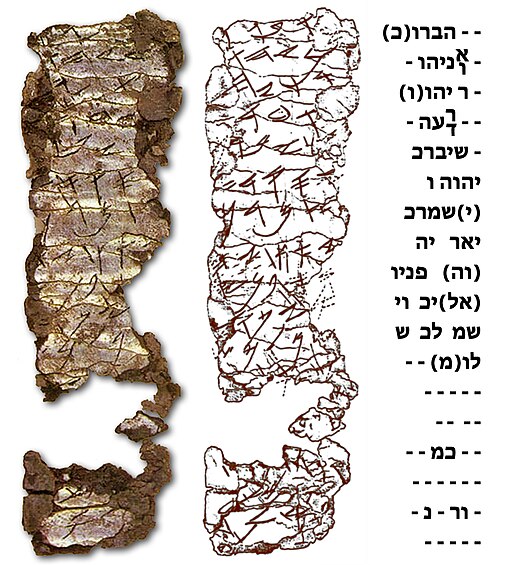
One of the most remarkable archaeological discoveries is the Ketef Hinnom silver scrolls. These tiny scrolls, dating to the 7th century BC, contain the Priestly Blessing from Numbers 6:24–2624 The Lord bless you and keep you; 25 the Lord make his face to shine upon you and be gracious to you;, making them the oldest surviving texts directly quoting the Hebrew Bible.1 Their discovery shows that Israelite religious practices and sacred texts were already established centuries before other manuscripts such as the famous Dead Sea Scrolls.
📜 Discovery and Context
The silver scrolls were uncovered at Ketef Hinnom, a burial site near Jerusalem, during excavations in 1979.2 The amulets are thin silver sheets, about 4 and 10 centimeters long when unrolled, that were rolled tightly into tiny cylinders and likely worn for protection. Each carries a form of the Priestly Blessing:
"The Lord bless you and keep you; the Lord make His face shine upon you and be gracious to you; the Lord lift up His countenance upon you and give you peace." (Numbers 6:24–2624 The Lord bless you and keep you; 25 the Lord make his face to shine upon you and be gracious to you;, NKJV)
While the most prominent text is the Priestly Blessing in Numbers 6:24-2624 The Lord bless you and keep you; 25 the Lord make his face to shine upon you and be gracious to you;, one of the two scrolls (KH1) also contains an inscription with very close parallels to other biblical passages. The specific text on this scroll reads:
"The Lord … who keeps the covenant and the kindness toward those who love him and keep his commandments."
Note that the ellipses (…) in this text indicate that portions of the original inscription are missing or unreadable due to the scrolls' fragile condition.
This phrase has strong parallels to verses from other parts of the Hebrew Bible:
-
Deuteronomy 7:99 Know therefore that the Lord your God is God, the faithful God who keeps covenant and steadfast love with those who love him and keep his commandments, to a thousand generations,: “Know therefore that the Lord your God is God, the faithful God who keeps covenant and steadfast love with those who love him and keep his commandments, to a thousand generations.”
-
Nehemiah 1:55 And I said, “O Lord God of heaven, the great and awesome God who keeps covenant and steadfast love with those who love him and keep his commandments,: “And I said, ‘O Lord God of heaven, the great and awesome God who keeps covenant and steadfast love with those who love him and keep his commandments…’”
-
Daniel 9:44 I prayed to the Lord my God and made confession, saying, “O Lord, the great and awesome God, who keeps covenant and steadfast love with those who love him and keep his commandments,: “I prayed to the Lord my God and made confession, saying, ‘O Lord, the great and awesome God, who keeps covenant and steadfast love with those who love him and keep his commandments…’”
Even in miniature form, the Silver Scroll inscriptions provide clear evidence that key biblical texts were written, circulated, and used in everyday devotion by Israelite communities centuries before other manuscript discoveries.
⚖️ Dating, Debate, and Historical Significance
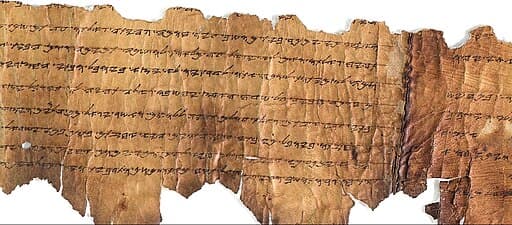
Most scholars date the scrolls to around 600 BC, just before the Babylonians destroyed Jerusalem in 586 BC, which makes them roughly 350 to 650 years older than the Dead Sea Scrolls, depending on the scroll.1 Some scholars initially questioned whether the damaged inscriptions could be dated precisely. However, a 2004 re-examination using high-resolution imaging confirmed both the reading and the date, largely settling the debate.1
Moreover, this confirmed dating is profoundly significant because it delivers a direct and powerful challenge to a key tenet of the Documentary Hypothesis, a prominent theory among biblical critics. This theory, in its classic form, posits that a major portion of the Torah (Genesis-Deuteronomy), known as the Priestly (P) source, was a much later composition, created during the post-exilic period (5th century BC).4
Yet here is a Priestly text, inscribed in silver and worn as an amulet in Jerusalem before the exile even began. That is archaeological proof that this material was not a post-exilic composition: it was already written down, known, and part of everyday faith.3 The theory's defenders now argue that P preserved older material, but that is a retreat from the classic claim. The Priestly texts were not simply late inventions; at least some were already established in Israel's worship before Jerusalem fell.
📚 Textual Similarities and Variants
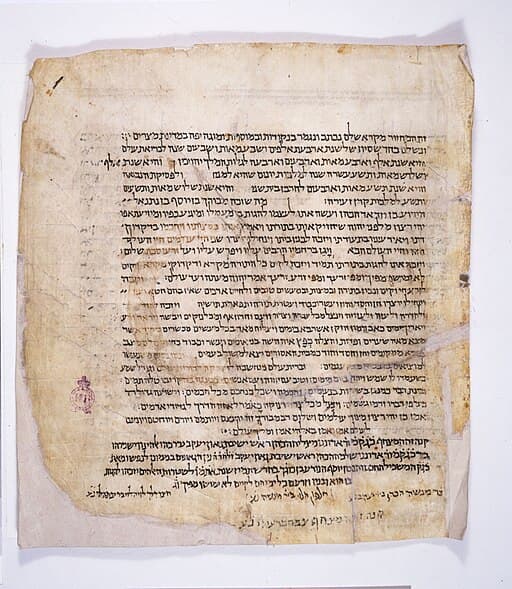
When comparing the Silver Scrolls to later manuscripts, including the Dead Sea Scrolls and the Masoretic Text, they show strong consistency in the wording of the Priestly Blessing. The surviving words match the later Hebrew text extraordinarily closely, with only minor spelling differences and one amulet giving a shorter form of the blessing.1 These are considered insignificant variants because they do not change the core message or theological content of the text. This remarkable stability indicates that textual transmission over centuries preserved the essential wording, supporting the reliability of the Hebrew Bible long before it was codified in later manuscripts.3
💡 Why This Matters for Biblical Reliability
The Silver Scrolls provide several important historical insights:
-
Early Circulation: Key texts like the Priestly Blessing were already in written form and used in daily religious practice centuries before the common era.
-
Textual Continuity: The scrolls show remarkable similarity to later copies, demonstrating a stable textual tradition across more than 1,500 years.
-
Personal Devotion: These amulets were likely worn for protection and were later placed in a tomb, showing that sacred texts were part of everyday life for individuals, not only public worship.
-
Historical Witness: The scrolls confirm that portions of the Hebrew Bible were not later inventions but had an established presence in Israelite society as early as the 7th century BC.
📖 Conclusion: A Window into Ancient Scripture
Though small, the Ketef Hinnom scrolls are a monumental discovery. They confirm that sacred texts were written, circulated, and revered by Israelite communities centuries before the Dead Sea Scrolls, providing the earliest tangible evidence of biblical writings in use. The remarkable consistency with later manuscripts underscores the reliability and longevity of the Hebrew Bible, demonstrating a long history of faithful transmission.
📚 References
Barkay, Gabriel, et al. (2004). "The Amulets from Ketef Hinnom: A New Edition and Evaluation." Bulletin of the American Schools of Oriental Research 334: 41–71.
- The definitive modern study that utilized advanced imaging to confirm the 7th-century BC dating and the legibility of the Paleo-Hebrew text.
Barkay, Gabriel (1992). "The Priestly Benediction on Silver Plaques from Ketef Hinnom in Jerusalem." Tel Aviv 19, no. 2: 139–192.
- The primary excavation report detailing the archaeological context of the burial caves where the scrolls were discovered.
Waaler, Erik (2002). "A Revised Date for Pentateuchal Texts? Evidence from Ketef Hinnom." Tyndale Bulletin 53, no. 1: 29–56.
- Argues that the amulets challenge the trend of dating Pentateuchal texts, including Priestly material, to the exilic or post-exilic period.
Kitchen, K.A. (2003). On the Reliability of the Old Testament. Eerdmans.
- A massive scholarly defense of the Old Testament's historicity, placing the scrolls within the broader context of ancient Near Eastern legal and religious traditions.
McDowell, Josh, and Sean McDowell (2017). Evidence That Demands a Verdict. Thomas Nelson.
- A comprehensive resource that synthesizes archaeological and manuscript evidence for a popular audience.
Image Credits: Photo, drawing, and transcription of silver scroll KH2 by Tamar Hayardeni, via Wikimedia Commons. Used with attribution.
Comments
No comments yet. Be the first to share your thoughts.