
Darkness at the Crucifixion

🌑 Ancient References to Darkness at the Crucifixion
The Gospels of Matthew, Mark, and Luke describe an unusual period of darkness during Jesus’s crucifixion, traditionally dated around 30–33 AD. Their account has been connected to several other ancient sources, including the historian Thallus, the Greek writer Phlegon, the Christian writer Tertullian, and a Chinese imperial chronicle known as the Hou Hanshu. Modern astronomy adds another layer, since the dates of ancient eclipses can now be calculated precisely.
In this article, we will examine how closely these sources correspond to the Gospel accounts and how much historical weight each carries. Africanus’s discussion of Thallus and Tertullian’s appeal to Roman records are especially relevant, while others, such as the Chinese eclipse of AD 31, appear to describe unrelated events.
The table below offers an initial comparison of the accounts, their connection to Jesus, and the limitations that shape how much weight each can carry.
🧠 Can These Be Linked?
| Source | Darkness | Solar Eclipse? | Earthquake? | Link to Jesus? | Notes |
|---|---|---|---|---|---|
| Gospels | ✅ Yes | 🟡 Implied supernatural | ✅ Yes | ✅ Direct | Primary theological account |
| Thallus (via Africanus) | ✅ Yes | ✅ Eclipse claimed | 🟡 Unclear | 🟡 Inferred | Fragmentary, secondary |
| Phlegon (via Eusebius) | ✅ Yes | ✅ Eclipse claimed | ✅ Nicaea quake | 🟡 Inferred | Stated year fits AD 33; eclipse debated |
| Hou Hanshu | 🟡 Eclipse only | ✅ Yes (AD 31) | ❌ None recorded | ❌ No | New-moon eclipse, not at Passover |
| Tertullian | ✅ Yes | 🟡 Says some mistook it for one | ❌ Not mentioned | ✅ Direct | Christian; cites Roman archives |
📖 Examining the Ancient Accounts
While the table highlights several similarities, their significance depends on the context of each account. The Gospels provide the starting point: they describe darkness during Jesus’s crucifixion. The question is how closely the other references match that account and whether they offer independent support.
The Gospel Accounts
Matthew, Mark, and Luke place the darkness during Jesus’s crucifixion and describe it as lasting from the sixth hour to the ninth, roughly noon until three in the afternoon:
Matthew 27:4545 Now from the sixth hour there was darkness over all the land until the ninth hour.: “Now from the sixth hour there was darkness over all the land until the ninth hour.”
Mark 15:3333 And when the sixth hour had come, there was darkness over the whole land until the ninth hour.: “And when the sixth hour had come, there was darkness over the whole land until the ninth hour.”
Luke 23:44–4544 It was now about the sixth hour, and there was darkness over the whole land until the ninth hour, 45 while the sun's light failed. And the curtain of the temple was torn in two.: “It was now about the sixth hour, and there was darkness over the whole land until the ninth hour, while the sun’s light failed. And the curtain of the temple was torn in two.”
The darkness occurs at midday and is accompanied by the tearing of the temple veil, giving the accounts a clear theological significance as well as a specific setting and duration.
Thallus, Preserved by Julius Africanus
The reference to Thallus comes through Julius Africanus, who wrote around AD 221 and challenged an eclipse explanation for the darkness:
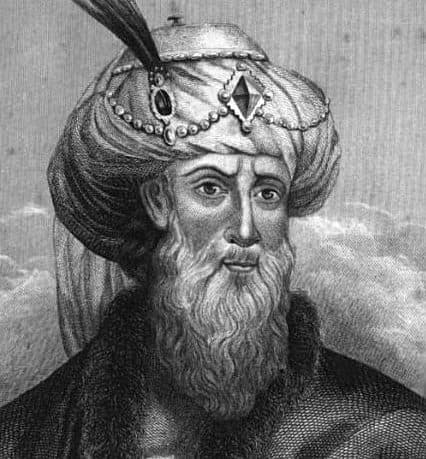
“This darkness Thallus, in the third book of his History, calls, as appears to me without reason, an eclipse of the sun.”1
Thallus’s own text is lost, so the connection to the crucifixion depends on Africanus’s reading of his account. Africanus rejects the eclipse explanation because Passover falls at a full moon, when a solar eclipse is impossible. Thallus’s date is also uncertain because it rests on a corrected numeral in Eusebius’s Chronicle, but if he wrote around AD 50, as some scholars conclude, and Africanus correctly identified the event, his would be the earliest known non-Christian reference to the crucifixion darkness.2
Phlegon of Tralles, Preserved in Eusebius’s Chronicle
Phlegon, a freedman of the emperor Hadrian, compiled his history of the Olympiads in the AD 130s. The passage preserved in Eusebius’s Chronicle describes an extraordinary darkening of the sky together with an earthquake:
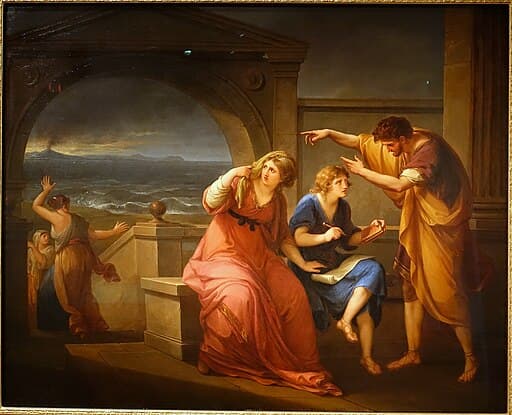
“In the fourth year of the 202nd olympiad, an eclipse of the sun happened, greater and more excellent than any that had happened before it; at the sixth hour, day turned into dark night, so that the stars were seen in the sky, and an earthquake in Bithynia toppled many buildings of the city of Nicaea.”3
The quotation does not connect the event to Jesus or Judea, although its midday darkness and earthquake explain why Christian writers compared it with the crucifixion accounts. Origen also cites Phlegon on an eclipse and great earthquakes under Tiberius,4 while Africanus reports that Phlegon placed a total eclipse “at full moon… from the sixth hour to the ninth.”1
Hou Hanshu, the Book of the Later Han
The Chinese imperial chronicle records a solar eclipse during the reign of Emperor Guangwu:
“On guihai, the last day of the month, the sun was eclipsed.”5
The emperor then left his main hall and suspended his handling of state affairs for five days, issuing an edict that blamed the disaster on his own lack of virtue. The eclipse fell on 10 May AD 31, a date confirmed by modern eclipse calculations,6 but because it occurred at a new moon, it cannot be the darkness at Passover, which falls at a full moon. The record makes no reference to Judea or Jesus, and the Hou Hanshu was compiled by Fan Ye in the fifth century from earlier Han court records.
Tertullian and the Roman Archives
Tertullian offers a different kind of reference in his Apology, written around AD 197 and addressed to the magistrates of the Roman Empire. He explicitly connects the midday darkness to Jesus’s death and appeals to records he says were held by Roman authorities:
“In the same hour, too, the light of day was withdrawn, when the sun at the very time was in his meridian blaze. Those who were not aware that this had been predicted about Christ, no doubt thought it an eclipse. You yourselves have the account of the world-portent still in your archives.”7
Unlike the surviving reports attributed to Thallus and Phlegon, Tertullian’s connection to Jesus is explicit. The uncertainty concerns his appeal to the archives, since no corresponding record survives today.
Astronomy: The Lunar Eclipse of AD 33
Astronomy adds one more notable detail: on the evening of 3 April AD 33, one of the two most widely proposed dates for the crucifixion, a partial lunar eclipse was underway as the moon rose over Jerusalem.8,9 Its timing is an interesting correlation with the proposed crucifixion date, but the Gospels do not mention this lunar eclipse, and it cannot account for their midday darkness. Seven weeks later at Pentecost, Peter quoted Joel’s prophecy: “the sun shall be turned to darkness and the moon to blood” (Acts 2:2020 the sun shall be turned to darkness and the moon to blood, before the day of the Lord comes, the great and magnificent day.). Physicist Colin Humphreys and astronomer Graeme Waddington argue that Peter was referring to signs his listeners had recently witnessed, proposing the eclipse as an explanation for the “moon to blood” language. Astronomer Bradley Schaefer, however, argued that the eclipsed moon would not have been visible at moonrise and that any remaining eclipse effects would probably have gone undetected by the unaided eye.9,10
Taken together, these accounts raise an important question: do they provide genuine historical support for the darkness at Jesus’s crucifixion, or can their similarities be explained another way? To evaluate the evidence fairly, we will first examine the strongest objections, then consider how well the historical evidence answers them.
⚖️ Objections to the Ancient Accounts
The strongest argument against independent corroboration focuses on two questions: whether these sources describe the same event and whether their connection to Jesus comes from the original reports or from later Christian interpretation. The argument can be stated as follows.
-
The Gospels: The Gospel accounts explicitly connect the darkness with Jesus’s death, but they are also theological narratives. Darkness functions symbolically in Jewish prophecy, particularly Amos 8:99 “And on that day,” declares the Lord God, “I will make the sun go down at noon and darken the earth in broad daylight., so the description may reflect literary or theological purposes rather than historical observation.
-
Thallus (via Africanus): Thallus’s original text is lost, and the reference to the darkness comes through the 3rd-century Christian Julius Africanus, who cites him to dispute his explanation. Since Africanus is writing nearly two centuries after the crucifixion and with a clear theological agenda, we cannot be sure what Thallus originally wrote or whether it referred to Judea at all.
-
Phlegon (via Eusebius and others): Phlegon mentions an eclipse and an earthquake, but the surviving quotation does not connect them to Judea or Jesus. Africanus’s version places the eclipse at a full moon, when a solar eclipse is astronomically impossible, and its three hours of darkness far exceed the few minutes of totality at any one location during a solar eclipse. Astronomers have also identified a real total eclipse on 24 November AD 29 that was visible in Bithynia, which may well be the event Phlegon describes.6,11 Later Christian authors may have drawn on an unrelated eclipse report as confirmation of the Gospel account. Historian Henry Innes MacAdam goes further, arguing that the AD 29 eclipse was also the event Thallus described, and that it may have served as a model for Luke’s description of the darkness at the crucifixion.11
-
Hou Hanshu (Chinese annals): The chronicle records a real solar eclipse on 10 May AD 31, but Chinese court historians recorded eclipses routinely, and this one fell at a new moon rather than at Passover. The attempt to connect it with events in Judea rests on coincidence, not evidence.
-
Tertullian: His appeal to Roman archives is explicit, but the records themselves are unavailable. The passage establishes that Tertullian claimed external corroboration, but it does not supply the records needed to verify that claim independently.
From this skeptical perspective, these references do not form an independent line of evidence. The only explicit links between the darkness and Jesus come from Christian writers, and the reports of Thallus and Phlegon survive only in quotations chosen by Christian authors who already believed they described the crucifixion. A single real event, the total eclipse of AD 29, may explain both reports, while the Gospel darkness may reflect the imagery of Amos 8:99 “And on that day,” declares the Lord God, “I will make the sun go down at noon and darken the earth in broad daylight.. On this view, the darkness is best explained as theological symbolism combined with a real eclipse that later writers connected to Jesus’s death.
🌘 Response: The Historical Case for the Darkness
These objections raise important questions about the surviving historical records and the theological significance of the Gospel accounts. Yet the central issue remains whether the darkness was an actual historical event. The Gospels consistently present it as such, while the accounts associated with Thallus, Phlegon, and Tertullian offer potential historical support beyond the biblical narratives. Examining these sources individually helps establish how closely they correspond to the event described at the crucifixion and how much weight each deserves.
The Gospels: Matthew, Mark, and Luke describe the darkness as part of the events surrounding Jesus’s death, giving it a specific setting and a duration from the sixth hour to the ninth. They use the same straightforward narrative language as they do for the other circumstances of the crucifixion, presenting the darkness as an event rather than identifying it as a vision, parable, or figurative description. Its connection to Amos 8:99 “And on that day,” declares the Lord God, “I will make the sun go down at noon and darken the earth in broad daylight., where God speaks of making the sun go down at noon, gives the account theological significance, but an event can occur and also be understood as a fulfillment of prophecy. The Gospel writers therefore describe the darkness as a literal event that also carries prophetic significance.
Thallus: Although we know Thallus’s account only through Julius Africanus, the reference is significant because Africanus names a historian’s History and disputes its eclipse explanation for what he understood to be the crucifixion darkness.1 If Africanus correctly connected Thallus’s report to that event, the passage would preserve a non-Christian attempt to explain the same darkness, showing that it was being discussed outside the Gospel accounts. And if Thallus wrote around AD 50, as some scholars propose, that explanation could have been written within about twenty years of the crucifixion.2
Phlegon: Phlegon’s report invites comparison with the Gospel accounts because it describes darkness at the sixth hour and an earthquake reported in the same year, with the additional detail that stars became visible. The preserved date places these events in AD 32–33, a span that includes AD 33, one of the two most widely proposed dates for the crucifixion.3 However, no total solar eclipse, the only kind that turns day into night, occurred anywhere near the Mediterranean that year, while the AD 29 eclipse was total or nearly so in Bithynia around 11 a.m., close to the sixth hour.6,11 For this reason, MacAdam proposes that the Greek numeral for “fourth” (Δ) is a copying error for “first” (Α), a one-letter change that would place Phlegon’s report in the year of the AD 29 eclipse.11
Two possibilities are worth considering. If MacAdam’s correction is right, Phlegon’s report describes the AD 29 eclipse and has no connection to the crucifixion. If Phlegon accurately dated the event to AD 32–33, the darkness he recorded could not have been caused by an eclipse, which would match the darkness described in the Gospels. As Africanus pointed out, a solar eclipse is impossible at Passover, when the moon is full.1 Phlegon does not mention Judea, so the connection remains an inference, but his report is still a possible parallel to the crucifixion darkness.
Hou Hanshu: The Chinese eclipse recorded in the Hou Hanshu appears unrelated to the darkness described in the Gospels. The eclipse is a genuine, astronomically verifiable event, but it occurred during a new moon in May AD 31, rather than at Passover. Some popular presentations also claim that a follow-up edict, in which the emperor says the people’s faults rest on “one man,” refers to Jesus. However, the emperor was quoting a traditional formula found in Analects 20.1, where a ruler takes responsibility for his people’s faults and refers to himself as “the One Man.”5,12 Neither the eclipse nor the edict establishes a connection to Jesus or the events in Judea, making this account unsuitable as independent evidence for the crucifixion darkness.
Tertullian: Around AD 197, Tertullian wrote a defense of Christianity addressed to the Roman officials who put Christians on trial, describing the darkness at midday and telling them that the account was “still in your archives.”7 By directing his audience to records he said they possessed, he was opening his claim to scrutiny beyond Christian testimony, since those officials could challenge his appeal by consulting their own archives.
Tertullian also says that people who did not know the prophecy assumed it was an eclipse, the same explanation Africanus attributes to Thallus. Decades earlier, Justin Martyr made a similar appeal, telling the emperor that details of Jesus’s crucifixion could be checked in “the Acts of Pontius Pilate,” showing that Tertullian’s appeal to Roman records was part of an earlier Christian defense of the events surrounding Jesus’s life and death.13
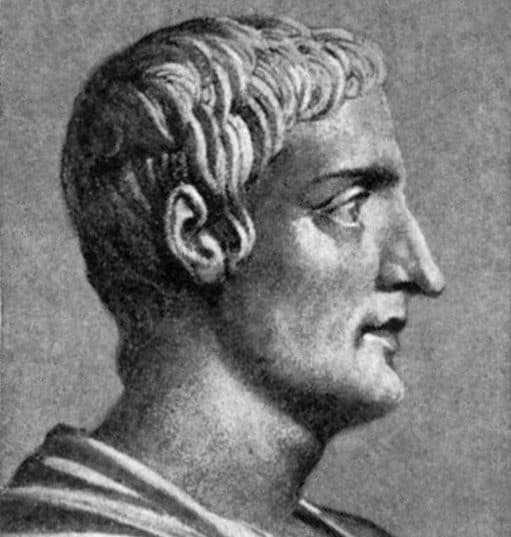
The records Tertullian cited no longer survive, but given how much of Rome’s written record has been lost, that is what we would expect. Even Pilate, who governed Judea for a decade, was known by name only from a small handful of literary sources until 1961, when the Pilate Stone naming him as prefect of Judea was discovered at Caesarea.14 Importantly, Roman historians like Tacitus could still consult “the registers of the Senate” in the early second century,15 and Tertullian was confident enough to make this appeal, which speaks to his credibility. Who would challenge oppressive Roman officials with their own records if those records did not exist?
Each of these historical references carries a different degree of certainty, but together they raise a broader question: Does the surviving evidence provide a credible historical basis for the darkness described in the Gospels?
🌟 Conclusion
The surviving evidence provides a cumulative, circumstantial case for the darkness at Jesus's crucifixion. Thallus may preserve an early non-Christian explanation of the event, Phlegon’s preserved account places an extraordinary midday darkness near the proposed crucifixion date, and Tertullian appeals to Roman archives. Although the strength of these connections varies, they offer meaningful historical support for the Gospel accounts.
The surviving evidence leaves questions unresolved, but there is a credible case that the Gospel writers were describing a real event, one that was known and discussed beyond the Gospels themselves. If the darkness occurred as described, it was a powerful sign of the significance of the crucifixion: an event that, historically and spiritually, changed the course of the world.
📚 References
Julius Africanus, Chronography, fragment 18, preserved by George Syncellus, a chronicler of the ninth century. In Ante-Nicene Fathers, vol. 6. New Advent – Quotes Thallus’s eclipse explanation of the darkness and rejects it, and reports Phlegon’s eclipse.
Van Voorst, Robert E. Jesus Outside the New Testament: An Introduction to the Ancient Evidence. Grand Rapids, MI: Eerdmans, 2000, pp. 20–23. – Discusses Thallus’s date and the evidence that the darkness tradition was known outside Christian circles.
Eusebius, Chronicle, Olympiad 202, in Jerome’s Latin edition. English translation (2005) at tertullian.org – Preserves Phlegon’s report of the eclipse and the earthquake at Nicaea.
Origen, Against Celsus 2.33, 2.59. New Advent – Cites Phlegon on the eclipse and earthquakes under Tiberius.
Fan Ye, Hou Hanshu (Book of the Later Han), juan 1B, Annals of Emperor Guangwu, Jianwu 7. Chinese text – Records the solar eclipse of AD 31 and the emperor’s edict.
Espenak, Fred, and Jean Meeus. Five Millennium Canon of Solar Eclipses: −1999 to +3000. NASA, 2006. Catalog for AD 1–100 – Confirms the total eclipse of 24 November AD 29 and the annular eclipse of 10 May AD 31.
Tertullian, Apology 21. In Ante-Nicene Fathers, vol. 3. New Advent – Describes the midday darkness and points Rome’s magistrates to their own archives.
Espenak, Fred, and Jean Meeus. Five Millennium Canon of Lunar Eclipses: −1999 to +3000. NASA, 2009. Catalog for AD 1–100 – Confirms the partial lunar eclipse of 3 April AD 33.
Humphreys, Colin J., and W. Graeme Waddington. “Dating the Crucifixion.” Nature 306 (1983): 743–746. Nature – Argues the lunar eclipse of 3 April AD 33 was visible from Jerusalem at moonrise.
Schaefer, Bradley E. “Lunar Visibility and the Crucifixion.” Quarterly Journal of the Royal Astronomical Society, vol. 31 (1990): 53–67. ADS – Argues that the eclipsed moon would have been invisible at moonrise in Jerusalem and that eclipse effects would probably have gone undetected by the unaided eye.
MacAdam, Henry Innes. “SKOTOS EGENETO: Luke 3:1; 23:44 and Four First Century Solar Eclipses at Antioch.” Irish Biblical Studies 21.1 (1999): 2–39. Article PDF – Discusses the identification of Phlegon’s report with the AD 29 eclipse and proposes changing the fourth Olympiad year to the first.
Confucius, Analects 20.1. Translated by James Legge. English translation; Chinese text. – Contains the expression used in the emperor’s edict, placing responsibility for the people’s faults on their ruler.
Justin Martyr, First Apology 35, 48. In Ante-Nicene Fathers, vol. 1. New Advent – Twice points the emperor to “the Acts of Pontius Pilate” to confirm events of Jesus’s life and crucifixion.
Ancient Inscriptions from Israel/Palestine, “The Portrayals of Pilate.” Brown University. IIP – Describes the 1961 discovery of the Pilate inscription at Caesarea, before which Pilate was a “shadowy figure” mentioned in a small handful of literary sources.
Tacitus, Annals 15.74. Translated by Alfred John Church and William Jackson Brodribb. Perseus – Cites “the registers of the Senate” as a source for events under Nero.
Image Credits: Gustave Doré. Wikimedia Commons. Public Domain. Available here.
Comments
No comments yet. Be the first to share your thoughts.