
Apostles’ Martyrdom: Evidence of Early Conviction
People often die for what they believe to be true, but rarely — if ever — for what they know to be a lie. This simple insight forms a powerful starting point for evaluating the apostles' testimony for the resurrection. The men and women closest to Jesus would have known if his resurrection was fabricated, yet they chose to proclaim the Gospel despite immense persecution, imprisonment, and ultimately death proclaiming Jesus as LORD.
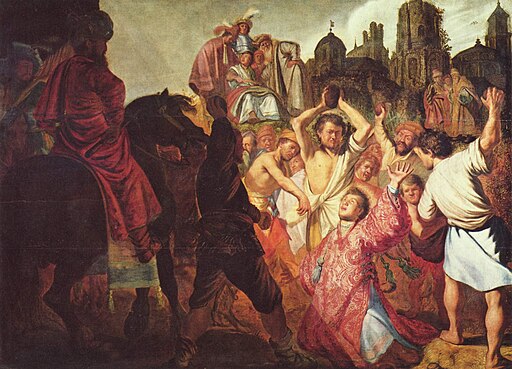
Even more striking is that some of the earliest leaders were once opponents or skeptics: Paul, who had persecuted Christians and approved Stephen’s stoning, and James, the brother of Jesus, who initially doubted his claims. Yet both became bold witnesses of the resurrection, willingly enduring persecution and death for what they claimed to have personally experienced.
The question arises: why would anyone die for a lie they knew to be false? Historical reasoning offers a simple answer: people do not willingly face torture and execution for something they know is untrue. The apostles’ martyrdoms, therefore, serve as a compelling circumstantial indicator that their testimonies were sincere and rooted in actual events.
⚖️ Circumstantial Evidence and Historical Reasoning
While we don't have recordings of every apostle’s thought process, circumstantial evidence can be remarkably insightful. Historians consider three key factors when evaluating the evidence:
-
Motivation – Most martyrs die for what they genuinely believe. To willingly die for a known falsehood is exceedingly rare.
-
Consistency of testimony – Across decades, the apostles maintained a unified message about Jesus’ resurrection, even under threat of imprisonment and death.
-
Conversion of skeptics – Former enemies and doubters became primary witnesses, suggesting an extraordinary event compelled their transformation.
These elements collectively provide strong circumstantial evidence for the historical claims of the apostles.
✝️ Paul: From Persecutor to Apostle
Paul of Tarsus exemplifies the improbability of dying for a known lie. His life shows a dramatic transformation from the highest of his class — a leading Pharisee and expert in Jewish law (Acts 22:33 “I am a Jew, born in Tarsus in Cilicia, but brought up in this city, educated at the feet of Gamaliel according to the strict manner of the law of our fathers, being zealous for God as all of you are this day.; Philippians 3:5–65 circumcised on the eighth day, of the people of Israel, of the tribe of Benjamin, a Hebrew of Hebrews; as to the law, a Pharisee; 6 as to zeal, a persecutor of the church; as to righteousness under the law, blameless.) — to a life of homelessness, continual imprisonment, and ultimately martyrdom for his faith in Christ. This begs the question: if Saul’s experience on the road to Damascus of being blinded and hearing the voice of Jesus (Acts 9:1–191 But Saul, still breathing threats and murder against the disciples of the Lord, went to the high priest 2 and asked him for letters to the synagogues at Damascus, so that if he found any belonging to the Way, men or women, he might bring them bound to Jerusalem.) was not true, why would he invent such a story? To go from persecuting Christians to willingly suffer and die for the faith is a remarkable transformation best explained by the reality of his testimony. Let's dive into Paul's testimony:
Acts 7:5858 Then they cast him out of the city and stoned him. And the witnesses laid down their garments at the feet of a young man named Saul. – Participation in Stephen’s Stoning
Saul is present at Stephen’s execution and is identified in the account as the young man overseeing the witnesses’ garments, showing his early opposition to the church.
Acts 8:11 And Saul approved of his execution. And there arose on that day a great persecution against the church in Jerusalem, and they were all scattered throughout the regions of Judea and Samaria, except the apostles. – Zealous Persecutor of the Church
Saul is explicitly described as approving Stephen’s death, and the resulting persecution scatters the Jerusalem church.
Acts 9:1–191 But Saul, still breathing threats and murder against the disciples of the Lord, went to the high priest 2 and asked him for letters to the synagogues at Damascus, so that if he found any belonging to the Way, men or women, he might bring them bound to Jerusalem. – Road to Damascus
This account summarizes Saul’s dramatic conversion after the Damascus road encounter, the event that transformed him from persecutor to witness. Read the full text here for additional context.
Acts 22:6–166 “As I was on my way and drew near to Damascus, about noon a great light from heaven suddenly shone around me. 7 And I fell to the ground and heard a voice saying to me, ‘Saul, Saul, why are you persecuting me?’ – Paul Testifies of His Conversion
Paul’s own retelling emphasizes that the vision was central to his testimony and remained important enough to repeat before later audiences.
2 Corinthians 11:23–2723 Are they servants of Christ? I am a better one—I am talking like a madman—with far greater labors, far more imprisonments, with countless beatings, and often near death. 24 Five times I received at the hands of the Jews the forty lashes less one. – Persecution for the Faith
After conversion, Paul endured repeated imprisonment, beatings, and life-threatening hardship for the message he proclaimed.
2 Timothy 4:6–76 For I am already being poured out as a drink offering, and the time of my departure has come. 7 I have fought the good fight, I have finished the race, I have kept the faith. – Facing Death with Faith
Paul’s final words show a man facing death with confidence that he had remained faithful to the end.
Critical Analysis: Paul’s conversion and subsequent martyrdom illustrate that he would have known if the resurrection were false. His unwavering commitment, repeated persecution, and ultimate death strongly indicate the sincerity, reliability, and historicity of his testimony.
🔹 Thomas and Physical Verification
The Gospels depict a culture of evidence among the apostles. Thomas, initially skeptical of the resurrection, demanded tangible proof: he wanted to touch Jesus’ wounds (John 20:24–2924 Now Thomas, one of the twelve, called the Twin, was not with them when Jesus came. 25 So the other disciples told him, “We have seen the Lord.” But he said to them, “Unless I see in his hands the mark of the nails, and place my finger into the mark of the nails, and place my hand into his side, I will never believe.”). His insistence shows that the apostles were not gullible; they required physical verification before belief.
James, the brother of Jesus, provides another example. Initially a skeptic (John 7:55 For not even his brothers believed in him.), James did not believe Jesus was the Messiah before his death and resurrection. Yet after encountering the risen Christ (1 Corinthians 15:77 Then he appeared to James, then to all the apostles.), he became a leading figure in the Jerusalem church, ultimately giving his life for the faith (Josephus and early Christian tradition suggest he was martyred around AD 62).
Both Thomas and James illustrate that even initial disbelief did not prevent eventual conviction, and that conviction came only after personal encounters with physical evidence. Once convinced, they embraced the message fully, despite enormous risks, highlighting why the apostles’ claims carry substantial historical weight.
🏛️ Martyrdom Across the Early Church
Historical records and early Christian tradition indicate that many apostles and early believers faced violent deaths for their faith:
-
Stephen – First Christian martyr, stoned for preaching Christ (Acts 7).
-
Peter – Tradition, supported by early Christian writers like Clement of Rome and Tertullian, holds that Peter was crucified upside down in Rome under Emperor Nero around 64 AD. He is said to have requested this form of death, feeling unworthy to die in the same manner as Jesus.6
-
Paul – After his missionary journeys, Paul was imprisoned and later beheaded in Rome under Nero around 67 AD. His Roman citizenship spared him the more brutal death of crucifixion. His letters and Acts attest to his frequent imprisonments and sufferings, while tradition preserves the details of his execution.6
-
James, the brother of Jesus – Historically attested by Josephus and early Christian tradition, he was martyred around 62 AD.5
-
James, son of Zebedee – Executed by Herod Agrippa I (Acts 12:1–21 About that time Herod the king laid violent hands on some who belonged to the church. 2 He killed James the brother of John with the sword,).
-
Thomas and other apostles – Tradition and early church writings suggest widespread persecution, with deaths by crucifixion, beheading, or stoning.
While some accounts rely more heavily on tradition than contemporary documentation, the early sources and consistency of reports make it likely that these martyrdoms reflect historical reality. The breadth and consistency of martyrdom across the early church make it highly improbable that these followers were knowingly promoting a falsehood.
🔎 Why This Matters Historically
The historical significance of the apostles' martyrdoms lies in their role as a powerful, albeit indirect, form of evidence. The core of this argument, known as the martyrdom argument, asserts that it is highly improbable for a large group of people to willingly endure torture and death for a lie they fabricated themselves. While not direct proof of the resurrection, it serves as a strong circumstantial indicator of the apostles' sincere belief in the truthfulness of their claims.
This argument is particularly compelling because it addresses a fundamental question in historical analysis: motivation. Historians and psychologists agree that self-preservation is a primary human instinct. Therefore, when individuals, and especially a cohesive group, act in direct opposition to this instinct by embracing suffering and death, it demands a credible explanation. The apostles' actions including enduring extreme hardship and persecution for their message suggest that they were fully convinced of its truth.
Furthermore, this is not just about a few individuals dying for their beliefs, but about the very foundation of a new religious movement. The willingness of the early Christian leaders to face death for their testimony provided a powerful and persuasive example to others. It demonstrated their conviction and contributed significantly to the rapid spread of Christianity in the Roman Empire.
📝 Critical Analysis
The case for the apostles’ martyrdoms as historical evidence for the resurrection can be strengthened by directly engaging the most common counterarguments.
The Hallucination or Group Delusion Theory
Some suggest the resurrection accounts were the result of hallucinations or mass delusions. While critics sometimes point to "shared visions" in other religions (like Marian apparitions), those events are fundamentally different. Most shared visions are just that—visual. People see a light or a figure from a distance. However, the apostles claimed a physical verification that is unheard of in group psychology. They didn't just see a ghost; they touched his wounds, walked with him, and ate breakfast with him over forty days.
Psychologically, shared hallucinations are not a recognized phenomenon, especially tactile ones (touching and feeling). To claim the resurrection was a hallucination, critics would essentially have to appeal to a "psychological miracle" to explain away a physical one, which is a self-defeating argument.
This theory also fails to account for two major problems:
-
The Skeptics: Hallucinations are usually "wish-fulfillments" for people who desperately want to see someone. This doesn't explain Paul, who was a violent enemy, or James, who was a hardened skeptic. They weren't "looking" for Jesus; they were convinced by an event so real it changed their lives forever.
-
The Empty Tomb: A hallucination stays in your mind; it doesn't empty a grave. If the apostles were just seeing things, the Roman or Jewish authorities could have simply produced the body to prove them wrong.
The “Died for a Lie” Objection
It is true that people sometimes die for sincerely held beliefs that turn out to be false. But the apostles’ situation is fundamentally different: they claimed firsthand experience of the resurrection of Jesus Christ. They were not merely believers in a story told by others; they were witnesses themselves. They would have known if it was false, yet they were willing to endure imprisonment and death for what they proclaimed. This makes the objection 'that people die for lies' all but inapplicable here.
The “Legend and Exaggeration” Theory
Some argue that stories of the apostles’ martyrdoms were later embellishments designed to elevate their status. While it is possible that some traditions grew in detail over time, the core facts of martyrdom for key figures like Peter, James, and Paul are corroborated by multiple early sources, including those outside the New Testament. For instance, the Roman historian Tacitus (c. 115 AD) notes the persecution of Christians under Nero, aligning historically with the accounts of Peter and Paul in Rome.
Comparative Perspective: Eyewitness Testimony
The New Testament is unusual among major world religions because it claims multiple eyewitnesses to its central event. Paul, in 1 Corinthians 15:3–83 For I delivered to you as of first importance what I also received: that Christ died for our sins in accordance with the Scriptures, 4 that he was buried, that he was raised on the third day in accordance with the Scriptures,, refers to over 500 witnesses of the risen Christ, many of whom were still alive at the time of his writing. No other major religious tradition is built on this kind of firsthand, verifiable testimony from multiple independent individuals, making Christianity’s claim uniquely anchored in historical observation rather than legend or philosophical assertion.
Strength of Historical Inference
Taken together, these factors form a robust argument:
-
Multiple independent witnesses in different locations
-
Physical evidence demanded by skeptics (Thomas, James, Paul)
-
Willingness to endure extreme persecution and death
-
Corroboration by non-Christian historical sources
🔹 Conclusion
The apostles’ martyrdoms, particularly those of former skeptics like Paul, Thomas, and James, offer powerful circumstantial evidence for the resurrection of Jesus. Their unwavering conviction, insistence on physical verification, and willingness to endure homelessness, imprisonment, and ultimately death point to a reality they were fully persuaded had occurred. Historical reasoning shows that the convergence of these martyrdoms, their transformation from skepticism to conviction, and their consistent testimony provides a highly persuasive inference for the resurrection. Considered alongside prophetic fulfillment (e.g., Isaiah 53), archaeological discoveries, manuscript evidence, and other corroborating data, the apostles’ experiences form an extremely convincing, comprehensive, and multi-faceted case for both the reliability of the New Testament and the historicity of the resurrection.
📚 References
Habermas, Gary R. The Minimal Facts Approach to the Resurrection of Jesus. Southeastern Theological Review, 2012. Available here.
- Outlines the "Minimal Facts" methodology, which uses data points accepted by the vast majority of scholars—including skeptics—to evaluate the Resurrection.
Lüdemann, Gerd.* The Resurrection of Jesus: History, Experience, Theology.* Fortress Press, 1994.
- Source for the "Psychological/Vision" theory; Lüdemann represents the leading skeptical response to the historical data.
Wright, N.T. The Resurrection of the Son of God. Fortress Press, 2003.
- A landmark study analyzing ancient views of life after death and arguing that the Resurrection is the best historical explanation for the rise of Christianity.
Tacitus, Cornelius. Annals, Book XV, Chapter 44. Written 116 AD.
- A critical Roman source that provides early, non-Christian confirmation of Jesus' execution under Pontius Pilate and the "mischievous superstition" of his followers.
Josephus, Flavius.* Antiquities of the Jews.* Written c. 93–94 AD.
-
Key passages: Book 18.3.3 (Testimonium Flavianum), Book 20.9.1 (James, brother of Jesus), Book 18.5.2 (John the Baptist). Online text available here.
-
A primary Jewish source that mentions Jesus, John the Baptist, and the execution of James, the brother of Jesus.
-
Clement of Rome. 1 Clement. Written c. 96 AD.
- One of the earliest Christian writings outside the New Testament, providing a 1st-century witness to the deaths of Peter and Paul.
Eusebius of Caesarea. Church History. Written c. 325 AD.
- The foundational work for early church history, preserving accounts of the apostles' lives and martyrdoms that might otherwise have been lost.
Image Credit: Rembrandt van Rijn. The Stoning of Saint Stephen. 1625. Wikimedia Commons. Available here.
This is a wonderful and comprehensive overview of the reliability of the gospel message. It's particularly compelling that people died for their beliefs. Nice work!