
Historical Evidence Atlas
Interactive Historical Evidence Atlas

Map data includes © OpenStreetMap contributors.
How to use the atlas
- Explore the mapSelect a find to read its evidence and sources.
- Take a journeyFollow a guided route through related finds.
- Compare datesUse the time bar or open the timeline.
Evidence & methodology
Each atlas node connects to a full historical article and records a date range, location, evidence class, concise claim, and any important caution about interpretation.
- Evidence typesArchaeological finds, manuscript evidence, non-Christian sources, and later testimony are labeled separately rather than treated as interchangeable forms of evidence.
- Dates and uncertaintyApproximate or disputed dates and locations are identified as such. The linked articles provide sources, context, and interpretive limits that cannot fit on the map.
- Scope of claimsThe atlas organizes evidence for comparison; no single artifact or text is presented as proving every historical or theological claim.
About the Jerusalem view
Jerusalem opens with a reconstruction around AD 30. Excavated sites and ancient descriptions anchor the Temple, palace area, pools and early wall circuits. Open the atlas key’s Jerusalem layout & sources for the evidence behind each feature. The proposed Second Wall is dashed; houses and lost upper structures are illustrative. Modern terrain has 2.6 times vertical exaggeration and does not reproduce every ancient ground level.
Switch to 1865 to compare Charles Wilson’s survey from the Eran Laor Collection, National Library of Israel (public domain). This restores the Ottoman walls, survey-derived roofscape and illustrative Jaffa Gate district while retaining the camera position and geographic anchors.
The nine article entries span several centuries. Five finds use site-area markers; textual accounts use source-based or traditional locations where recorded. The five hundred has a labelled display stand with no location dot. Their sculptures illustrate evidence entries rather than buildings in the reconstructed city.
Atlas evidence cards
Atlas Track
Archaeology
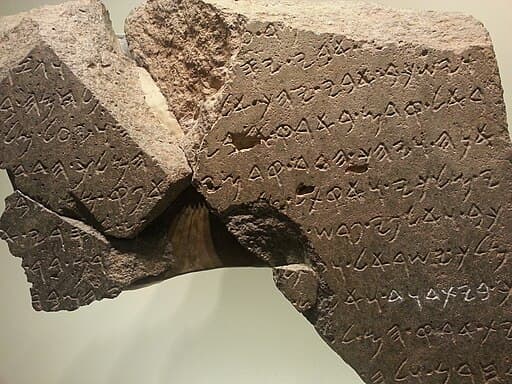
9th century BC / Israel
Discovered 1993-1994 / Tel Dan, northern Israel
Tel Dan Stele
The inscription is a major extra-biblical witness associated with the House of David.
Read full article (opens in a new tab)Evidence note
Found at Tel Dan, the Aramaic inscription is widely known for its reference often read as the House of David.
The inscription supports memory of a Davidic dynasty; it does not by itself reconstruct David's whole life or reign.
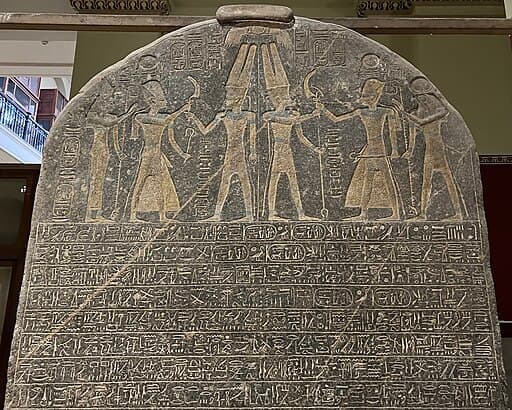
c. 1208 BC / Egypt
Discovered 1896 / Merneptah's mortuary temple, west-bank Thebes
Merneptah Stele
The stele contains the earliest widely recognized extra-biblical reference to Israel.
Read full article (opens in a new tab)Evidence note
Merneptah's victory inscription names Israel among peoples in Canaan, placing Israel in the land by the late thirteenth century BC.
It confirms Israel's presence, not the full details of Israel's origin, population size, or political structure.
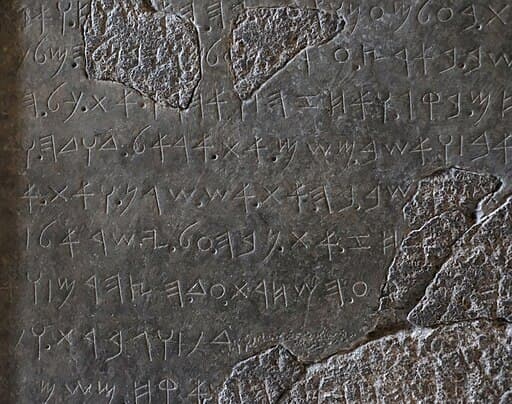
9th century BC / Jordan
Discovered 1868 / Dhiban, Jordan
Mesha Stele
The Moabite Stone gives an external inscriptional window into Israel and Moab's shared world.
Read full article (opens in a new tab)Evidence note
The inscription of King Mesha describes Moab, Israel, Omri, and regional conflict from a neighboring nation's perspective.
It is royal propaganda from Moab's side, so it should be read as an ancient political text rather than a neutral chronicle.
Atlas Track
Manuscripts
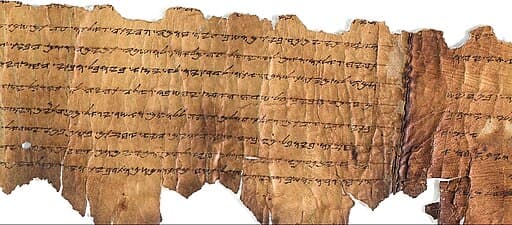
c. 250 BC-AD 68 / West Bank
Discovered 1947-1956 / Qumran caves, Judean Desert
Dead Sea Scrolls
Hidden in caves near the Dead Sea, these manuscripts take readers back more than a thousand years before the great medieval Hebrew codices.
Read full article (opens in a new tab)Evidence note
Hidden in caves near the Dead Sea, these manuscripts take readers back more than a thousand years before the great medieval Hebrew codices. The Great Isaiah Scroll preserves Isaiah 53 from before the time of Jesus, allowing readers to examine both the transmission of Scripture and a passage central to Christian claims about prophecy.
They do not show that the text was copied without any variation. They show something more realistic and historically valuable: a broad pattern of careful transmission, alongside the kinds of textual variants we would expect from ancient manuscripts.
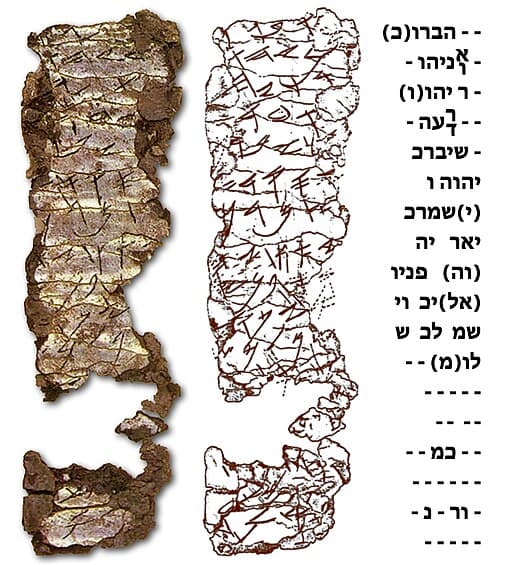
Late 7th-early 6th century BC / Israel
Discovered 1979 / Ketef Hinnom, Jerusalem
Ketef Hinnom Silver Scrolls
These tiny silver amulets preserve one of the earliest known biblical-text witnesses.
Read full article (opens in a new tab)Evidence note
The scrolls include wording closely related to the priestly blessing in Numbers, anchoring part of the biblical textual tradition in the late First Temple period.
They are not complete Bible manuscripts, but they are still incredibly important. These tiny silver amulets preserve biblical wording from centuries before the Dead Sea Scrolls, making them one of the earliest witnesses to Scripture we have.
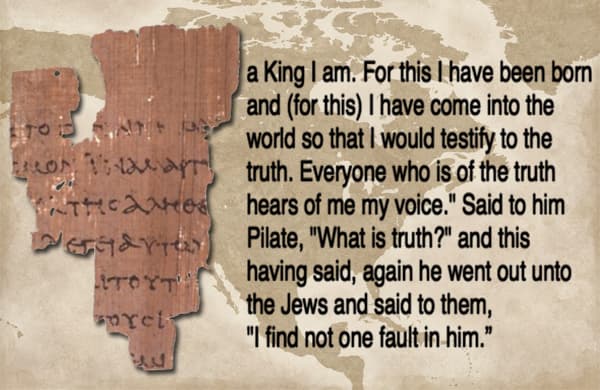
2nd-3rd century AD / Egypt (representative)
Published and studied across the 20th century / Egyptian manuscript finds (representative: Oxyrhynchus)
Early New Testament Papyri
From the small scrap known as P52 to substantial portions of the Gospels and Paul’s letters, early papyri preserve New Testament writings copied in the first centuries of Christianity.
Read full article (opens in a new tab)Evidence note
From the small scrap known as P52 to substantial portions of the Gospels and Paul’s letters, early papyri preserve New Testament writings copied in the first centuries of Christianity. The close agreement between P75 and the later Codex Vaticanus provides detailed evidence of the Gospel text’s preservation across generations of transmission.
These witnesses range from small fragments to substantial portions of books; their surviving contents and dates differ.
Atlas Track
External Sources
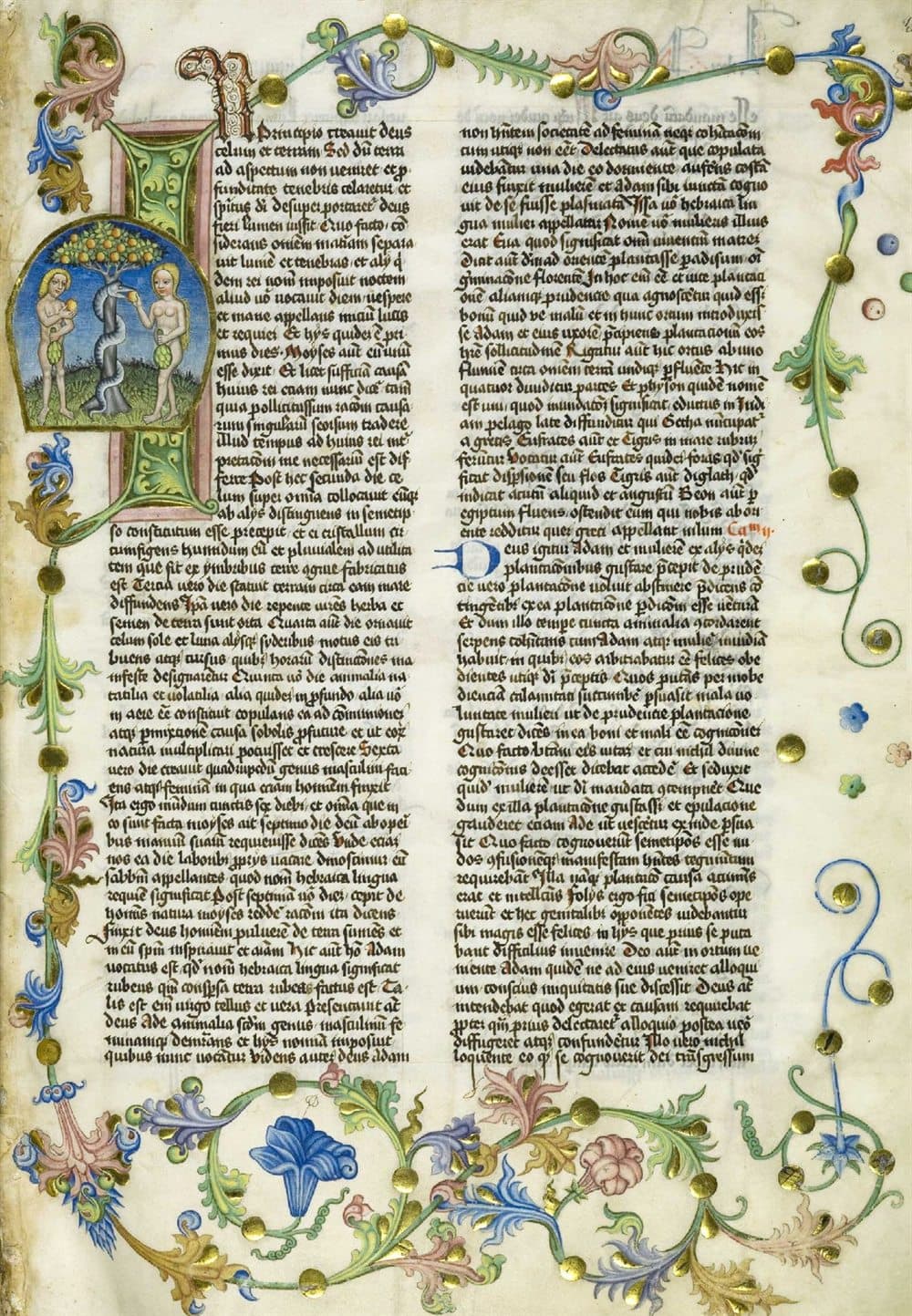
c. AD 93-94 / Italy
Preserved in manuscript tradition / Rome, Roman Empire
Josephus on Jesus
Josephus is a major Jewish non-Christian witness to Jesus and the early Christian movement.
Read full article (opens in a new tab)Evidence note
Writing in Antiquities, Josephus gives a first-century Jewish historian's reference to Jesus, James, and the movement surrounding them.
The strongest claims here are widely accepted: Josephus knew of Jesus, James, and the movement connected to him. The debate is mainly over the wording of the longer Testimonium passage, especially the lines that sound unusually favorable to Jesus. That debate affects the exact wording, not the broader value of Josephus as a non-Christian witness.
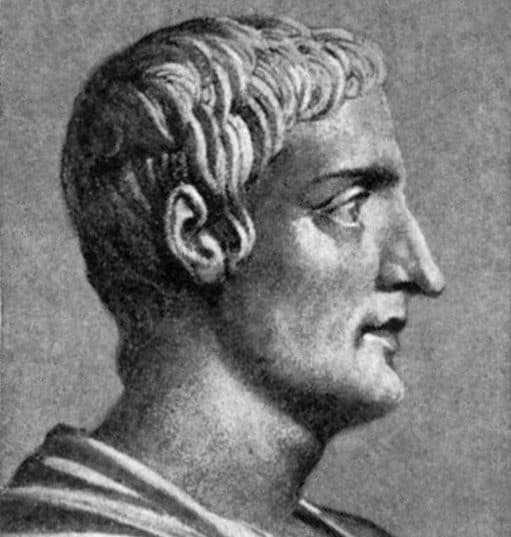
c. AD 115-117 / Italy
Preserved in manuscript tradition / Rome, Roman Empire
Tacitus on Jesus
Tacitus gives a hostile Roman reference to Christ, execution under Pilate, and Christians in Rome.
Read full article (opens in a new tab)Evidence note
In Annals, Tacitus connects the name Christian to Christus and places his execution during Tiberius' reign under Pontius Pilate.
Tacitus writes with contempt for Christianity, yet records Jesus’ execution and the persecution of his followers. His hostility makes this especially valuable as testimony from a Roman historian with no interest in defending the Christian faith.
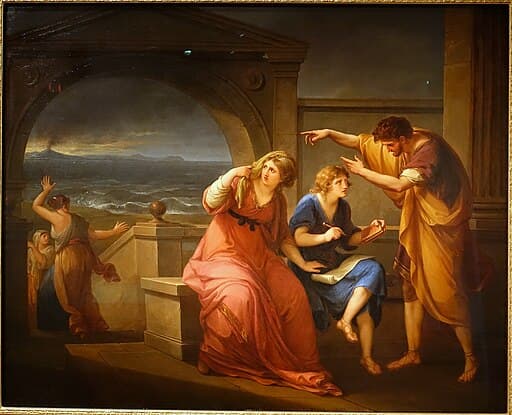
c. AD 111-113 / Turkey
Preserved in Pliny's letter collection / Bithynia-Pontus, Asia Minor
Pliny the Younger
Pliny gives outside testimony about Christian worship practices and Roman administrative concern.
Read full article (opens in a new tab)Evidence note
Pliny's letter to Trajan describes Christians meeting, singing to Christ, and pledging ethical conduct in the early second century.
Pliny reports what he observed and investigated as a Roman governor. His letter is valuable evidence for early Christian worship and public visibility, but it does not independently establish the beliefs Christians were confessing.
Atlas Track
Testimony
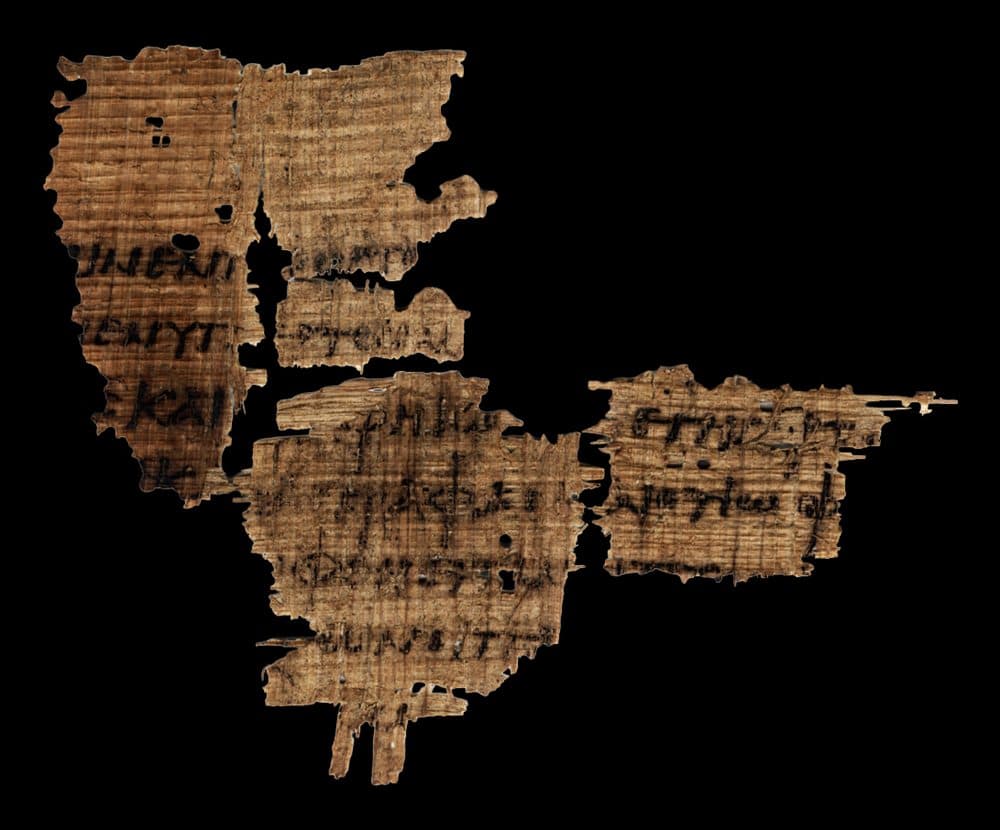
Creed cited c. AD 55 / Israel
Cited by Paul, c. AD 55 / Display position only; event location not recorded
The 500 Eyewitnesses (1 Corinthians 15)
Passing on an earlier resurrection tradition, Paul reports that Jesus appeared to more than 500 people at once and adds that most were still alive.
Read full article (opens in a new tab)Evidence note
Passing on an earlier resurrection tradition, Paul reports that Jesus appeared to more than 500 people at once and adds that most were still alive. His letter places the claim within living memory of Jesus’ death, alongside appearances to Peter, James and the other apostles.
Paul preserves early resurrection testimony and reports an appearance to more than 500 people, most of whom he says were still alive. The 500 are not individually identified, and no independent account verifies this particular appearance. The passage establishes an early claim, not 500 separately documented testimonies.
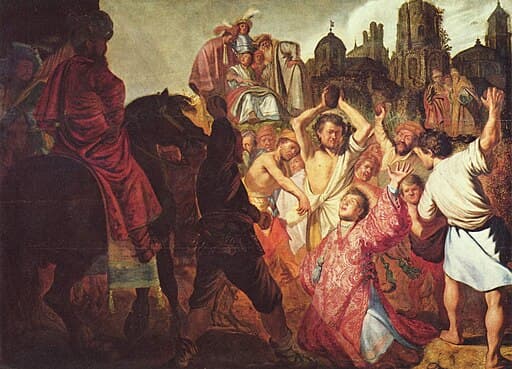
c. AD 30-70 / Israel
Earliest Christian proclamation / Earliest preaching, Jerusalem
The Apostles' Testimony
Peter proclaimed that he had seen Jesus alive after the crucifixion.
Read full article (opens in a new tab)Evidence note
Peter proclaimed that he had seen Jesus alive after the crucifixion. Thomas, Jesus’ brother James and Paul also became witnesses, despite their earlier doubts or opposition. Their testimony helped launch a movement whose early leaders endured persecution and ultimately martyrdom. Their radically changed lives and costly convictions form part of the historical case for the resurrection.
Paul’s own letters attest to suffering, and early Christian sources describe Peter and Paul’s deaths. Costly commitment supports an inference of sincerity; it does not by itself establish what caused their experiences. The sources do not document every apostle being offered freedom in exchange for recanting.
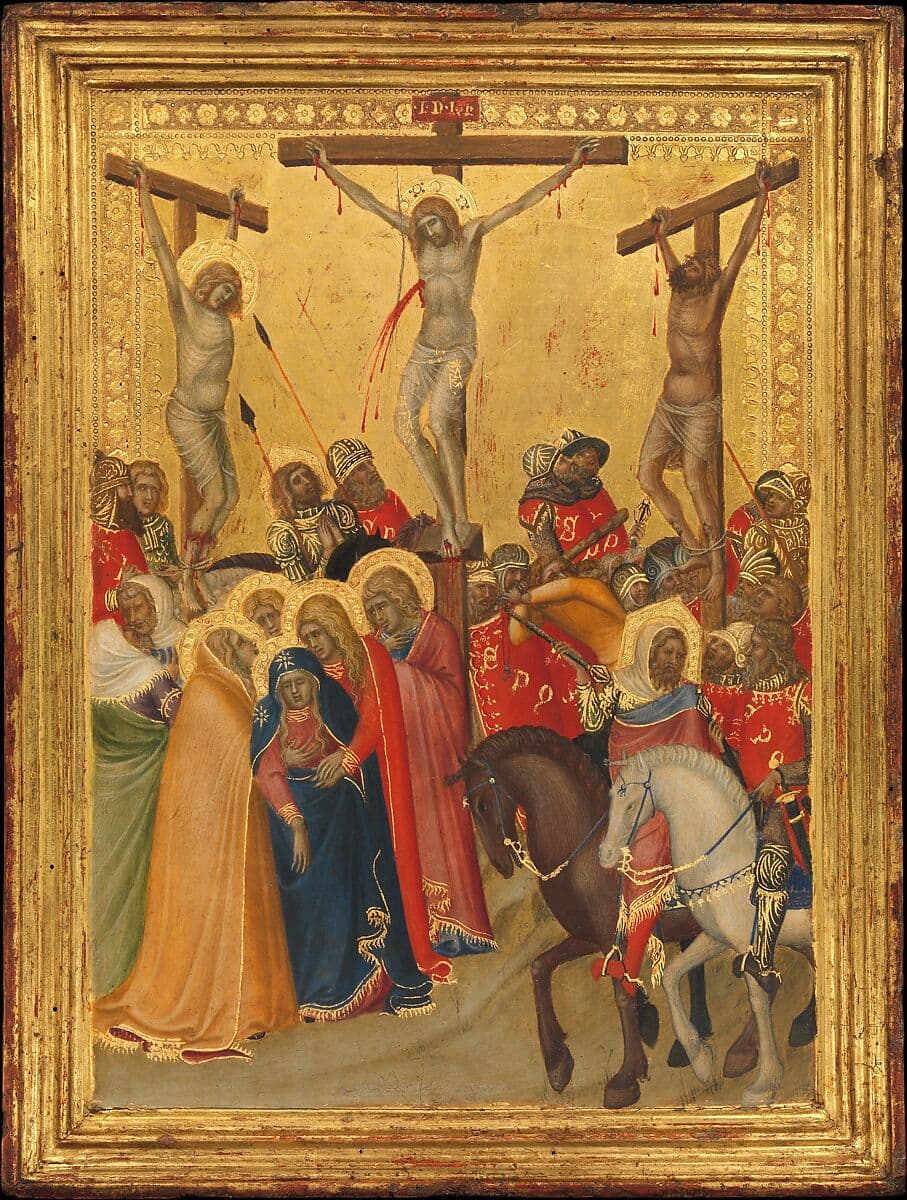
Event c. AD 30-33 / Israel
Modern medical analysis / Crucifixion site, Jerusalem
Medical Corroboration of the Crucifixion
A nail still embedded in a first-century heel bone provides physical evidence of crucifixion in Roman Judea.
Read full article (opens in a new tab)Evidence note
A nail still embedded in a first-century heel bone provides physical evidence of crucifixion in Roman Judea. Alongside this discovery, medical studies of scourging and John’s account of blood and water explore how the Gospel descriptions fit what is known about Roman execution and the human body.
This corroborates the historical reliability and plausibility of the crucifixion accounts; it analyses the texts rather than adding an independent ancient source.
Image credits & model references
Map data. Jerusalem’s modern street context and geographic control points use data from © OpenStreetMap contributors, available under the Open Database License. The AD 200 borders use Ancient World Mapping Center data derived in part from OpenStreetMap. Street lines are clipped and styled for this atlas; they do not reconstruct ancient streets. See the terrain and reconstruction sources and the map key’s historical border sources for details.
These are illustrative 3D studies, not scans. Outlines follow reference photographs; thickness, edges and unseen surfaces are approximate. Photographs are mapped to documented faces. Photo-derived meshes and texture mappings retain the corresponding photograph’s licence. Unless stated otherwise, downloaded photographs are unchanged thumbnails; cropping and perspective approximation happen when they are fitted to the model.
1.
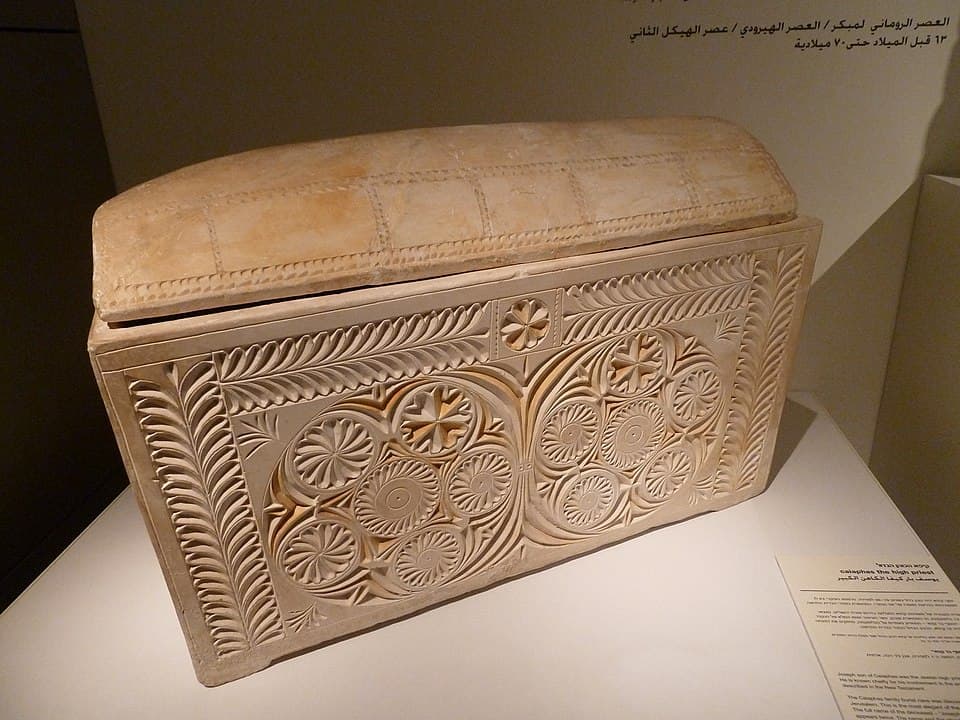 Caiaphas Ossuary
Reference photograph. deror_avi; CC BY-SA 3.0.
Model. A schematic limestone chest, domed lid and rosette carving, not a survey of every decorated surface.
Read the evidence and historical sources →schematic limestone chest, domed lid and rosette carving; not a survey of every decorated surface.
2.
 Celsus' Critique of Christianity
Reference photograph. Wikimedia Commons; Public domain.
Model. The article’s reference image displayed on an illustrative book symbol, not an original manuscript.
Read the evidence and historical sources →3.
 Cyrus Cylinder
Reference photograph. Mike Peel, modified by مانفی; CC BY-SA 4.0.
Model. A barrel-shaped clay cylinder. The photograph wraps around an approximate surface; it is not a complete record of the inscription.
Read the evidence and historical sources →the article’s photograph, mapped to an approximate barrel shape. This wrapping is an appearance study, not a complete inscription record.
4.
 Darkness at the Crucifixion
Reference photograph. Gustave Doré; Public domain.
Model. The article’s reference image displayed on an illustrative book symbol, not an original manuscript.
Read the evidence and historical sources →5.
Dead Sea ScrollsReference photograph. Shai Halevi / IAA; CC BY-SA 4.0.
Model. The photographed face follows the surviving outline. Unseen surfaces and thickness are illustrative.
Read the evidence and historical sources →Shai Halevi / Israel Antiquities Authority, Commons reference, CC BY-SA 4.0. Thin, torn manuscript section; not the shape of the entire scroll.
6.
Early New Testament PapyriReference photograph. Composite: KetefHinnomFan; CC0 1.0.
Model. The photographed face follows the surviving outline. Unseen surfaces and thickness are illustrative.
Read the evidence and historical sources →John Rylands Library Ms Greek P 457, recto, public domain. Its outline replaces the former framed image with modern English commentary. Reverse not reproduced.
7.
 Hezekiah's Tunnel & Siloam Inscription
Reference photograph. Tamar Hayardeni; CC BY 3.0.
Model. Schematic water-site symbol, not a reconstruction of this pool or tunnel.
Read the evidence and historical sources →8.
Josephus on JesusReference photograph. Brother Maciej / Master of the Lady with Unicorn; Public domain.
Model. The article’s reference image displayed on an illustrative book symbol, not an original manuscript.
Read the evidence and historical sources →9.
Ketef Hinnom Silver ScrollsReference photograph. Tamar Hayardeni.
Model. The unrolled KH2 silver amulet and its separated lower piece. The reverse and thickness are illustrative.
Read the evidence and historical sources →Tamar Hayardeni, KH2 photograph, drawing and transcription. Only the photographed KH2 strip and detached lower portion are sampled; the adjacent transcription/diagram is excluded. The model does not duplicate KH2 to claim a second photographed amulet. See the linked source for its license terms.
10.
 Lachish Letters
Reference photograph. NenyaAleks; Public domain.
Model. The photographed face follows the surviving outline. Unseen surfaces and thickness are illustrative.
Read the evidence and historical sources →NenyaAleks, replica of Lachish Letter III, public domain (PD-self). A pottery sherd, with thin clay sides and a distinct plain reverse.
11.
 Lucian of Samosata
Reference photograph. William Faithorne; Cropped engraving; Public domain.
Model. The article’s reference image displayed on an illustrative book symbol, not an original manuscript.
Read the evidence and historical sources →12.
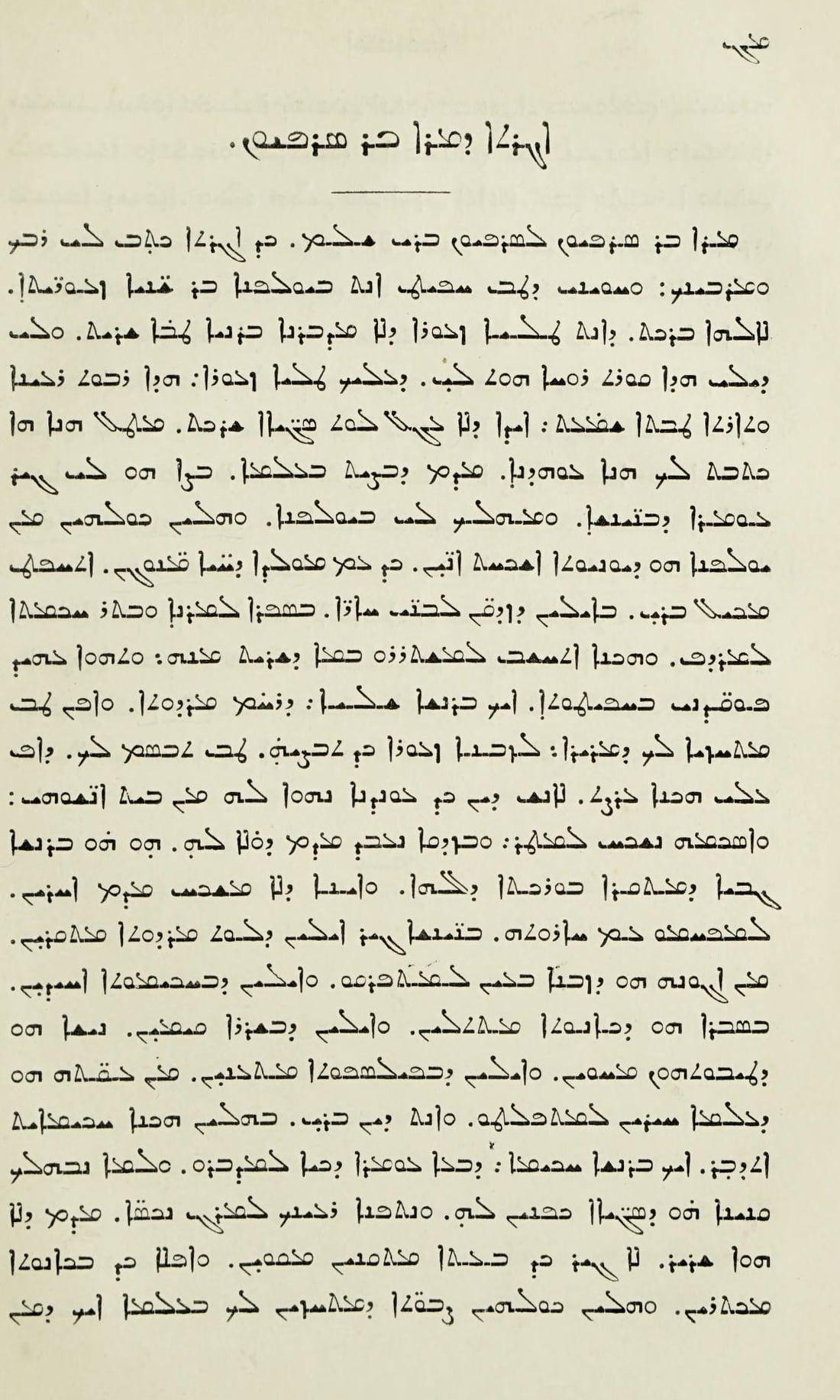 Mara bar Serapion
Reference photograph. Cureton, 1855 / Princeton scan; Public domain; Margins cropped.
Model. The article’s reference image displayed on an illustrative book symbol, not an original manuscript.
Read the evidence and historical sources →opening of the letter in William Cureton (ed.), Spicilegium Syriacum (1855), Syriac p. 43. Princeton Theological Seminary Library scan via Internet Archive, leaf n138. Public-domain printed edition; margins cropped. Used on an illustrative book symbol, not a reconstruction or photograph of the surviving ancient manuscript.
13.
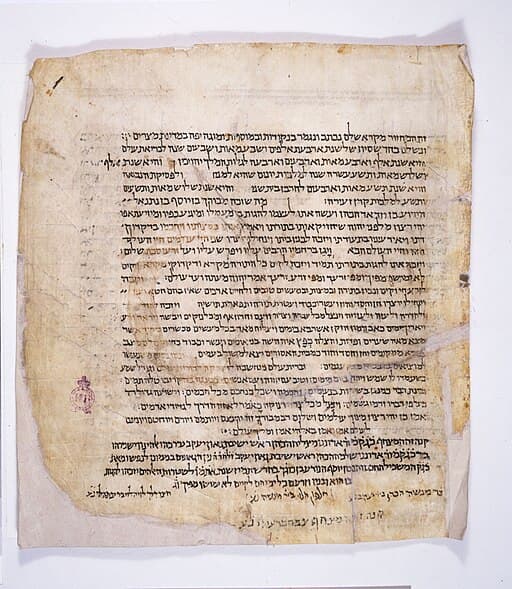 Masoretic Text
Reference photograph. Leningrad Codex; Public domain.
Model. An illustrative volume for this manuscript tradition, not a reconstruction of an original binding.
Read the evidence and historical sources →14.
Medical Corroboration of the CrucifixionReference photograph. Pietro Lorenzetti / The Met; Public domain.
Model. The article’s reference image displayed on an illustrative book symbol, not an original manuscript.
Read the evidence and historical sources →15.
Merneptah SteleReference photograph. Onceinawhile; CC BY-SA 4.0.
Model. Different photographs show Merneptah’s inscription and the earlier Amenhotep III face. Depth and edges are approximate.
Read the evidence and historical sources →Inscription face. 𐰇𐱅𐰚𐰤, Merneptah Steli (cropped), cropped/rotated on Commons by Jeff G. Full-length Merneptah inscription face. CC BY-SA 4.0.
Earlier Amenhotep III face. Onceinawhile, Merneptah Stele 2022 (reverse side). The earlier Amenhotep III face, sampled separately without mirroring. The model material compensates the dark photograph's exposure. Perspective and museum lighting remain in the source; this is not a calibrated texture scan. CC BY-SA 4.0.
16.
Mesha SteleReference photograph. Mbzt; CC BY-SA 4.0.
Model. The reassembled museum stele, including restored areas. The reverse and depth are illustrative.
Read the evidence and historical sources →Mbzt, Mesha stele, Louvre AO 5066. The article’s reference photograph. Includes the museum's restored areas; it is not an intact ancient stele. Louvre catalogue. CC BY-SA 4.0.
17.
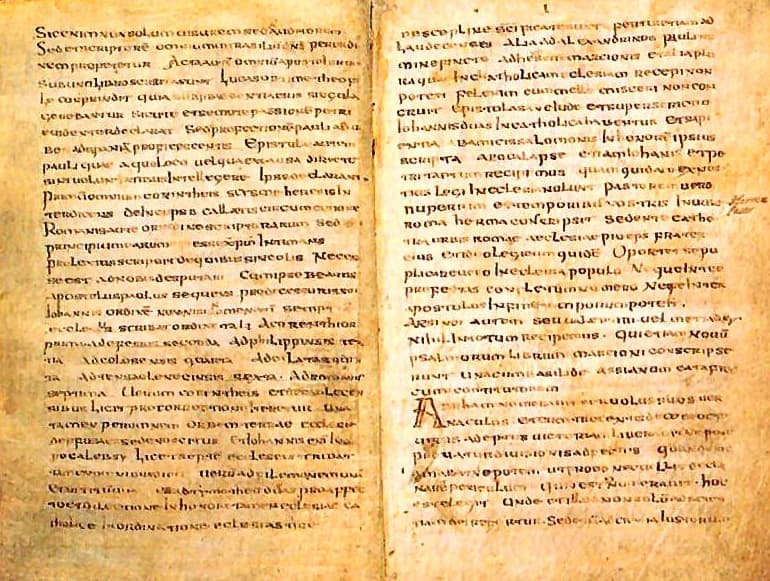 Muratorian Fragment
Reference photograph. Image author unknown; held by Biblioteca Ambrosiana; Public domain.
Model. An illustrative volume for this manuscript tradition, not a reconstruction of an original binding.
Read the evidence and historical sources →18.
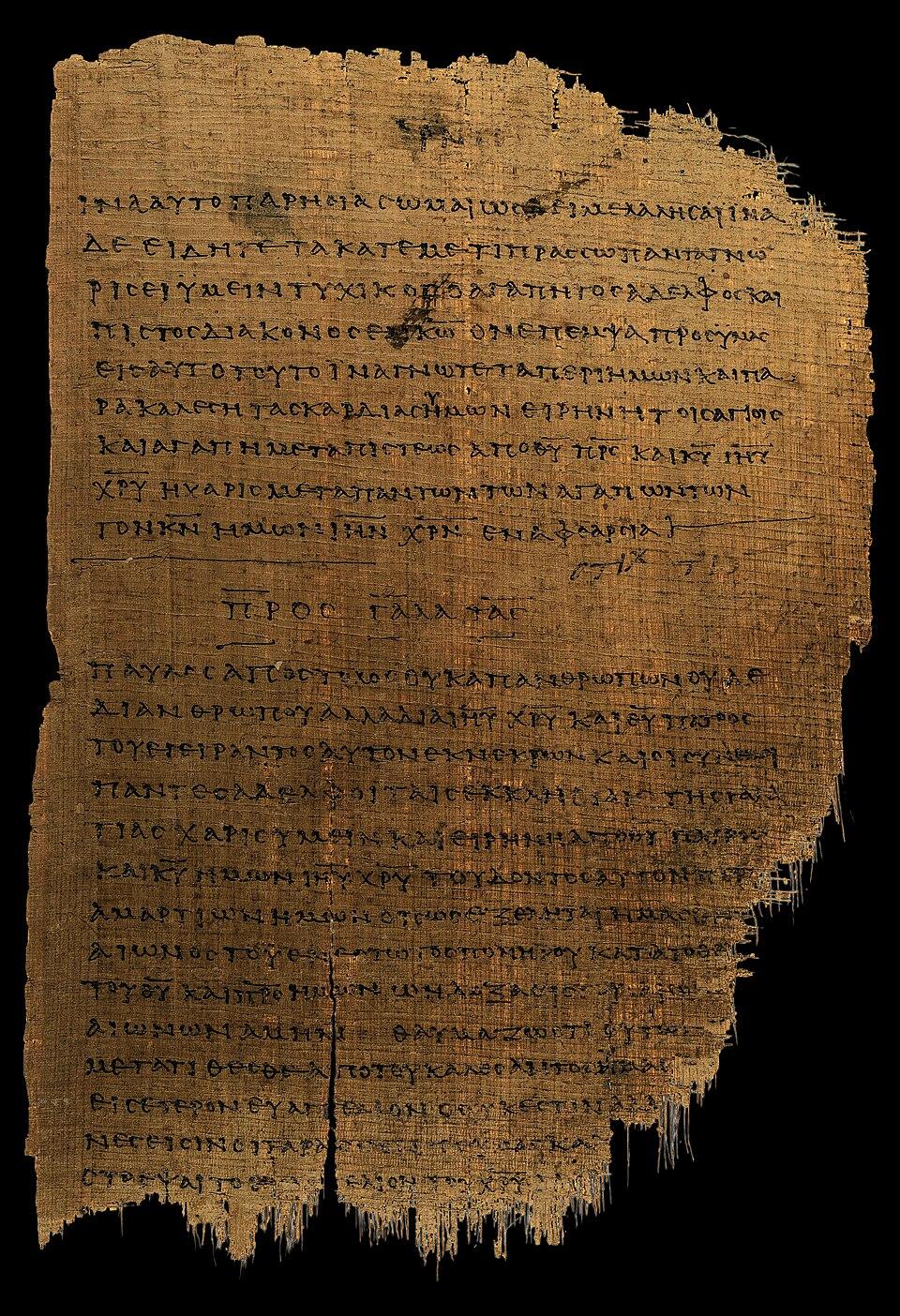 New Testament Manuscript Reliability
Reference photograph. Papyrus 46 / University of Michigan; Public domain.
Model. A P46 leaf containing the end of Ephesians and beginning of Galatians represents the wider manuscript tradition. Unseen surfaces and thickness are illustrative.
Read the evidence and historical sources →University of Michigan P.Mich.inv. 6238 (P46), leaf with the end of Ephesians and beginning of Galatians, public domain. Unmodified 960px Commons thumbnail, with the photographed perimeter traced in model coordinates. This leaf represents the wider manuscript tradition; the map position is a representative region, not P46's findspot. Reverse not reproduced.
19.
Papyrus 52 (P52)Reference photograph. Composite: KetefHinnomFan; CC0 1.0.
Model. The photographed face follows the surviving outline. Unseen surfaces and thickness are illustrative.
Read the evidence and historical sources →John Rylands Library Ms Greek P 457, recto, public domain. Its outline replaces the former framed image with modern English commentary. Reverse not reproduced.
20.
 Patristic Citations of the New Testament
Reference photograph. André Thevet, 1584; Public domain.
Model. The article’s reference image displayed on an illustrative book symbol, not an original manuscript.
Read the evidence and historical sources →21.
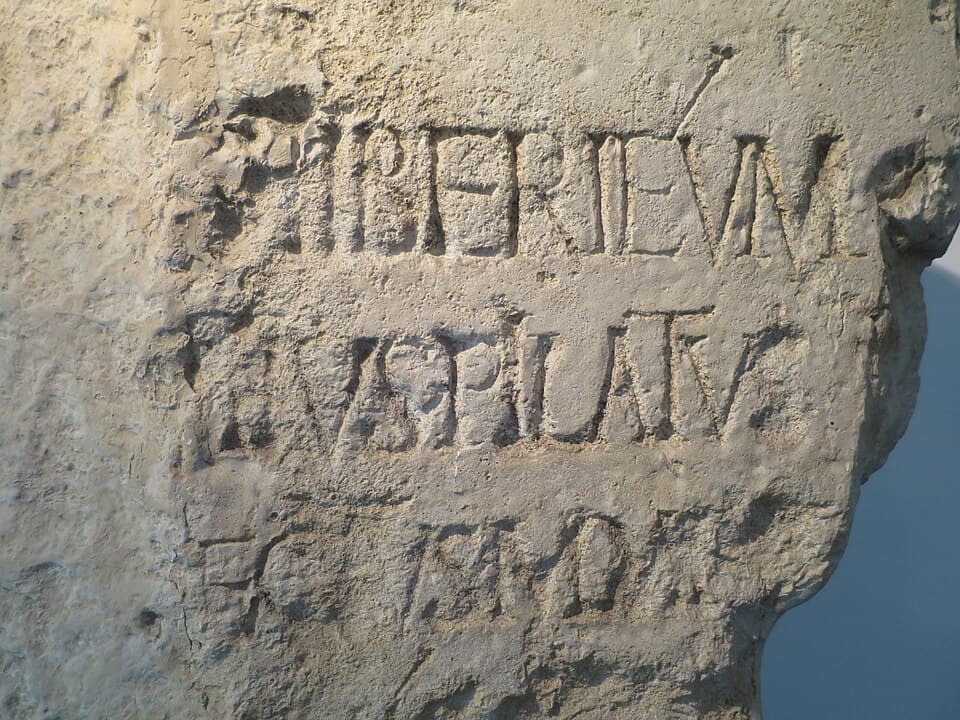 Pilate Stone
Reference photograph. Reinhard Dietrich; CC BY 4.0.
Model. An approximate broken limestone block, using the article’s photograph of a modern copy.
Read the evidence and historical sources →Reinhard Dietrich, modern Milan copy, CC BY 4.0. The existing close-up informs the inscription face; block outline and depth are approximate, not traced from a full-object scan.
22.
Pliny the YoungerReference photograph. Angelica Kauffmann; Public domain.
Model. The article’s reference image displayed on an illustrative book symbol, not an original manuscript.
Read the evidence and historical sources →23.
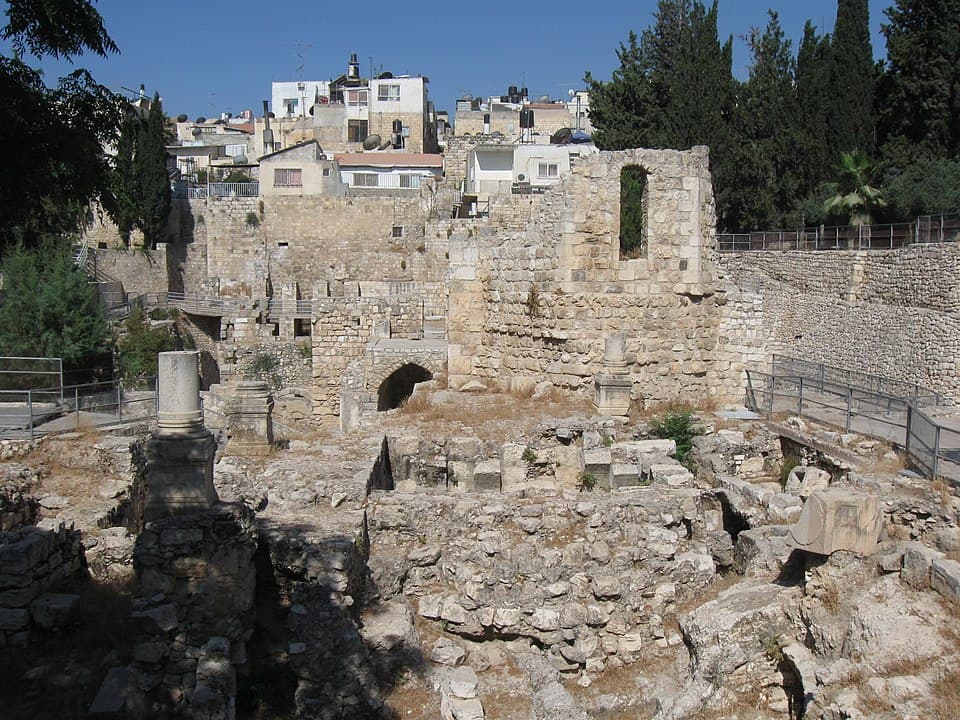 Pool of Bethesda
Reference photograph. Ori~; Attribution.
Model. Schematic water-site symbol, not a reconstruction of this pool or tunnel.
Read the evidence and historical sources →24.
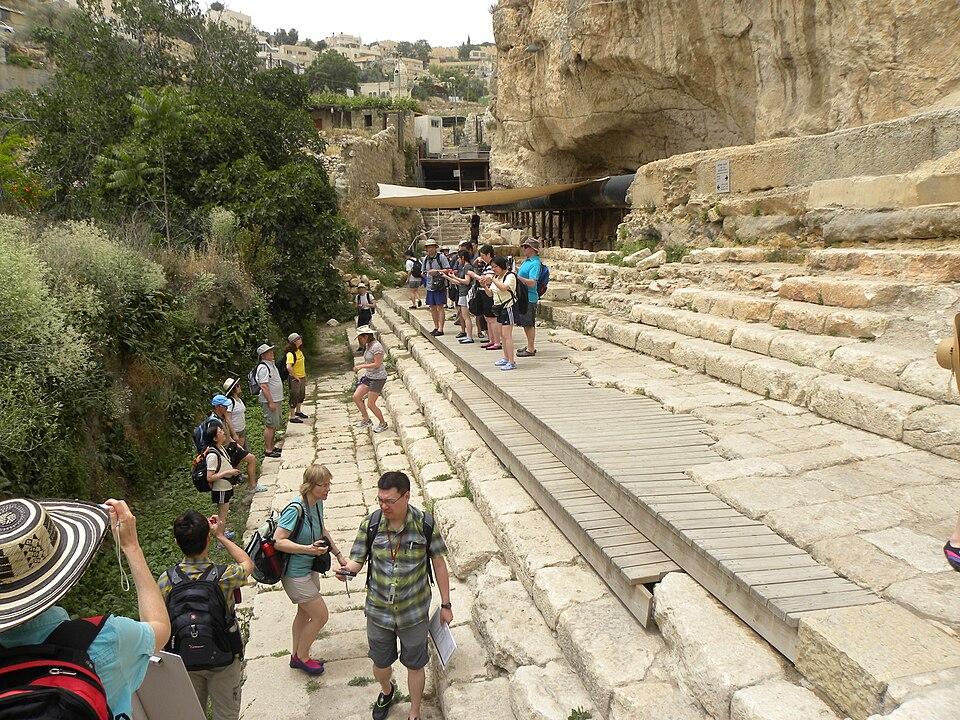 Pool of Siloam
Reference photograph. Ian Scott; CC BY-SA 2.0.
Model. Schematic water-site symbol, not a reconstruction of this pool or tunnel.
Read the evidence and historical sources →25.
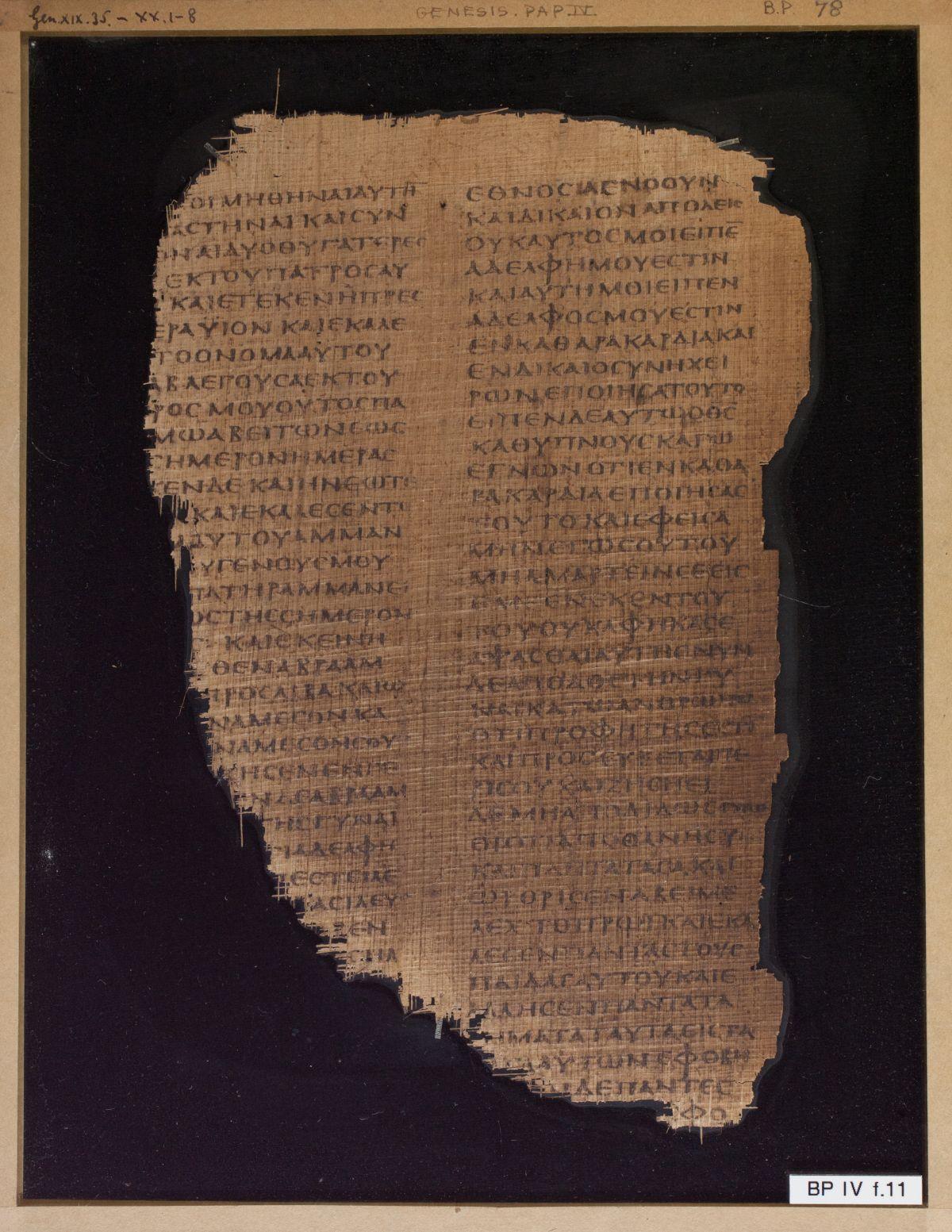 Septuagint
Reference photograph. Chester Beatty, Dublin; CC BY 4.0.
Model. An illustrative volume for this manuscript tradition, not a reconstruction of an original binding.
Read the evidence and historical sources →Chester Beatty, Dublin, BP IV f.11 (Rahlfs 961), Genesis 19:35–20:8, fourth-century Egypt. Photograph © Chester Beatty Library, CC BY 4.0 under the museum's image-use policy. Museum-supplied 1,200-pixel rendition, no bitmap crop or retouching. Displayed on an illustrative book symbol with perspective/UV mapping; not a reconstruction of this codex. The verified reverse photograph is not installed or mapped. This source comes directly from the museum, not Wikimedia.
26.
 Suetonius on Early Christianity
Reference photograph. Wikimedia Commons; Public domain.
Model. The article’s reference image displayed on an illustrative book symbol, not an original manuscript.
Read the evidence and historical sources →27.
Tacitus on JesusReference photograph. Grolier Society, 1920; Public domain.
Model. The article’s reference image displayed on an illustrative book symbol, not an original manuscript.
Read the evidence and historical sources →28.
 Taylor Prism
Reference photograph. David Castor; Public domain.
Model. A six-sided prism with one photographed face. Unphotographed sides are left as plain clay.
Read the evidence and historical sources →the article’s composite photograph. One photographed panel on a six-sided shape; other faces use plain clay rather than repeating its text.
29.
Tel Dan SteleReference photograph. Yael Y; CC BY-SA 3.0.
Model. Three surviving fragments, following a museum display. Their original arrangement and unseen surfaces are uncertain.
Read the evidence and historical sources →Oren Rozen, Tel Dan Stele on display, 2017. Three separate silhouettes follow this museum arrangement. The original relationship of the fragments is debated. Jewish Museum object context. CC BY-SA 4.0.
30.
The 500 Eyewitnesses (1 Corinthians 15)Reference photograph. Papyrus 123; Public domain.
Model. The article’s reference image displayed on an illustrative book symbol, not an original manuscript.
Read the evidence and historical sources →31.
The Apostles' TestimonyReference photograph. Rembrandt van Rijn, 1625.
Model. The article’s reference image displayed on an illustrative book symbol, not an original manuscript.
Read the evidence and historical sources →32.
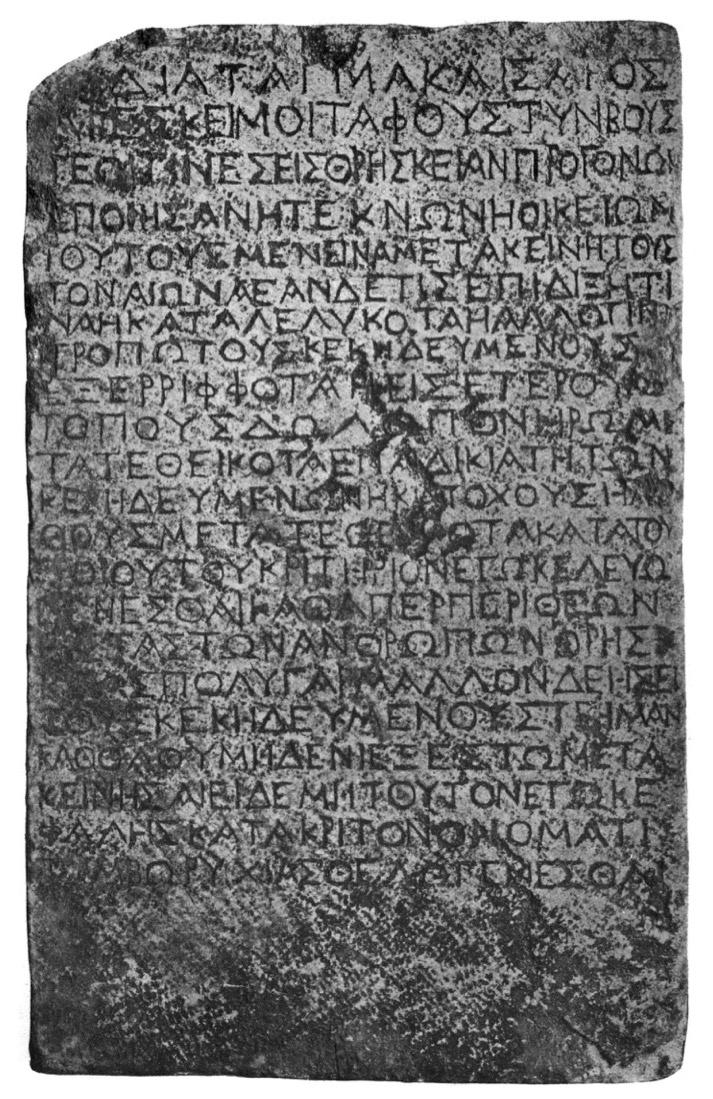 The Nazareth Decree
Reference photograph. Published by F. Cumont, 1930; Public-domain scan.
Model. The inscription’s face follows an archival photograph published by F. Cumont in 1930. The reverse and thickness are illustrative.
Read the evidence and historical sources →archival photograph published by F. Cumont in 1930, public-domain scan. Unmodified reference photograph; model front follows its outline and crops away the white background. Reverse and thickness are illustrative.
33.
 The Talmud on Jesus
Reference photograph. Brigade Piron; CC BY-SA 4.0.
Model. The article’s reference image displayed on an illustrative book symbol, not an original manuscript.
Read the evidence and historical sources →


For shared site imagery, see Image Credits.