
Prophecy of the Humble King: Zechariah 9:9
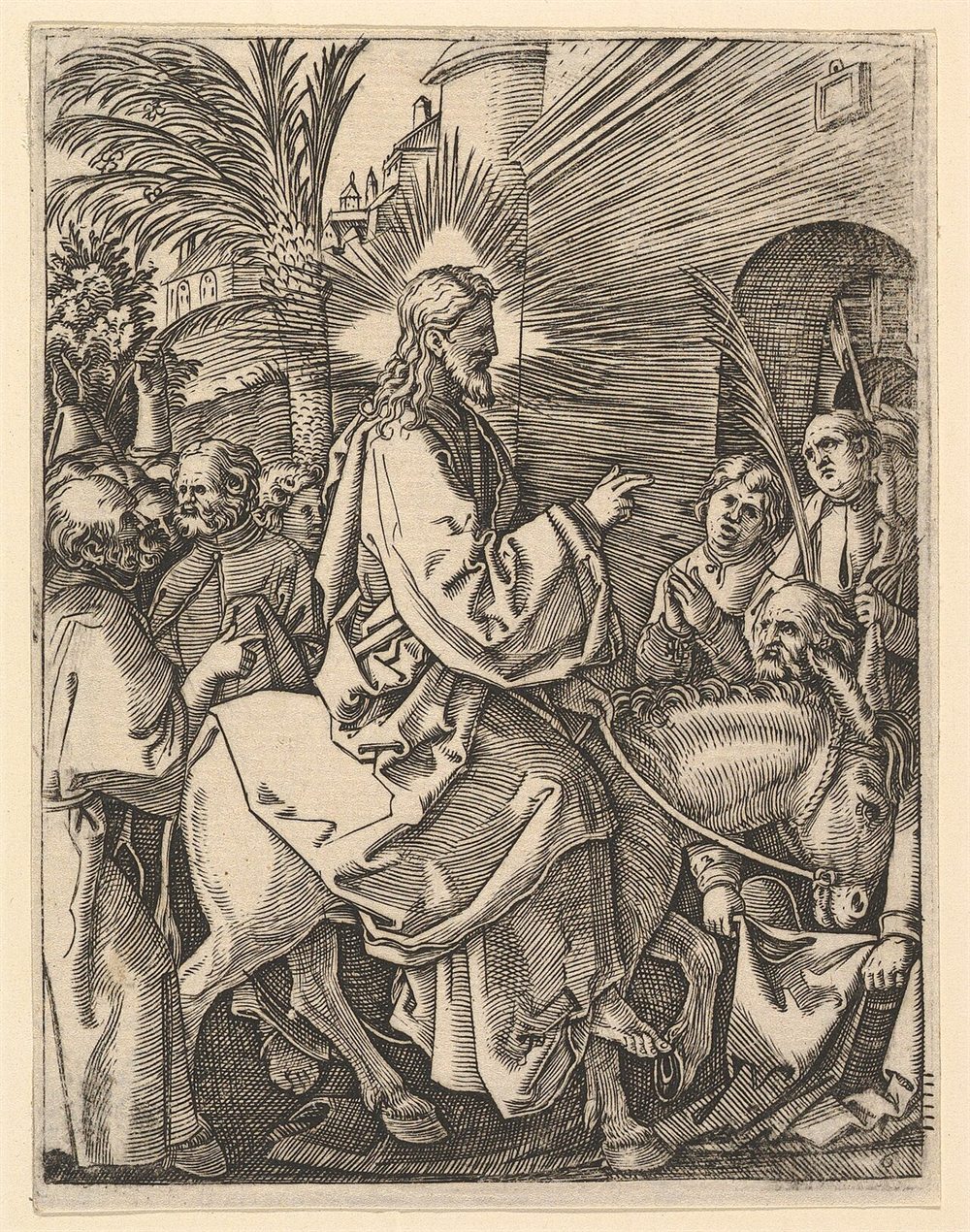
Zechariah 9:99 Rejoice greatly, O daughter of Zion! Shout aloud, O daughter of Jerusalem! Behold, your king is coming to you; righteous and having salvation is he, humble and mounted on a donkey, on a colt, the foal of a donkey. describes a king entering Jerusalem on a donkey, an image that stands in sharp contrast to the expectations of royal power in the ancient world. This prophecy foretells a ruler who will arrive not with military might, but with humility, righteousness, and peace. The Gospels present Jesus’ triumphal entry into Jerusalem as the ultimate fulfillment of this prophecy.
✨ Prophecy: Zechariah’s Vision of the King
📖 Zechariah 9:99 Rejoice greatly, O daughter of Zion! Shout aloud, O daughter of Jerusalem! Behold, your king is coming to you; righteous and having salvation is he, humble and mounted on a donkey, on a colt, the foal of a donkey.:
"Rejoice greatly, O daughter of Zion! Shout aloud, O daughter of Jerusalem! Behold, your king is coming to you; righteous and having salvation is he, humble and mounted on a donkey, on a colt, the foal of a beast of burden."
Context:
Zechariah prophesied in the 6th century BC, addressing the post-exilic community in Jerusalem. His message often blends immediate restoration themes with broader future hope.
In this passage, the king is portrayed in deliberate contrast to the surrounding rulers of the ancient Near East. Rather than arriving on a war horse—a symbol of conquest—he comes on a donkey, an image associated with peaceful rule and non-militaristic kingship. In the ancient world, horses were linked with warfare, while donkeys were used in contexts of peace or civil processions, reinforcing the contrast embedded in the text.1
Themes:
-
Humility: The king is lowly and approachable, not exalted through military dominance.
-
Righteous victory: His authority is tied to justice and divine purpose rather than force.
-
Universal recognition: The call for Zion and Jerusalem to rejoice signals acceptance of his kingship.
✡️ Early Jewish Interpretations
Jewish sources have historically seen Zechariah 9:99 Rejoice greatly, O daughter of Zion! Shout aloud, O daughter of Jerusalem! Behold, your king is coming to you; righteous and having salvation is he, humble and mounted on a donkey, on a colt, the foal of a donkey. as Messianic, though interpretations varied:
-
Rabbinic tradition: Some passages in the Babylonian Talmud (e.g., Sanhedrin 98a) connect the verse to a future Davidic king who would bring peace and restoration.2
-
Medieval commentators: Rashi and Ibn Ezra highlighted the symbolism of the donkey, noting that the king’s humility and righteousness would distinguish him from worldly rulers.3
-
Broader Jewish perspective: Other interpretations understand the passage more generally as describing an ideal righteous ruler, without identifying a specific individual.
Figures such as Zerubbabel are sometimes proposed as historical referents, particularly given the restoration hopes surrounding his role in the early post-exilic period.1 However, he is never portrayed as a reigning king, nor is he associated with the defining imagery of Zechariah 9:99 Rejoice greatly, O daughter of Zion! Shout aloud, O daughter of Jerusalem! Behold, your king is coming to you; righteous and having salvation is he, humble and mounted on a donkey, on a colt, the foal of a donkey., leaving the identification incomplete. Regardless, Jewish readers recognized an expectation of a humble yet victorious king, a theme that is not clearly fulfilled by a specific historical figure in Jewish traditions.
✝️ Fulfillment in the Gospels
The New Testament authors explicitly connect Zechariah’s prophecy with Jesus’ entry into Jerusalem:
-
Matthew 21:5–95 “Say to the daughter of Zion, ‘Behold, your king is coming to you, humble, and mounted on a donkey, on a colt, the foal of a beast of burden.’” 6 The disciples went and did as Jesus had directed them. (ESV) – Matthew quotes Zechariah 9:99 Rejoice greatly, O daughter of Zion! Shout aloud, O daughter of Jerusalem! Behold, your king is coming to you; righteous and having salvation is he, humble and mounted on a donkey, on a colt, the foal of a donkey. directly: "Say to the daughter of Zion, ‘Behold, your king is coming to you, humble, and mounted on a donkey, on a colt, the foal of a beast of burden.’” The crowds responded: “Hosanna to the Son of David! Blessed is he who comes in the name of the Lord! Hosanna in the highest!”
-
Mark 11:1–111 Now when they drew near to Jerusalem, to Bethphage and Bethany, at the Mount of Olives, Jesus sent two of his disciples 2 and said to them, “Go into the village in front of you, and immediately as you enter it you will find a colt tied, on which no one has ever sat. Untie it and bring it., Luke 19:28–4428 And when he had said these things, he went on ahead, going up to Jerusalem. 29 When he drew near to Bethphage and Bethany, at the mount that is called Olivet, he sent two of the disciples,, John 12:12–1912 The next day the large crowd that had come to the feast heard that Jesus was coming to Jerusalem. 13 So they took branches of palm trees and went out to meet him, crying out, “Hosanna! Blessed is he who comes in the name of the Lord, even the King of Israel!” – Each Gospel presents the narrative with the same core details:
- Jesus sends disciples to fetch a colt.
- He rides into Jerusalem
- Crowds respond with celebration and Messianic language (“Hosanna,” “Son of David”)
Key Observations & Fulfillments:
-
Intentional symbolism: Jesus’ choice of a donkey over a horse aligns perfectly with Zechariah’s vision.
-
Public recognition: The crowd’s response reflects royal and Messianic expectations.
-
Divine timing: The entry occurs days before His crucifixion, highlighting the paradox of the suffering yet victorious Messiah.
✝️ Addressing Skepticism
Some critics suggest that the Gospel writers frame the event in a way that draws attention to its prophetic significance. However, this proposal is based primarily on literary inference rather than external evidence that the event was fabricated or materially revised. All four Gospels preserve the same central tradition — Jesus’ public entry into Jerusalem on a colt amid acclamation from the crowds — which points to an early and widely known event. At most, the argument concerns emphasis and presentation, not whether the event itself occurred in a way that corresponded to Zechariah’s prophecy. Some have also pointed to Matthew’s mention of both a donkey and a colt, while the other Gospels focus on the colt alone. Yet this is best understood as a minor variation in detail, consistent with normal patterns of eyewitness or historical reporting, and does not affect the consistency of the prophetic parallels.
📖 Summary
Zechariah 9:99 Rejoice greatly, O daughter of Zion! Shout aloud, O daughter of Jerusalem! Behold, your king is coming to you; righteous and having salvation is he, humble and mounted on a donkey, on a colt, the foal of a donkey. presents a king marked by humility, righteousness, and peace—qualities that stand in clear contrast to prevailing models of power in the ancient world. Jewish interpretation has often read this passage as pointing toward an ideal or future ruler, while not consistently identifying a specific historical figure.
The Gospels present Jesus’ entry into Jerusalem with this same imagery. Matthew explicitly cites the passage, and all four accounts describe the same core elements — the donkey, the public reception, and the setting in Jerusalem — indicating a shared and early tradition.
For many, this alignment is understood as a fulfillment of Messianic expectation. While some interpret the narratives as reflecting theological shaping, this view remains largely inferential and primarily concerns how the event is presented rather than whether it occurred. The convergence between Book of Zechariah and the Gospel accounts therefore remains a central feature in how the passage has been understood and is widely regarded as a fulfillment of this prophetic expectation.
📚 References
Boda, Mark J. Exploring Zechariah. SBL Press, 2017.
Read onlineBabylonian Talmud, Sanhedrin 98a. Available here: https://www.sefaria.org/Sanhedrin.98a
Rashi and Ibn Ezra. Commentaries on Zechariah 9:99 Rejoice greatly, O daughter of Zion! Shout aloud, O daughter of Jerusalem! Behold, your king is coming to you; righteous and having salvation is he, humble and mounted on a donkey, on a colt, the foal of a donkey..
Read onlineJewish Virtual Library. Messianic Prophecies.
Read onlineImage Credits: Marcantonio Raimondi after Albrecht Dürer, The Entry into Jerusalem, via Wikimedia Commons. Released under CC0 1.0 through The Met Open Access policy.
Comments
No comments yet. Be the first to share your thoughts.