
The Prophecy of the Unbroken Bones
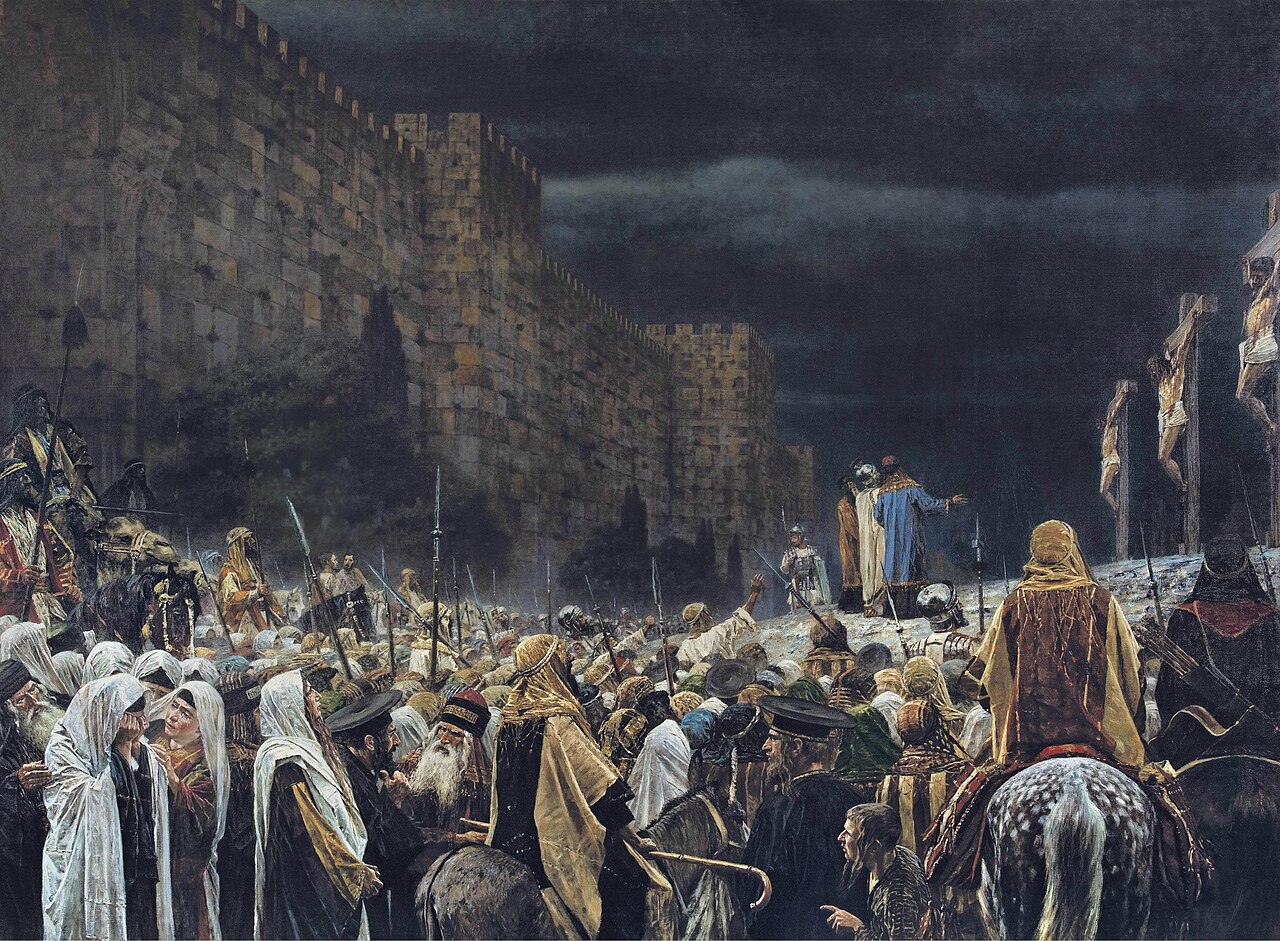
The Gospels demonstrate that the crucifixion of Jesus was not only a historical event but also the fulfillment of ancient prophecy, written centuries before Jesus's birth. From the Passover lamb of Exodus to the words of David and Zechariah, the Gospels show that several details of Christ’s death were foretold and accomplished in extraordinary alignment with Scripture.
🐑 The Passover Lamb and Unbroken Bones Prophecy
Exodus 12:4646 It shall be eaten in one house; you shall not take any of the flesh outside the house, and you shall not break any of its bones. (ESV) records God’s command regarding the Passover lamb:
“It shall be eaten in one house; you shall not take any of the flesh outside the house, and you shall not break any of its bones.”
This instruction was repeated in Numbers 9:1212 They shall leave none of it until the morning, nor break any of its bones; according to all the statute for the Passover they shall keep it. and became central to Jewish understanding of the Passover meal. The lamb’s unbroken body symbolized purity, completeness, and the wholeness of God’s salvation.
Early Jewish tradition held tightly to this symbolism. Philo, a first-century Jewish philosopher, emphasized the integrity of the lamb as part of its sacrificial meaning.1 Later rabbinic writings also stressed that every part of the lamb must remain intact, a sign of its consecration to God.
When John the Baptist declared Jesus to be “the Lamb of God, who takes away the sin of the world” (John 1:2929 The next day he saw Jesus coming toward him, and said, “Behold, the Lamb of God, who takes away the sin of the world!), he was pointing directly to this ancient imagery and typology. Jesus was not just another sacrifice: He was the true Passover Lamb, foretold for generations.
It is within this historical context that the events of the crucifixion take on deeper significance.
🔨 Roman Crucifixion and the Practice of Broken Legs
Crucifixion was a brutal execution method. Victims could survive for days, suspended on the cross, their bodies slowly suffocating under their own weight. To speed up death, Roman executioners would often break the victim’s legs in a process called crurifragium, preventing them from pushing up to breathe, which led to rapid asphyxiation.7
John 19:31–3331 Since it was the day of Preparation, and so that the bodies would not remain on the cross on the Sabbath (for that Sabbath was a high day), the Jews asked Pilate that their legs might be broken and that they might be taken away. 32 So the soldiers came and broke the legs of the first, and of the other who had been crucified with him. records this exact moment:
“Since it was the day of Preparation, and so that the bodies would not remain on the cross on the Sabbath (for that Sabbath was a high day), the Jews asked Pilate that their legs might be broken and that they might be taken away. So the soldiers came and broke the legs of the first, and of the other who had been crucified with him. But when they came to Jesus and saw that he was already dead, they did not break his legs.”
What seems like a small detail is actually profound: the Romans, unknowingly, preserved the very sign of Jesus as the perfect Lamb. His bones remained unbroken, in fulfillment of Exodus 12:4646 It shall be eaten in one house; you shall not take any of the flesh outside the house, and you shall not break any of its bones., Numbers 9:1212 They shall leave none of it until the morning, nor break any of its bones; according to all the statute for the Passover they shall keep it., and Psalm 34:2020 He keeps all his bones; not one of them is broken.:
“He keeps all his bones; not one of them is broken.” (Psalm 34:2020 He keeps all his bones; not one of them is broken.)
Psalm 34:2020 He keeps all his bones; not one of them is broken. - Briefly Addressing Criticism
Some scholars note that Psalm 34 originally refers to the righteous sufferer more generally rather than a specific messianic figure. In this view, the passage reflects a broader pattern of divine protection rather than a direct prediction. However, the Gospel of John applies the text typologically, presenting Jesus as the ultimate embodiment of the righteous one whose life and death align with Scripture.
Even so, this is not an isolated detail. The preservation of Jesus’ unbroken bones aligns with multiple strands of Old Testament prophecy and imagery, especially the Passover lamb, and reflects a broader pattern of fulfillment rather than a single, stand-alone connection. This pattern also continues in the next detail recorded at the crucifixion.
🗡️ The Spear in His Side: Proof of Death and Prophetic Fulfillment
Instead of breaking His legs, John 19:3434 But one of the soldiers pierced his side with a spear, and at once there came out blood and water. (ESV) says:
“But one of the soldiers pierced his side with a spear, and at once there came out blood and water.”
This action was both medical confirmation of death and theological fulfillment. Roman soldiers were trained to ensure crucifixion victims were truly dead before removal from the cross.8 The spear thrust into Jesus’ side served this very purpose.
Yet John points us beyond Roman practice, directing our attention to prophecy. Zechariah 12:1010 “And I will pour out on the house of David and the inhabitants of Jerusalem a spirit of grace and pleas for mercy, so that, when they look on me, on him whom they have pierced, they shall mourn for him, as one mourns for an only child, and weep bitterly over him, as one weeps over a firstborn. (ESV) declares:
“When they look on me, on him whom they have pierced, they shall mourn for him, as one mourns for an only child, and weep bitterly over him, as one weeps over a firstborn.”
John realized the Messiah would be pierced not symbolically, but literally. And in that moment, with blood and water flowing, he saw prophecy fulfilled before his very eyes.
📜 Early Christian and Jewish Interpretation of Zechariah
Early Jewish and Christian interpreters recognized multiple layers in Zechariah 12:1010 “And I will pour out on the house of David and the inhabitants of Jerusalem a spirit of grace and pleas for mercy, so that, when they look on me, on him whom they have pierced, they shall mourn for him, as one mourns for an only child, and weep bitterly over him, as one weeps over a firstborn.. Some rabbinic traditions linked the verse to Messiah ben Joseph, a suffering messiah whose death would bring national mourning and repentance.2 Medieval commentators such as Rashi and Ibn Ezra also reflect a range of interpretive approaches to the passage.3,4 Other Jewish readings have understood the piercing more metaphorically, as a symbol of communal or spiritual suffering, or even as referring to Israel as a whole.5,6
Early Christians, however, saw the literal fulfillment of these prophecies in Jesus: the unbroken bones, the pierced side, and the mourning over Him confirmed He was the promised Messiah. This diversity of Jewish interpretation underscores that the messianic reading was already present in Jewish thought, and that the Gospel accounts reflect a historically and theologically grounded perspective.
✝️ The Passover Lamb: Slain Yet Whole
The Gospel accounts of the crucifixion present both the depth of Christ’s suffering and the theological significance attributed to it. Not one bone was broken. His side was pierced. These details are recorded consistently across the Gospel tradition, with no surviving sources that contradict them. External references, such as the account of Tacitus, further confirm that Jesus was executed under Pontius Pilate, placing the event firmly within the historical record.
And John, as if to underline its weight, adds in John 19:3535 He who saw it has borne witness—his testimony is true, and he knows that he is telling the truth—that you also may believe.:
“He who saw it has borne witness—his testimony is true, and he knows that he is telling the truth—that you also may believe.”
For John, this wasn’t just memory. It was revelation. Jesus is the Lamb without blemish, slain for us yet kept whole — so that through His wounds, we are made whole.
📚 References
Philo of Alexandria, Special Laws
Babylonian Talmud, Sukkah 52a
Ibn Ezra, Commentary on Zechariah 12:10
Abarbanel, Commentary on Zechariah 12:10
Metzudat David (Alshech), Commentary on Zechariah 12:10
Martin Hengel, Crucifixion in the Ancient World and the Folly of the Message of the Cross (Fortress Press, 1977).
Brown, Raymond E. The Death of the Messiah: From Gethsemane to the Grave. Yale University Press, 1994.
Image Credits: Vasily Vereshchagin, A Crucifixion in the Time of the Romans (1887), via Wikimedia Commons. Public domain.
Comments
No comments yet. Be the first to share your thoughts.