
Daniel 9
Daniel 9:24–2724 “Seventy weeks are decreed about your people and your holy city, to finish the transgression, to put an end to sin, and to atone for iniquity, to bring in everlasting righteousness, to seal both vision and prophet, and to anoint a most holy place. 25 Know therefore and understand that from the going out of the word to restore and build Jerusalem to the coming of an anointed one, a prince, there shall be seven weeks. And for sixty-two weeks it shall be built again with squares and moat, but in a troubled time. has long been regarded as one of the most structurally significant prophetic passages in the Old Testament. Across both Jewish and Christian interpretive traditions, it has often been understood as a Messianic timeline: a structured sequence associated with the arrival of an “Anointed One.”
The prophecy describes a period of “seventy weeks” (Hebrew: shavuim), commonly interpreted in this context as seventy sets of seven years, forming a 490-year framework.1
Because of the passage’s complexity and the range of interpretations it has generated, this study is presented as part of a broader series.
🧭 The Focus of This Article
This article serves as a foundational entry point, focusing on:
- The Textual Roots: A direct look at the passage and the linguistic basis for understanding “weeks” as years
- The Messianic Framework: Why many early Jewish and Christian interpreters understood this as a redemptive timeline rather than a purely local historical reference
- The Christian Identification: How this framework has been understood to align with the public ministry, death, and resurrection of Jesus (AD 27–33)
📝 Note on Scope & Related Articles
While this article focuses on the historical Messianic interpretation, modern critical scholarship often proposes an alternative Maccabean framework, dating the text to the 2nd century BC. This perspective will be briefly introduced here, but the full technical discussion, including its strongest textual and historical arguments as developed in modern scholarship, is addressed in the article: Daniel 9: The Maccabean Interpretation Examined.
Additionally, the precise chronology, starting points, and the structure of the final “week” in Daniel 9 remain areas of ongoing scholarly discussion and are examined in detail in the companion article: Daniel 9: Exploring Interpretations.
📖 Full Text: Daniel 9:24–2724 “Seventy weeks are decreed about your people and your holy city, to finish the transgression, to put an end to sin, and to atone for iniquity, to bring in everlasting righteousness, to seal both vision and prophet, and to anoint a most holy place. 25 Know therefore and understand that from the going out of the word to restore and build Jerusalem to the coming of an anointed one, a prince, there shall be seven weeks. And for sixty-two weeks it shall be built again with squares and moat, but in a troubled time. (ESV)
24 “Seventy weeks are decreed about your people and your holy city, to finish the transgression, to put an end to sin, and to atone for iniquity, to bring in everlasting righteousness, to seal both vision and prophet, and to anoint a most holy place.
25 Know therefore and understand that from the going out of the word to restore and build Jerusalem to the coming of an anointed one, a prince, there shall be seven weeks. Then for sixty-two weeks it shall be built again with squares and moat, but in a troubled time.
26 And after the sixty-two weeks, an anointed one shall be cut off and shall have nothing. And the people of the prince who is to come shall destroy the city and the sanctuary. Its end shall come with a flood, and to the end there shall be war. Desolations are decreed.
27 And he shall make a strong covenant with many for one week, and for half of the week he shall put an end to sacrifice and offering. And on the wing of abominations shall come one who makes desolate, until the decreed end is poured out on the desolator.”
📊 Most Common Messianic Timeline & Implications
Daniel 9:24–2724 “Seventy weeks are decreed about your people and your holy city, to finish the transgression, to put an end to sin, and to atone for iniquity, to bring in everlasting righteousness, to seal both vision and prophet, and to anoint a most holy place. 25 Know therefore and understand that from the going out of the word to restore and build Jerusalem to the coming of an anointed one, a prince, there shall be seven weeks. And for sixty-two weeks it shall be built again with squares and moat, but in a troubled time. presents a prophetic framework of “seventy weeks” (shavuim), commonly understood as seventy weeks of years, or 490 years total. While interpretations differ on exact start points and how the final seven years are fulfilled, the general segmentation is widely recognized across Christian traditions:
| Segment | Length | Summary |
|---|---|---|
| 7 weeks | 49 years | Rebuilding of Jerusalem after a decree (commonly dated to 457 BC based on Ezra 7:12–2612 “Artaxerxes, king of kings, to Ezra the priest, the scribe of the Law of the God of heaven. Peace. And now 13 I make a decree that anyone of the people of Israel or their priests or Levites in my kingdom, who freely offers to go to Jerusalem, may go with you.) |
| 62 weeks | 434 years | A period leading up to the appearance of an "anointed one" or Messiah (~408 BC to AD 27) |
| 1 week | 7 years | This final "week" is subject to multiple interpretations: some see it fulfilled in Jesus' ministry and early Church history; others point to later historical events (e.g., the Roman siege) or a still-future fulfillment. |
Though the final week remains debated, many interpreters understand the first 69 weeks (483 years) as leading to the period of Jesus’ public ministry and crucifixion, generally dated around AD 27–33.
🧭 Messianic Fulfillment: A Coherent Trajectory
Daniel 9:26-2726 And after the sixty-two weeks, an anointed one shall be cut off and shall have nothing. And the people of the prince who is to come shall destroy the city and the sanctuary. Its end shall come with a flood, and to the end there shall be war. Desolations are decreed. 27 And he shall make a strong covenant with many for one week, and for half of the week he shall put an end to sacrifice and offering. And on the wing of abominations shall come one who makes desolate, until the decreed end is poured out on the desolator.” points to the following which Christians tie to Jesus:
-
The coming of an “anointed one” (Messiah) → Fulfilled in Jesus.
-
His being “cut off” → Death on the cross.
-
A covenant confirmed with many → The New Covenant in Christ’s blood (Luke 22:2020 And likewise the cup after they had eaten, saying, “This cup that is poured out for you is the new covenant in my blood.).
-
End of sacrifices → Fulfilled spiritually when Jesus became the once-for-all offering (Hebrews 10:10–1410 And by that will we have been sanctified through the offering of the body of Jesus Christ once for all. 11 And every priest stands daily at his service, offering repeatedly the same sacrifices, which can never take away sins.).
-
Destruction of the temple → Fulfilled in AD 70 by Rome.
⏳ Why “Seventy Weeks” = 490 Years
The term “weeks” (Hebrew: שָׁבֻעִים shavuim) literally means “sevens,” without specifying the unit. Like how we use “dozen” to refer to a group of twelve, shavuim refers to groups of seven, with the unit determined by context. In Daniel 9, the connection to Jeremiah’s seventy-year exile (Daniel 9:22 in the first year of his reign, I, Daniel, perceived in the books the number of years that, according to the word of the Lord to Jeremiah the prophet, must pass before the end of the desolations of Jerusalem, namely, seventy years.) and the scope of the events described point toward understanding these “sevens” as years rather than days.
Linguistic Clarity: Why "Weeks of Years" Is Correct
-
Daniel 9 is written in the context of Jeremiah’s prophecy of 70 years of exile (Daniel 9:22 in the first year of his reign, I, Daniel, perceived in the books the number of years that, according to the word of the Lord to Jeremiah the prophet, must pass before the end of the desolations of Jerusalem, namely, seventy years.), making year-based interpretation highly likely.
-
While shavua itself simply denotes a “seven,” the Old Testament already reflects structured groupings of years in sevens (e.g., sabbatical cycles in Leviticus 25), making a year-based reading conceptually consistent.
-
The scope of the prophecy includes events far beyond a literal 490 days (70 weeks of days), such as the rebuilding of Jerusalem and the temple, the coming of an anointed one, the destruction of the temple, the end of sin, and the bringing of everlasting righteousness.
Therefore, the idea that these “weeks” are symbolic of years, rather than literal seven-day periods, is well supported both by context and Jewish interpretive tradition.
📚 Support from Jewish and Christian Sources
Jewish Thought (Before Jesus)
Jewish sources before Jesus do not merely treat Daniel as prophetic, but reflect a broader expectation of a coming anointed figure and a meaningful redemptive timeline.
-
Dead Sea Scrolls (4Q174): This text shows that the Qumran community viewed Daniel as genuine prophecy and associated it with end-times and messianic expectations, even if it does not provide a direct interpretation of the seventy weeks.2
-
1 Enoch & Jubilees: Use symbolic “weeks” to describe extended periods of time, demonstrating that this kind of time-structure was already part of Jewish apocalyptic thought.
-
Talmud (Sanhedrin 97b): Reflects continued awareness of messianic timelines connected to Daniel, even when interpreted cautiously or deferred.3
While early Jewish writings may not have explicitly timed the prophecy to Jesus, the idea of weeks = years was part of the interpretive landscape well before the first century.
Christian Tradition
Early Christian writers did not invent this framework but built upon it, explicitly identifying the fulfillment in Jesus.
-
Julius Africanus (c. AD 200): Calculated the 490 years from Artaxerxes to the time of Christ.4
-
Eusebius (4th century): Interpreted the “anointed one” who is cut off as referring directly to Jesus’ death.5
-
Modern evangelical scholars such as Gleason Archer, Harold Hoehner, and Michael Rydelnik continue to defend this interpretation as historically and textually grounded.1,6
⏳ On Timeline and Chronology
While the interpretive framework of Daniel 9 is central to the discussion, another major area of scholarly debate concerns its chronological structure.
Questions about starting points, calendar systems, and the structure of the seventy weeks remain widely debated and can significantly affect how the prophecy is interpreted.
For a more detailed comparison of messianic, preterist, and futurist approaches, see the companion article: Daniel 9: Exploring Interpretations.
🧠 Alternative Interpretations (Brief Overview)
While the messianic interpretation has been widely held throughout history, most modern critical scholars date Daniel to the 2nd century BC and interpret Daniel 9 within a Maccabean historical framework. This Maccabean interpretation, championed by scholars like John J. Collins and John Goldingay, identifies the prophecy in relation to events occurring in the 2nd century BC.7, 8
From this perspective, the “anointed one” who is “cut off” is commonly identified as the high priest Onias III, and the cessation of sacrifice is linked to the actions of Antiochus IV Epiphanes in 167 BC. Some scholars, such as Collins, also argue based on the structure of the Hebrew text that the passage refers to more than one “anointed one.”7
While this approach highlights real historical parallels, many interpreters argue that it does not fully account for the broader scope of the prophecy or its extended timeline. Furthermore, the Maccabean view is not clearly attested within extant Jewish or Christian interpretive traditions. Its earliest clear articulation in the historical record appears in the 3rd century AD in the critiques of pagan philosopher Porphyry.9 It then emerges as a dominant position only much later within modern critical scholarship beginning in the 18th century. While the absence of earlier evidence does not disprove the view, it suggests that this framework represents a later development rather than a historically continuous interpretive tradition.
For a full comparison of these views, see: Daniel 9: Maccabean vs. Messianic Interpretation
📖 Summary
Daniel 9:24–2724 “Seventy weeks are decreed about your people and your holy city, to finish the transgression, to put an end to sin, and to atone for iniquity, to bring in everlasting righteousness, to seal both vision and prophet, and to anoint a most holy place. 25 Know therefore and understand that from the going out of the word to restore and build Jerusalem to the coming of an anointed one, a prince, there shall be seven weeks. And for sixty-two weeks it shall be built again with squares and moat, but in a troubled time. presents a structured timeline of “seventy sevens,” widely understood by Christians as a 490-year period tied to the restoration of Jerusalem and the coming of an “anointed one.”
Within this framework, many interpreters understand the first 69 weeks (483 years) as leading to the time of Jesus’ public ministry and crucifixion, with the prophecy also anticipating the destruction of Jerusalem and the Temple in AD 70.
While questions remain regarding the precise calculation and structure of the timeline, this interpretation offers a coherent reading that connects the prophecy to key events in the New Testament.
For further exploration of alternative interpretations and ongoing debates, see the companion articles linked throughout this article.
📚 References
Hoehner, Harold W. Chronological Aspects of the Life of Christ. Zondervan, 1977.
Dead Sea Scrolls (4Q174 – “Florilegium”) – Second Temple Jewish text reflecting messianic interpretation of Daniel.
Talmud (Sanhedrin 97b). – Rabbinic discussion of messianic timelines.
Julius Africanus, cited in Ante-Nicene Fathers, Vol. VI – Early Christian chronological interpretation.
Eusebius of Caesarea. Demonstratio Evangelica. – Early Christian interpretation connecting Daniel to Christ.
Rydelnik, Michael. The Messianic Hope: Is the Hebrew Bible Really Messianic? B&H Academic, 2010.
Collins, John J. Daniel: A Commentary on the Book of Daniel. Hermeneia Series. Fortress Press, 1993.
Goldingay, John. Daniel. Word Biblical Commentary, Vol. 30. Zondervan, 1989.
Jerome. Commentary on Daniel. – Preserves and critiques the views of Porphyry on Daniel’s dating.
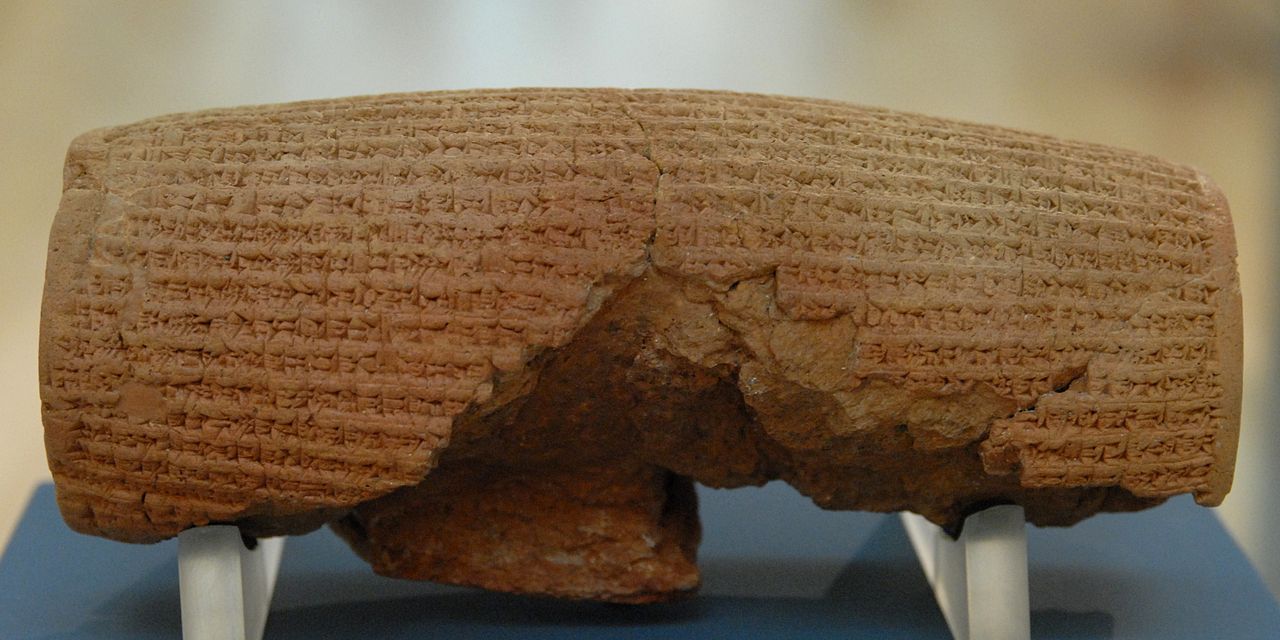
Image Credits: Cyrus Cylinder (British Museum ME 90920). Photo by Marie-Lan Nguyen (Jastrow), via Wikimedia Commons. Licensed under CC BY 2.5.



Comments
No comments yet. Be the first to share your thoughts.