
The Prophecy of the Messiah’s Birthplace in Bethlehem
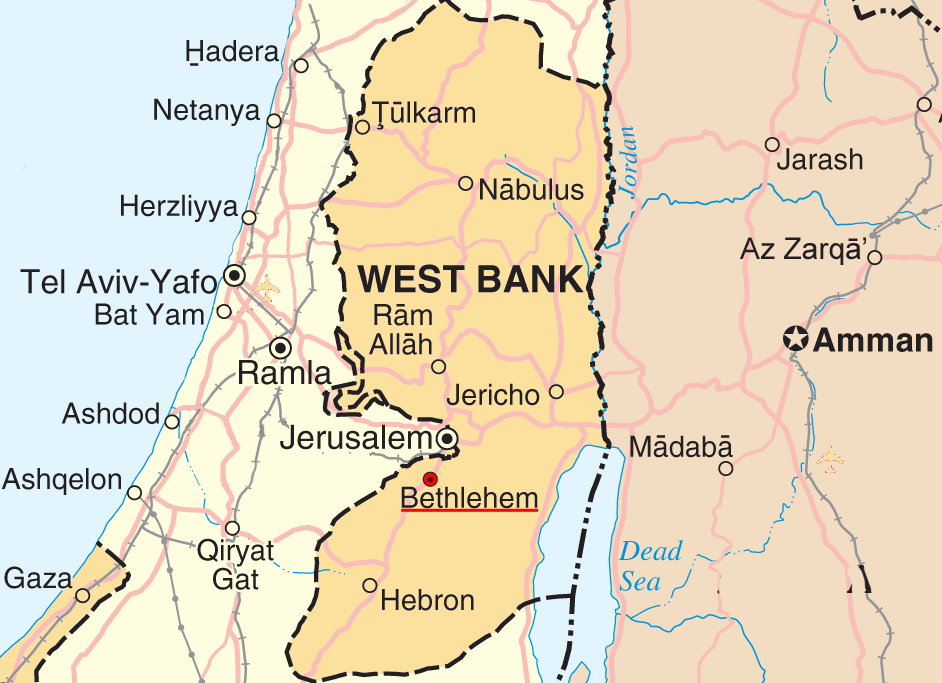
At a time when Bethlehem was little more than a small and easily overlooked town, the prophet Micah recorded a surprising promise about its future. In Micah 5:22 But you, O Bethlehem Ephrathah, who are too little to be among the clans of Judah, from you shall come forth for me one who is to be ruler in Israel, whose coming forth is from of old, from ancient days., written in the 8th century BC, this seemingly insignificant place is identified as the birthplace of a coming ruler whose origins reach back to “ancient times” (Hebrew: miqedem).
Micah 5:22 But you, O Bethlehem Ephrathah, who are too little to be among the clans of Judah, from you shall come forth for me one who is to be ruler in Israel, whose coming forth is from of old, from ancient days. (ESV)
"But you, O Bethlehem Ephrathah,
who are too little to be among the clans of Judah,
from you shall come forth for me
one who is to be ruler in Israel,
whose coming forth is from of old,
from ancient days."
📖 Theological Significance of the Messiah’s Birthplace Prophecy
Micah 5:22 But you, O Bethlehem Ephrathah, who are too little to be among the clans of Judah, from you shall come forth for me one who is to be ruler in Israel, whose coming forth is from of old, from ancient days. reveals several key theological points:
| Aspect | Meaning |
|---|---|
| Bethlehem | Small and humble — God's choice of the lowly to bring forth greatness. |
| "Ruler over Israel" | Points to a kingly, messianic figure who will reign over God's people. |
| "From of old, from ancient days" | The Hebrew phrase “from of old, from ancient days” (מִקֶּדֶם מִימֵי עוֹלָם) often implies timelessness or eternity, especially when describing what God has done or how long He has existed (Psalm 90:22 Before the mountains were brought forth, or ever you had formed the earth and the world, from everlasting to everlasting you are God., Proverbs 8:22–2322 “The Lord possessed me at the beginning of his work, the first of his acts of old. 23 Ages ago I was set up, at the first, before the beginning of the earth.). |
🕎 Jewish Context and Interpretation of Micah 5:22 But you, O Bethlehem Ephrathah, who are too little to be among the clans of Judah, from you shall come forth for me one who is to be ruler in Israel, whose coming forth is from of old, from ancient days.
Jewish commentators primarily interpret this passage as referring to a future ruler from the line of David — a coming king who would arise during a time of national distress to restore Israel.
Bethlehem is central to this expectation. As the birthplace of David (1 Samuel 16:11 The Lord said to Samuel, “How long will you grieve over Saul, since I have rejected him from being king over Israel? Fill your horn with oil, and go. I will send you to Jesse the Bethlehemite, for I have provided for myself a king among his sons.”), it anchors the prophecy in the Davidic dynasty and reinforces the continuity of Israel’s kingship.
The phrase “from of old, from ancient days” (מִקֶּדֶם מִימֵי עוֹלָם) is often understood as poetic language, pointing either to the ancient origins of David’s line or to God’s long-established plan for this ruler.
Some interpretations have suggested the passage could refer to a historical king such as Hezekiah. However, this view does not clearly account for the specific reference to Bethlehem, and no known ruler from that period fits all the details of the prophecy as discussed in the critical objections section.
Classical Jewish Commentary
-
Rashi emphasizes Bethlehem as the origin of David’s family, highlighting the continuity of kingship from ancient roots.1
-
Targum Jonathan, an early Aramaic paraphrase, explicitly identifies the figure as the Messiah:
“From you shall come forth before Me the Messiah, to exercise dominion over Israel…”2
📖 Fulfillment in the New Testament
The New Testament presents the fulfillment of Micah 5:22 But you, O Bethlehem Ephrathah, who are too little to be among the clans of Judah, from you shall come forth for me one who is to be ruler in Israel, whose coming forth is from of old, from ancient days. through multiple independent accounts, all placing Jesus’ birth in Bethlehem, the prophesied city of David.
Matthew 2:1–61 Now after Jesus was born in Bethlehem of Judea in the days of Herod the king, behold, wise men from the east came to Jerusalem, 2 saying, “Where is he who has been born king of the Jews? For we saw his star when it rose and have come to worship him.” (ESV)
Now after Jesus was born in Bethlehem of Judea in the days of Herod the king, behold, wise men from the east came to Jerusalem, saying, “Where is he who has been born king of the Jews? For we saw his star when it rose and have come to worship him.”
When Herod the king heard this, he was troubled, and all Jerusalem with him; and assembling all the chief priests and scribes of the people, he inquired of them where the Christ was to be born.
They told him, “In Bethlehem of Judea, for so it is written by the prophet:
‘And you, O Bethlehem, in the land of Judah, are by no means least among the rulers of Judah; for from you shall come a ruler who will shepherd my people Israel.’”
The religious leaders themselves quote Micah 5:22 But you, O Bethlehem Ephrathah, who are too little to be among the clans of Judah, from you shall come forth for me one who is to be ruler in Israel, whose coming forth is from of old, from ancient days. to Herod, showing that Bethlehem was clearly understood as the prophesied birthplace of the Messiah.
Luke 2:4–74 And Joseph also went up from Galilee, from the town of Nazareth, to Judea, to the city of David, which is called Bethlehem, because he was of the house and lineage of David, 5 to be registered with Mary, his betrothed, who was with child. likewise emphasizes Joseph’s Davidic lineage and explains how Jesus’ birth in Bethlehem took place, aligning the narrative with both Micah and broader messianic expectations.
While Matthew and Luke present the fulfillment of Micah 5:22 But you, O Bethlehem Ephrathah, who are too little to be among the clans of Judah, from you shall come forth for me one who is to be ruler in Israel, whose coming forth is from of old, from ancient days. in the birth narratives, the Gospel of John reflects how this expectation was widely recognized during Jesus’ lifetime.
“Has not the Scripture said that the Christ comes from the offspring of David, and comes from Bethlehem, the village where David was?” (John 7:4242 Has not the Scripture said that the Christ comes from the offspring of David, and comes from Bethlehem, the village where David was?”)
Even those who questioned Jesus assumed that the Messiah must come from Bethlehem. Their objection is not to the prophecy itself, but to what they believed were the facts about Jesus’ origin. The tension arises because many assumed Jesus was from Galilee, the primary region of his ministry. Unaware of his birth in Bethlehem, they concluded he could not be the Messiah. In doing so, they unintentionally affirm that Bethlehem was widely recognized as the expected birthplace of the Christ.
⚖️ Critics Objections and Counterarguments
Some skeptics and critics raise the following:
1. Objection: Was the Bethlehem Birth Invented to Fit the Prophecy?
Some critics argue that the claim Jesus was born in Bethlehem was retroactively created to match Micah 5:22 But you, O Bethlehem Ephrathah, who are too little to be among the clans of Judah, from you shall come forth for me one who is to be ruler in Israel, whose coming forth is from of old, from ancient days.. However, this theory lacks historical support and raises several problems:
-
John 7:41–4241 Others said, “This is the Christ.” But some said, “Is the Christ to come from Galilee? 42 Has not the Scripture said that the Christ comes from the offspring of David, and comes from Bethlehem, the village where David was?” Shows Bethlehem Was Expected: When some in the crowd say, “But the Messiah doesn’t come from Galilee,” it shows that people clearly understood Micah 5:22 But you, O Bethlehem Ephrathah, who are too little to be among the clans of Judah, from you shall come forth for me one who is to be ruler in Israel, whose coming forth is from of old, from ancient days. as a Messianic prophecy. Interestingly, the Gospel of John doesn’t “correct” this misunderstanding in that moment, suggesting the author was being honest about diverse traditions or emphasizing a deeper irony.
-
Public Claims, Public Scrutiny: Jesus was a well-known public figure in Galilee and Judea. The Gospels were written within a few decades of his life (30s–70s AD) and circulated in regions where eyewitnesses could challenge false claims. If Jesus had not been born in Bethlehem, it would have been easy for opponents to expose this, especially since his Messianic credentials depended on it.
-
Motivated Critics: The Pharisees and Temple leadership were highly motivated to discredit Jesus. If his birthplace contradicted Messianic prophecy, this would have been a powerful argument; yet we have no record of it ever being used against him.
-
No Ancient Refutation: No surviving ancient Jewish or hostile source claims that Jesus was not born in Bethlehem. While later rabbinic texts (e.g., Toledot Yeshu) attack Jesus in various ways, they never dispute the Bethlehem birth.
2. Alternative Interpretations and the Limitations of Hezekiah as Fulfillment
Some Jewish interpretations of Micah 5:22 But you, O Bethlehem Ephrathah, who are too little to be among the clans of Judah, from you shall come forth for me one who is to be ruler in Israel, whose coming forth is from of old, from ancient days. have historically pointed to Hezekiah, the faithful king of Judah, or to a general hope of Davidic restoration rather than a specific future messianic figure. These views typically frame Micah's prophecy as either referring to a near-term political deliverer or a symbol of Israel’s covenantal continuity.
However, these interpretations face a number of key limitations:
-
Hezekiah’s reign did not result in lasting peace or universal rule, nor was he born in Bethlehem (he was born in Jerusalem).
-
The Davidic monarchy ultimately collapsed, and Hezekiah's line was cut off in exile, failing to fulfill the expectations of a ruler who would shepherd Israel permanently.
-
Most importantly, Micah 5:22 But you, O Bethlehem Ephrathah, who are too little to be among the clans of Judah, from you shall come forth for me one who is to be ruler in Israel, whose coming forth is from of old, from ancient days.’s language about the ruler’s origins being “from of old, from ancient days” (ESV: מִקֶּדֶם מִימֵי עוֹלָם) suggests a scope that may transcend a human timeframe, as seen in passages such as Psalm 90:22 Before the mountains were brought forth, or ever you had formed the earth and the world, from everlasting to everlasting you are God. and Proverbs 8:22–2322 “The Lord possessed me at the beginning of his work, the first of his acts of old. 23 Ages ago I was set up, at the first, before the beginning of the earth..
Thus, while alternative interpretations existed, they do not sufficiently account for the prophetic depth and eternal scope of Micah’s vision. Christian theology sees this fulfilled not merely in a historical king, but in the incarnation of the eternal Word (cf. John 1:1–141 In the beginning was the Word, and the Word was with God, and the Word was God. 2 He was in the beginning with God.), who was born in Bethlehem in precise fulfillment of this prophecy.
📊 Specificity of Bethlehem
Micah 5:22 But you, O Bethlehem Ephrathah, who are too little to be among the clans of Judah, from you shall come forth for me one who is to be ruler in Israel, whose coming forth is from of old, from ancient days. does not point to a major city, but to Bethlehem, a small village in first-century Judea, likely home to only around 1,000–2,000 inhabitants (based on typical estimates for small Judean villages).3 By comparison, Judea’s population is commonly estimated at roughly 500,000–600,000.4,5 Even at a basic level, this suggests that only a small fraction of the population would have been born in Bethlehem. Using mid-range estimates (e.g., ~1,500 inhabitants out of ~550,000), this yields a proportion of roughly 1 in 350.
Expanding further, the total Jewish population of the Roman Empire is often estimated at around 4–5 million.6 Within that broader context, the likelihood of any individual being born in Bethlehem becomes smaller still (approximately 1 in 3,000 based on similar mid-range estimates).
These figures are illustrative rather than precise statistical calculations, but they highlight an important point: the prophecy is geographically specific and significantly narrows the range of possible fulfillment. When combined with the additional requirement of descent from the line of David, the pool of plausible candidates becomes more limited.
The Gospel accounts, across independent narratives, consistently place Jesus’ birth in Bethlehem, aligning directly with the expectation established in Micah 5:22 But you, O Bethlehem Ephrathah, who are too little to be among the clans of Judah, from you shall come forth for me one who is to be ruler in Israel, whose coming forth is from of old, from ancient days..
✍️ Conclusion
Micah 5:22 But you, O Bethlehem Ephrathah, who are too little to be among the clans of Judah, from you shall come forth for me one who is to be ruler in Israel, whose coming forth is from of old, from ancient days. stands as one of the clearest Old Testament prophecies about the Messiah’s birthplace. Both Jewish expectation and Christian fulfillment revolve around a coming ruler from Bethlehem, linked to David’s line and God’s eternal purpose. In the New Testament, this prophecy is explicitly fulfilled in Jesus of Nazareth, whose birth in Bethlehem of Judea is recorded as a divine confirmation of his Messianic identity.
📚 References
Rashi, Commentary on Micah 5:22 But you, O Bethlehem Ephrathah, who are too little to be among the clans of Judah, from you shall come forth for me one who is to be ruler in Israel, whose coming forth is from of old, from ancient days. — Emphasizes Bethlehem and Davidic lineage.
Targum Jonathan on Micah 5:22 But you, O Bethlehem Ephrathah, who are too little to be among the clans of Judah, from you shall come forth for me one who is to be ruler in Israel, whose coming forth is from of old, from ancient days. — Early Aramaic paraphrase identifying the Messiah’s eternal dominion.
E. P. Sanders, Jesus and Judaism (Fortress Press, 1985).
Emil Schürer, The History of the Jewish People in the Age of Jesus Christ (T&T Clark, rev. ed.).
Joachim Jeremias, Jerusalem in the Time of Jesus (Fortress Press, 1969).
Tacitus, Histories 5.5.
Philo, Legatio ad Gaium 281–282.
Image Credits: Bethlehem Location map by Al Ameer son, derived from a United Nations map, via Wikimedia Commons. Public domain.
Comments
No comments yet. Be the first to share your thoughts.