
The Sign of Isaiah 7:14 – Prophecy of a Virgin Birth
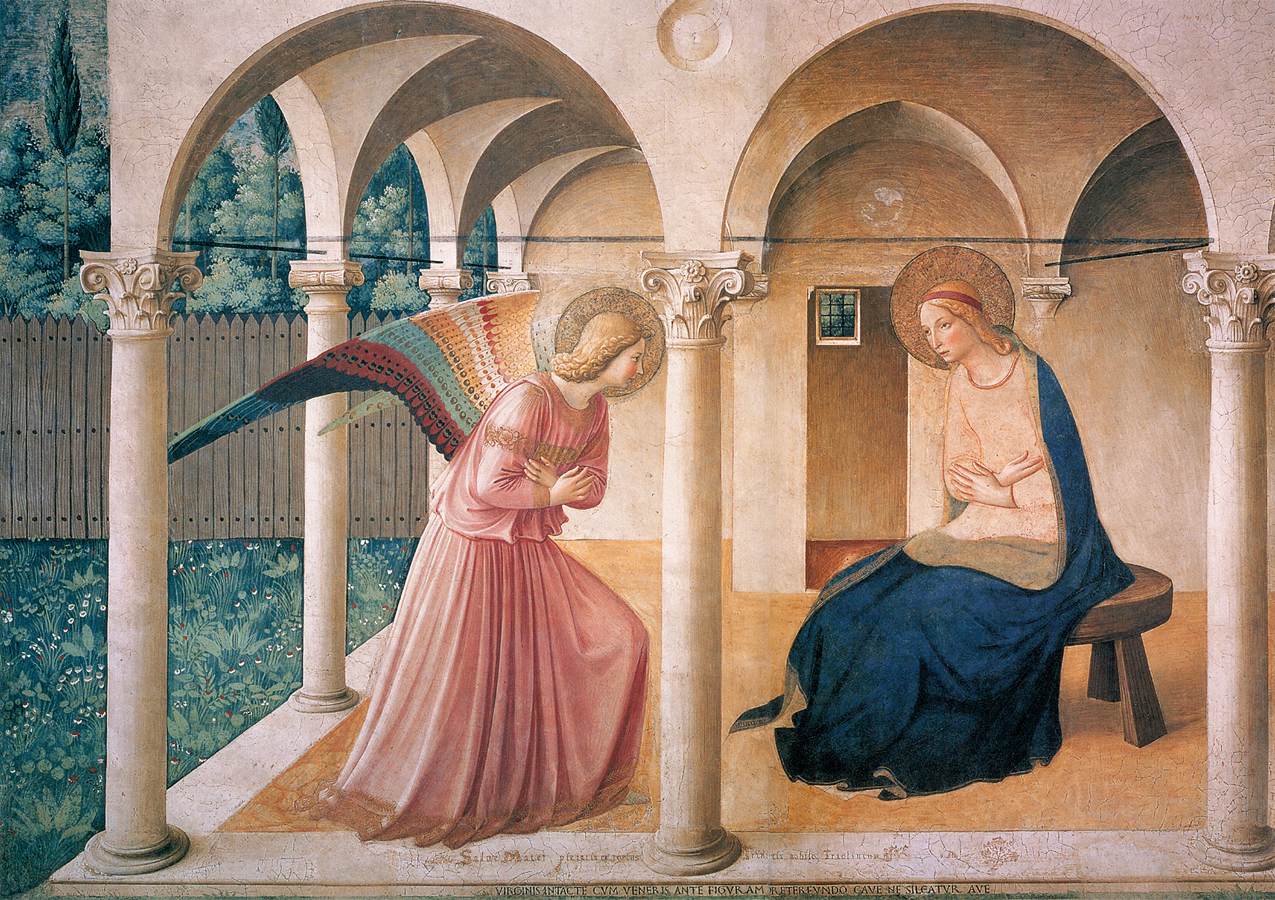
Few passages in Scripture have stirred as much debate and anticipation as Isaiah 7:1414 Therefore the Lord himself will give you a sign. Behold, the virgin shall conceive and bear a son, and shall call his name Immanuel.. Written over 700 years before Christ, this prophecy gave Israel a glimpse of a miraculous sign:
“Behold, the virgin shall conceive and bear a son, and shall call his name Immanuel.” (Isaiah 7:1414 Therefore the Lord himself will give you a sign. Behold, the virgin shall conceive and bear a son, and shall call his name Immanuel.)
Christians see in this verse a direct foretelling of the birth of Jesus, while Jewish interpretations have traditionally read it differently. But what did the earliest Jewish readers actually expect? Was the idea of a virgin birth simply invented by Christians after the fact or does the evidence show otherwise?
📖 The Hebrew Text – “Young Woman” vs. “Virgin”
The original Hebrew word used in Isaiah 7:1414 Therefore the Lord himself will give you a sign. Behold, the virgin shall conceive and bear a son, and shall call his name Immanuel. is ‘almah’ (עַלְמָה), which literally means young woman (of marriageable age). Critics often argue this does not explicitly mean virgin, which would be the Hebrew word bethulah.
However, ancient Jewish translators working long before Jesus gave us further insight.
📜 The Septuagint and Early Jewish Interpretation
In its immediate context, Isaiah 7:1414 Therefore the Lord himself will give you a sign. Behold, the virgin shall conceive and bear a son, and shall call his name Immanuel. was given as a sign to King Ahaz, and many Jewish interpretations understand it in relation to events in his own time rather than as a direct messianic prophecy. At the same time, the history of interpretation shows that this was not the only way the passage was read before the time of Jesus.
The Septuagint (LXX), a Greek translation of the Hebrew Bible completed by Jewish scholars in Alexandria around the 2nd–3rd century BC, renders Isaiah 7:1414 Therefore the Lord himself will give you a sign. Behold, the virgin shall conceive and bear a son, and shall call his name Immanuel. with the word παρθένος (parthenos), which most commonly means virgin.1,5
This is significant: it shows that some Jewish interpreters before Christianity allowed for a miraculous Messianic conception. It wasn’t a Christian “re-interpretation” forced into the text, but an existing stream of Jewish expectation.
⚖️ Translation Nuance and Scholarly Debate
At the same time, scholars note that the Septuagint does not always translate Hebrew terms woodenly. In some contexts, παρθένος (parthenos) can carry a broader sense of a young woman of marriageable age, even if it often implies virginity.1,5 However, its use here reflects a translation choice that goes beyond a strictly neutral rendering of ‘almah’, indicating that the translators perceived something distinctive in the passage.
This is reinforced by the immediate context: Isaiah presents the birth as a “sign” (’ot) given to King Ahaz (Isaiah 7:1414 Therefore the Lord himself will give you a sign. Behold, the virgin shall conceive and bear a son, and shall call his name Immanuel.). In the Hebrew Bible, a sign points to something divinely significant, not just a routine event. A purely ordinary birth would not function as a compelling sign in this context.
At minimum, the passage points to a birth that is not ordinary, but one marked by God’s involvement.
🤱 Could the Virgin Birth Tradition Have Been Invented?
Some critics argue that the virgin birth accounts in the Gospels were later theological developments rather than historical memories. However, several features of the tradition make simple fabrication much less likely:
-
The accounts in Matthew and Luke appear in independent narrative contexts, with different emphases, structures, and even distinct genealogical traditions, yet they converge on the same central claim: that Jesus’ conception was miraculous without a father.2 This suggests the presence of an early, shared tradition rather than a single coordinated invention.
-
The story itself reflects the real social pressures of a first-century Jewish setting. Joseph’s initial intention to quietly divorce Mary (Matthew 1:18–2518 Now the birth of Jesus Christ took place in this way. When his mother Mary had been betrothed to Joseph, before they came together she was found to be with child from the Holy Spirit. 19 And her husband Joseph, being a just man and unwilling to put her to shame, resolved to divorce her quietly.) underscores the seriousness of the situation and the potential for public shame. Allegations surrounding irregular birth could invite suspicion or dishonor (John 8:4141 You are doing the works your father did.”), making the claim itself culturally and socially difficult. The inclusion of these tensions suggests that the account was not constructed as an idealized or unchallenged story, but preserves details consistent with the Gospel narrative.2
-
The Gospel writers explicitly connect the event to Isaiah 7:1414 Therefore the Lord himself will give you a sign. Behold, the virgin shall conceive and bear a son, and shall call his name Immanuel., drawing on a Greek translation of the Septuagint that rendered the term as parthenos (“virgin”). This indicates that the claim was not created in isolation, but was understood within an existing interpretive framework already present in the textual tradition.
Taken together, these factors suggest that the virgin birth accounts are best understood not as late theological embellishments, but as early traditions that were preserved, interpreted, and connected to Scripture by the Gospel writers.
✨ Immanuel – “God With Us”
The son to be born would be called Immanuel (עִמָּנוּאֵל), meaning God with us. Critics point out that Jesus’ name was not literally “Immanuel,” but rather “Yeshua” (Jesus).
Yet names in Hebrew prophecy often carry theological significance, not strict labels. For example:
-
“Isaiah” means The Lord saves
-
“Elijah” means My God is Yahweh
In the same way, Jesus’ very identity fulfilled “Immanuel”: as the Word made flesh (John 1:1414 And the Word became flesh and dwelt among us, and we have seen his glory, glory as of the only Son from the Father, full of grace and truth.), He is literally God dwelling among us. His role and presence, not His given name, are what embody the prophecy’s meaning.
Matthew 1:22–2322 All this took place to fulfill what the Lord had spoken by the prophet: 23 “Behold, the virgin shall conceive and bear a son, and they shall call his name Immanuel” (which means, God with us). (50-90 AD) – "All this took place to fulfill what the Lord had said through the prophet: ‘The virgin will conceive and give birth to a son, and they will call him Immanuel’ (which means ‘God with us’)."
🕊️ Other Early Christian Witnesses:
By the mid-2nd century, the interpretation of Isaiah 7:1414 Therefore the Lord himself will give you a sign. Behold, the virgin shall conceive and bear a son, and shall call his name Immanuel. as referring to the virgin birth and the identification of “Immanuel” in this context was already well established in early Christian literature.3,4
-
Justin Martyr (c. 150 AD) argued in Dialogue with Trypho that Isaiah 7:1414 Therefore the Lord himself will give you a sign. Behold, the virgin shall conceive and bear a son, and shall call his name Immanuel. clearly foretold Christ’s virgin birth and His title “Immanuel.”3
-
Irenaeus (c. 180 AD) in Against Heresies likewise affirms that Jesus fulfilled this prophecy, emphasizing that “God with us” describes His very identity, not a literal name.4
⚖️ Conclusion – More Than a Sign for Ahaz
Isaiah 7:1414 Therefore the Lord himself will give you a sign. Behold, the virgin shall conceive and bear a son, and shall call his name Immanuel. was originally given to King Ahaz as a sign of God’s presence and deliverance for Judah. But its ultimate fulfillment reaches beyond his time. The Septuagint’s use of parthenos shows that long before Jesus, Jews themselves could envision a miraculous birth as part of this prophecy.
Christians believe the birth of Jesus is the fullest realization:
-
A virgin conceives ✨
-
A son is born 👶
-
God is with us 🙏
Isaiah’s prophecy was not a late invention but reflects an expectation present within some streams of Jewish tradition prior to the time of Jesus. In this light, the Gospel accounts clearly present the birth of Christ as the fulfillment of a promise preserved and fulfilled across centuries.
📚 References
Tov, Emanuel. Textual Criticism of the Hebrew Bible. Fortress Press, 2012.
Raymond E. Brown, The Birth of the Messiah
Justin Martyr, Dialogue with Trypho
https://www.newadvent.org/fathers/01286.htmIrenaeus, Against Heresies
https://www.newadvent.org/fathers/0103.htmBauer, Walter, Frederick W. Danker, William F. Arndt, and F. Wilbur Gingrich. Greek-English Lexicon of the New Testament and Other Early Christian Literature (BDAG). 3rd ed. University of Chicago Press, 2000.
Image Credits: Fra Angelico, The Annunciation (c. 1438-1450), via Wikimedia Commons. Public domain.
Comments
No comments yet. Be the first to share your thoughts.