
Fulfillment of the New Covenant
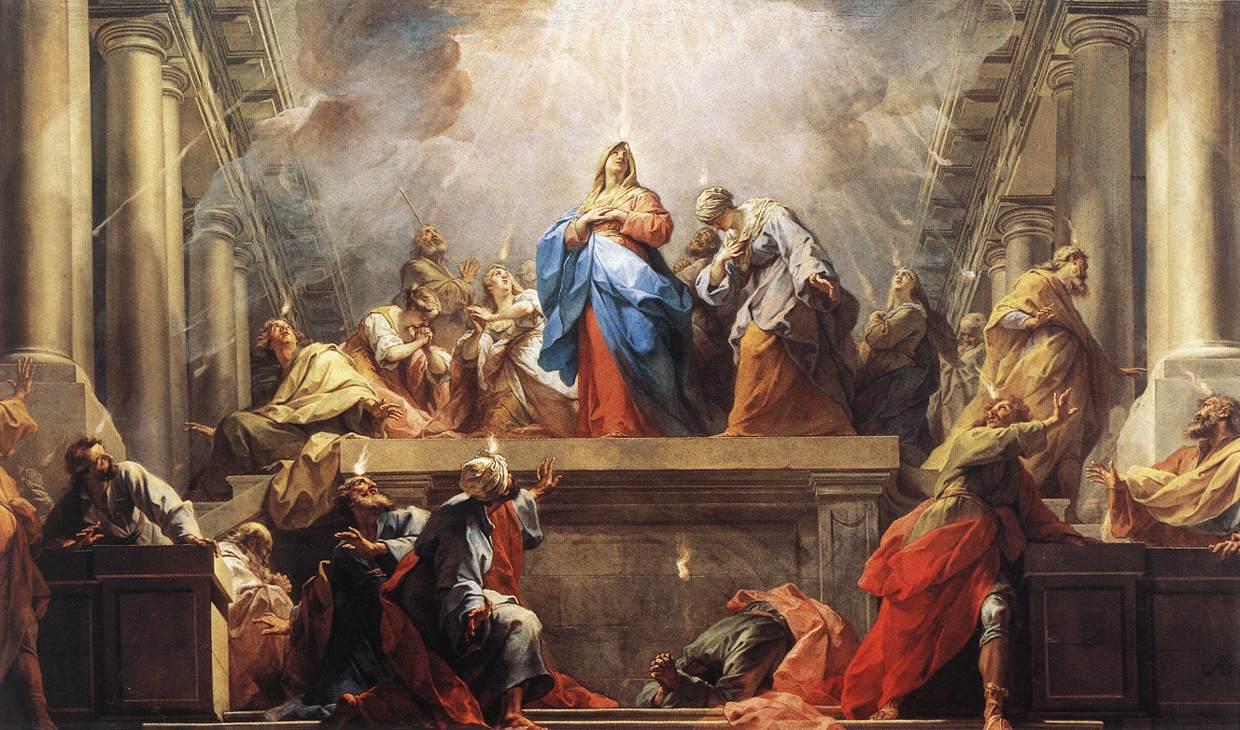
The New Covenant is the biblical promise that God would renew His relationship with His people in a deeper and more lasting way. Unlike the covenant made at Sinai, which was written on stone tablets and repeatedly broken, this future covenant would involve forgiveness of sins, God’s law written on the heart, and a transformed people who truly know Him. In the New Testament, this promise becomes central to how Jesus’ death, resurrection, and the coming of the Holy Spirit are understood.
But was this idea really anticipated in the Old Testament, or did later Christians read it back into Israel’s Scriptures? That question turns not on one passage alone, but on a wider prophetic pattern found especially in Jeremiah 31, Ezekiel 36, and Joel 2, which were written hundreds of years before the time of Jesus. Read together, these texts present a future hope marked by covenant renewal, inward transformation, and the outpouring of God’s Spirit.
✨ Jeremiah 31: The Core Promise of the New Covenant
The clearest Old Testament passage on the New Covenant appears in Jeremiah 31:31–3431 “Behold, the days are coming, declares the Lord, when I will make a new covenant with the house of Israel and the house of Judah, 32 not like the covenant that I made with their fathers on the day when I took them by the hand to bring them out of the land of Egypt, my covenant that they broke, though I was their husband, declares the Lord., where God declares that the days are coming when He will make a “new covenant” with the house of Israel and the house of Judah. What makes this promise so significant is that it is explicitly “not like” the original covenant made when Israel came out of Egypt.
"Behold, the days are coming, declares the Lord, when I will make a new covenant with the house of Israel and the house of Judah, not like the covenant that I made with their fathers on the day when I took them by the hand to bring them out of the land of Egypt, my covenant that they broke, though I was their husband, declares the Lord. But this is the covenant that I will make with the house of Israel after those days, declares the Lord: I will put my law within them, and I will write it on their hearts. And I will be their God, and they shall be my people. And no longer shall each one teach his neighbor and each his brother, saying, 'Know the Lord,' for they shall all know me, from the least of them to the greatest, declares the Lord. For I will forgive their iniquity, and I will remember their sin no more." - Jeremiah 31:31-3431 “Behold, the days are coming, declares the Lord, when I will make a new covenant with the house of Israel and the house of Judah, 32 not like the covenant that I made with their fathers on the day when I took them by the hand to bring them out of the land of Egypt, my covenant that they broke, though I was their husband, declares the Lord.
Even before turning to the New Testament, this is already a major development within the Hebrew Bible. Jeremiah is not describing a minor reform of the old arrangement, but a covenant renewal marked by inner change, restored relationship, and lasting forgiveness.
🕊️ Ezekiel 36: A New Heart and a New Spirit
Jeremiah is not alone in pointing toward this kind of renewal. In Ezekiel 36:26–2726 And I will give you a new heart, and a new spirit I will put within you. And I will remove the heart of stone from your flesh and give you a heart of flesh. 27 And I will put my Spirit within you, and cause you to walk in my statutes and be careful to obey my rules., God promises to give His people a new heart and a new spirit, removing the heart of stone and replacing it with a heart of flesh. He also says, “I will put my Spirit within you.”
"And I will give you a new heart, and a new spirit I will put within you. And I will remove the heart of stone from your flesh and give you a heart of flesh. And I will put my Spirit within you, and cause you to walk in my statutes and be careful to obey my rules." - Ezekiel 36:26–2726 And I will give you a new heart, and a new spirit I will put within you. And I will remove the heart of stone from your flesh and give you a heart of flesh. 27 And I will put my Spirit within you, and cause you to walk in my statutes and be careful to obey my rules.
This passage develops the same hope from a slightly different angle. Jeremiah emphasizes the law written on the heart and the forgiveness of sins. Ezekiel emphasizes inward transformation and the divine enablement to walk in God’s statutes, addressing the deeper problem behind Israel’s repeated cycle of sin, judgment, and exile. Together, the two prophets describe something far deeper than external religious reform. They point to a future work of God that reaches into the inner life of His people.
🔥 Joel 2: The Promise of the Spirit Poured Out
A third key text appears in Joel 2:28–2928 “And it shall come to pass afterward, that I will pour out my Spirit on all flesh; your sons and your daughters shall prophesy, your old men shall dream dreams, and your young men shall see visions. 29 Even on the male and female servants in those days I will pour out my Spirit., where God promises to pour out His Spirit on all flesh. Unlike earlier periods in Israel’s history, where the Spirit is often associated with select prophets, kings, or judges, Joel presents a wider outpouring that reaches sons and daughters, young and old, and even servants.
“I will pour out my Spirit on all flesh; your sons and your daughters shall prophesy, your old men shall dream dreams, and your young men shall see visions. Even on the male and female servants in those days I will pour out my Spirit.” (Joel 2:28-2928 “And it shall come to pass afterward, that I will pour out my Spirit on all flesh; your sons and your daughters shall prophesy, your old men shall dream dreams, and your young men shall see visions. 29 Even on the male and female servants in those days I will pour out my Spirit.)
This does not repeat Jeremiah and Ezekiel word for word, but it clearly belongs to the same larger pattern. The future restoration of God’s people would involve not only covenant renewal and inner transformation, but also the broad outpouring of God’s own Spirit.
✝️ Why the New Testament Sees Fulfillment in Christ
This is why the New Testament repeatedly returns to these passages. Hebrews 8 and 10 quote Jeremiah 31 directly to explain the significance of Christ’s priesthood and sacrifice. Acts 2 cites Joel 2 when Peter explains the outpouring of the Spirit at Pentecost. Paul’s letters likewise use language of inward renewal, forgiveness, and Spirit-enabled obedience that closely echoes these prophetic themes.
The Christian claim, then, is not built on a single isolated prediction. It is based on a wider prophetic pattern already present in the Hebrew Scriptures: a coming covenant unlike the old one, forgiveness of sins, transformed hearts, and the gift of God’s Spirit. The New Testament presents Jesus and Pentecost as the moment when those long-awaited promises began to be realized after the resurrection of Jesus.
🛡️ Was This Reading Forced?
Some readers argue that these passages refer only to Israel’s historical restoration and were later reinterpreted by Christians. There is truth in the fact that these prophecies arise from Israel’s own covenant history and hopes for restoration. Yet the language of the texts also reaches beyond mere political return. Jeremiah speaks of a covenant “not like” the one made at the exodus. Ezekiel points to a deep inward renewal. Joel anticipates a broad outpouring of the Spirit.
For that reason, the New Testament’s use of these texts is not arbitrary. Whether or not one accepts the Christian conclusion, the connection rests on real themes already present in the prophets themselves, and in language that was never clearly fulfilled in a complete or final way in Israel’s earlier history.1
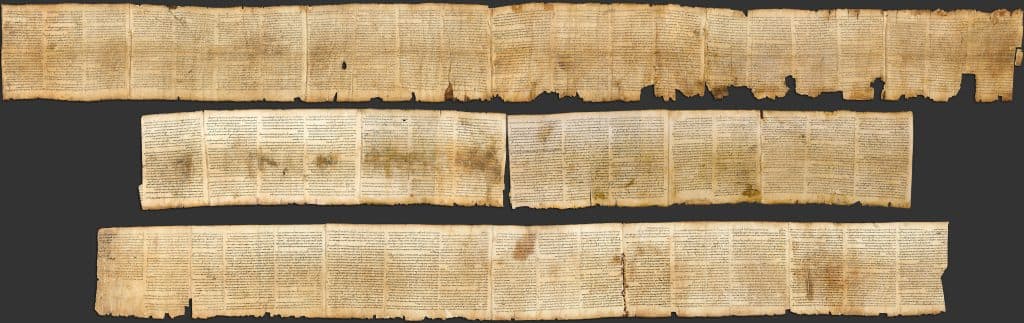
Jewish interpretation does not appear to have made Jeremiah 31 a central passage in the same way later Christian writers did, yet the text was still understood as speaking of a future renewal in God’s relationship with His people.2 This helps explain why “new covenant” language was already present in Second Temple Judaism; most notably, the Damascus Document at Qumran applies that language to its own community.3 While the Qumran sect’s use reflects a sectarian identity rather than the later Christian theology of Pentecost, the historical point remains: early Christians did not invent the idea of a “new covenant” from nothing. They claimed that an existing prophetic hope had reached its decisive fulfillment in Jesus.
📖 Summary
The New Covenant was not a random theological idea invented by early Christians. It was rooted in a prophetic pattern already visible in the Old Testament. Jeremiah promised a new covenant marked by forgiveness and the law written on the heart. Ezekiel spoke of a new heart and God’s Spirit within His people. Joel anticipated a coming outpouring of the Spirit on all flesh.
Read together, these passages help explain why the New Testament presents Christ and the coming of the Spirit as the fulfillment of a long-awaited covenant renewal. The Christian claim is not that every detail was obvious in advance, but that the central categories were already there: a new covenant unlike the one at Sinai, forgiveness of sins, God’s law written on the heart, a renewed relationship with God, a new heart and spirit, obedience empowered from within, and the outpouring of God’s Spirit on His people.
📚 References
M. D. Terblanche, “Jeremiah 31:31–34: A Prospect of True Transformation.”
Alon Goshen-Gottstein, “The New Covenant – Jeremiah 31:30–33 (31:31–34) in Jewish Interpretation.”
Damascus Document, for “new covenant in the land of Damascus.”
P. de Vries, “The Relationship between the Glory of YHWH and the Spirit of YHWH in Ezekiel 33–48.”
Connor Boyd, “New take on the New Covenant: a reconsideration of the ‘New Covenant’ and Jeremiah 31:31–34 in the Masoretic Text, Septuagint, and Dead Sea Scrolls,” for the scholarly debate around whether the Qumran use directly appropriates Jeremiah 31.
Image Credits: Jean Restout, Pentecost (1732), via Wikimedia Commons. Public domain.

Comments
No comments yet. Be the first to share your thoughts.