
Tacitus on Jesus

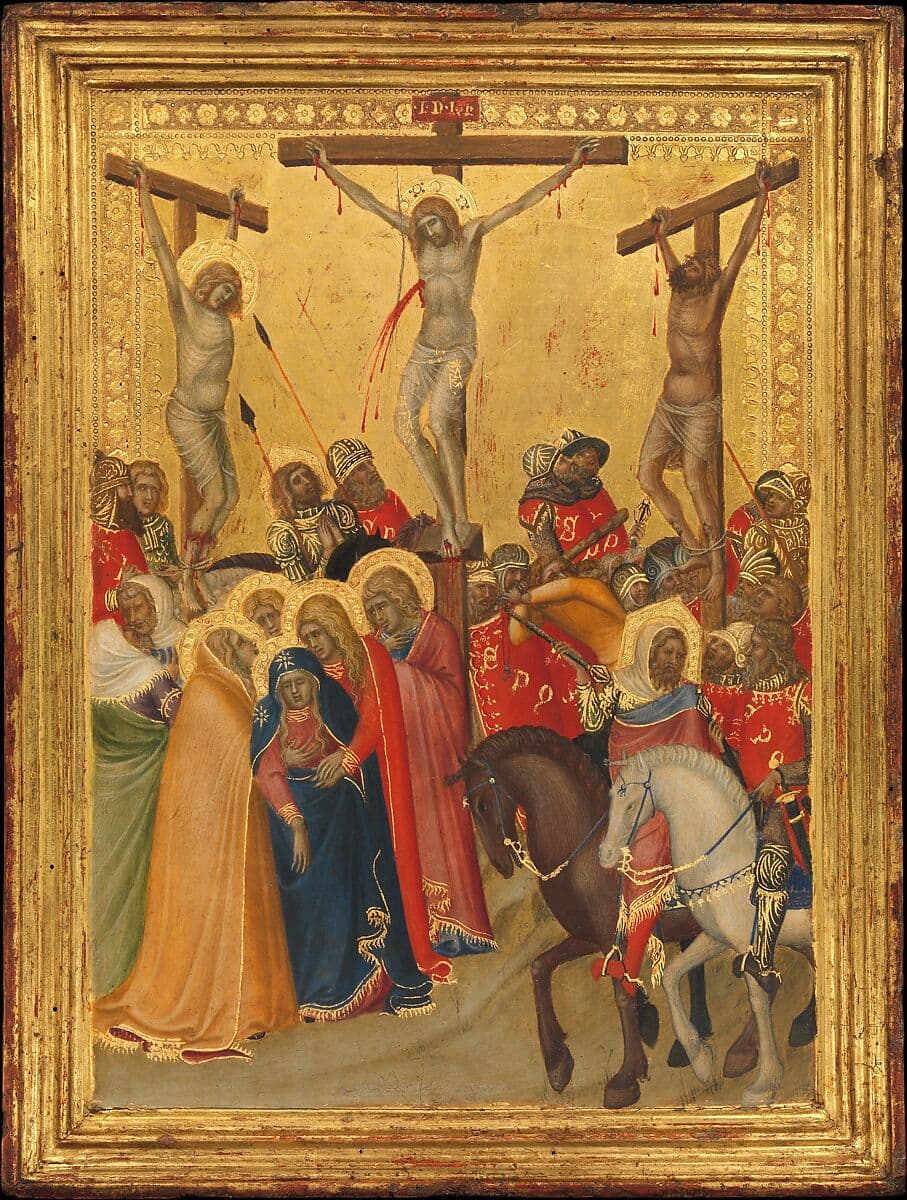
Tacitus, a Roman historian writing around 116 AD, provides one of the most important non-Christian references to Jesus Christ. In Annals 15.44, he confirms that Christus (Jesus) was executed under Pontius Pilate during the reign of Emperor Tiberius and documents the brutal persecution of early Christians under Nero.
Historians, both Christian and non-Christian, widely regard this passage as authentic and historically reliable, offering Roman confirmation of Jesus’s execution under Pontius Pilate and the early presence of Christianity.
🧭 Introduction
When discussing the historical existence of Jesus, one of the most compelling and frequently cited non-Christian sources is the Roman historian Tacitus. His monumental work, The Annals, records the history of the Roman Empire from the death of Augustus in 14 AD to the end of Nero’s reign in 68 AD. Within this time frame, Tacitus offers a chilling account of how Emperor Nero blamed the Christian sect for the Great Fire of Rome, and in doing so, he left behind one of the earliest and most respected historical references to Jesus Christ.
📜 The Annals, Book 15, Chapter 44
“...Consequently, to get rid of the report, Nero fastened the guilt and inflicted the most exquisite tortures on a class hated for their abominations, called Christians by the populace. Christus, from whom the name had its origin, suffered the extreme penalty during the reign of Tiberius at the hands of one of our procurators, Pontius Pilatus, and a most mischievous superstition, thus checked for the moment, again broke out not only in Judaea, the first source of the evil, but even in Rome…” — Tacitus, Annals 15.44
This excerpt from the Annals confirms several historical facts including:
-
Jesus (Christus) was executed under Pontius Pilate, during Tiberius’s reign.
-
He describes the rise of Christianity as a real and 'dangerous' movement, spreading from Judea to Rome.
-
He notes the severe persecution of Christians under Nero following the Great Fire of Rome in 64 AD.
🔍 Is this passage authentic?
The passage in Annals 15.44 is nearly universally accepted by scholars as authentic. Tacitus writes with clear hostility toward Christians, calling their beliefs a “mischievous superstition” and describing them as a class “hated for their abominations.” A later Christian scribe would likely not have written in such terms, making interpolation highly unlikely. The language and tone also fit naturally with Tacitus’s broader treatment of unpopular sects.
There is also no serious manuscript controversy surrounding this section of the Annals. This portion survives in a single 11th-century manuscript, the source of every later copy, and the only notable variant in the passage is a minor spelling of “Christians” (Chrestianos, corrected to Christianos), reflecting the same Roman confusion of the name discussed in our Suetonius article. While this manuscript is medieval and relatively late, the broader principles of textual transmission and manuscript comparison are explored in greater detail in our article: New Testament Manuscript Reliability.
A separate question is where Tacitus got his information. Some argue he simply repeated what Christians claimed about Jesus, but that view is speculative and does not fit how Tacitus handles his sources elsewhere. In this passage, he writes with confidence and specificity, naming both Pontius Pilate and the reign of Tiberius. While his exact source is unknown, Tacitus was openly hostile to Christians and unlikely to take their word for it, yet he treated Jesus’s execution under Pilate as established fact.
For these reasons, historians across the spectrum regard Annals 15.44 as a reliable, non-Christian confirmation of Jesus’s execution and the early presence of Christians in Rome.2 The crucifixion under Pontius Pilate remains one of the most widely accepted facts about Jesus in modern historical scholarship.
🏛️ Tacitus as a Historical Witness
Tacitus was well positioned to know these facts, as he was a Roman senator and proconsul who operated within the highest levels of imperial administration and had access to official records.3 He was also a member of the priestly college that oversaw foreign religions in Rome (Annals 11.11), which gave him a professional reason to know about groups like the Christians. His historical method is widely regarded as critical and source-driven, and throughout his writings he distinguishes between hearsay and documented events, often signaling when information is uncertain.
When Tacitus records the execution of Christus under Pontius Pilate in Annals 15.44, he does so within a broader account of Roman administrative actions under Nero, the world of government he knew from the inside. Taken together, his position, his careful method, and this administrative context give his brief notice real weight as evidence that Jesus was executed under Pilate.
⚖️ The Pilate Title Issue: “Procurator” vs. “Prefect”
One classic scholarly discussion surrounding this passage involves Tacitus’s reference to Pilate as a “procurator.” Archaeological evidence, most notably the Pilate Stone discovered at Caesarea Maritima, identifies Pilate’s official title during Tiberius’s reign as “prefect” (praefectus), not procurator.
At first glance, this might seem like a discrepancy. However, from AD 44 onward the Roman governors of Judea did hold the title “procurator,” so by Tacitus’s time in the early second century it had become the familiar term for the office. Tacitus was likely using the title his own audience knew rather than reproducing an outdated one, and both Josephus and Philo use the equivalent Greek term for Pilate as well.4
Rather than undermining his credibility, this detail fits a Roman historian writing in the language of his own day. A Christian interpolator, by contrast, would more likely have echoed the Gospels, which use the general term “governor” rather than a technical title.
📌 Summary: What we learn from Tacitus
Tacitus’s account confirms several key historical facts:
-
Jesus existed, referred to here as “Christus.”
-
He was executed by Pontius Pilate under Emperor Tiberius.
-
His followers were known as Christians and were already present in Rome by the 60s AD.
-
The movement was considered 'dangerous' enough to warrant brutal suppression by Nero.
Ultimately, Tacitus’s account is significant largely because it is incidental. His primary goal wasn't to document the life of Jesus, but to illustrate the depravity of Emperor Nero. By using the Christians as a backdrop for Nero’s cruelty, he inadvertently provided one of the most significant non-Christian confirmations of the crucifixion.
📚 References
Tacitus, Cornelius. Annals, Book XV, Chapter 44. Written c. 116 AD. Church & Brodribb translation via Perseus.
Ehrman, Bart D. Did Jesus Exist? The Historical Argument for Jesus of Nazareth. HarperOne, 2012.
Mellor, Ronald. The Roman Historians. Routledge, 1999.
Maier, Paul L. In the Fullness of Time: A Historian Looks at Christmas, Easter, and the Early Church. HarperSanFrancisco, 1991.
Habermas, Gary R. The Historical Jesus: Ancient Evidence for the Life of Christ. College Press, 1996.
Image Credits: Unknown illustrator. Drawing based on an antique bust. Published by the Grolier Society, 1920. Wikimedia Commons. Public Domain. Available here.


Comments
No comments yet. Be the first to share your thoughts.