
Radiation Afterglow: The Echo of a Beginning
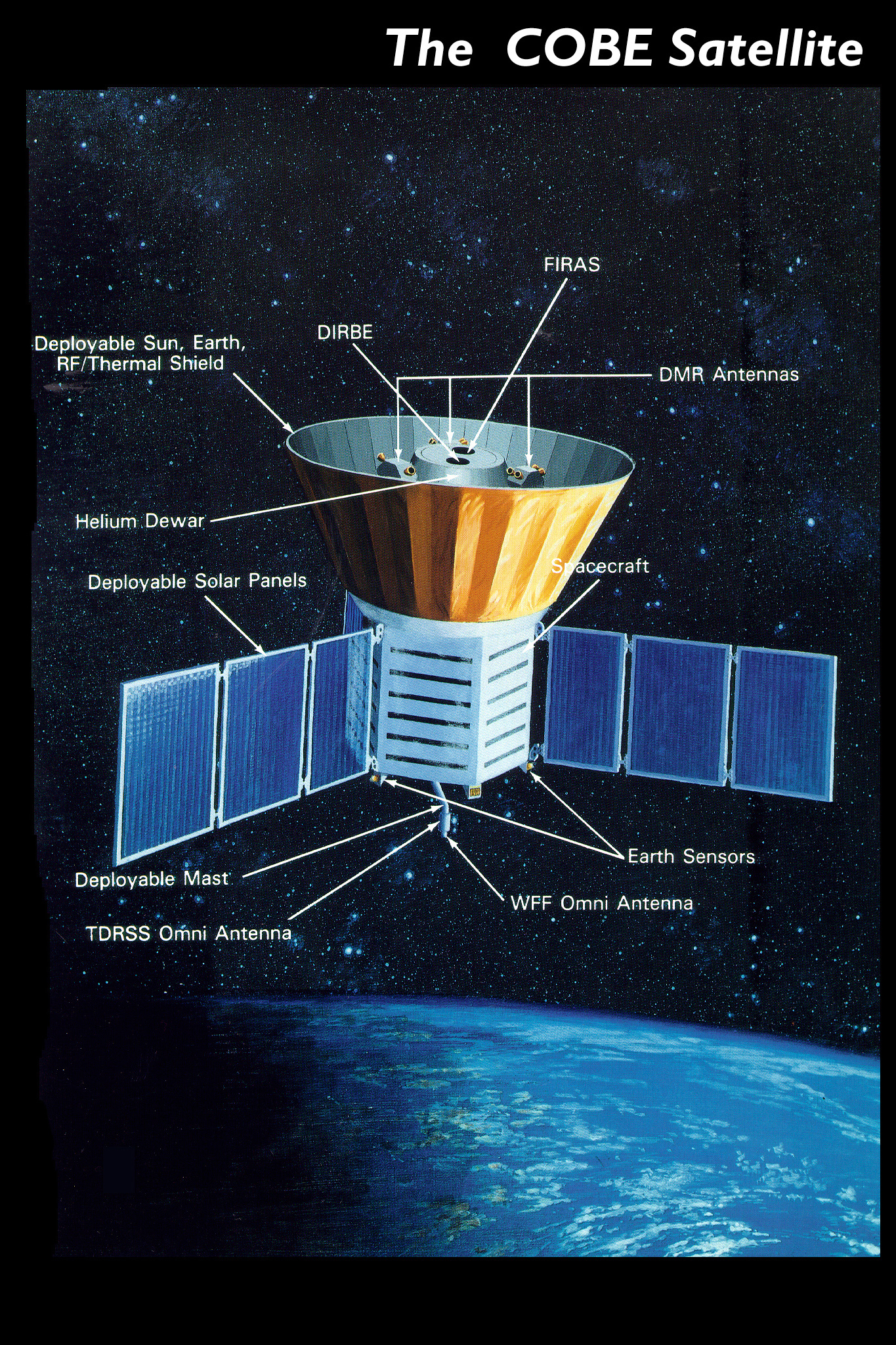
The cosmic microwave background (CMB) is the faint thermal radiation that fills the universe in every direction. It is often described as the afterglow of the Big Bang, and is one of the clearest pieces of evidence that the universe passed through an early hot, dense phase.1
🌌 What Is the Cosmic Microwave Background?
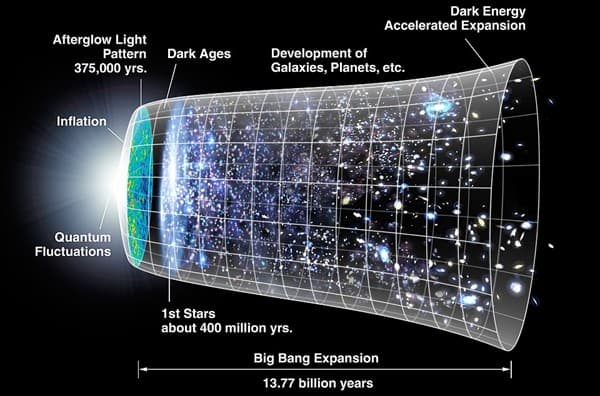
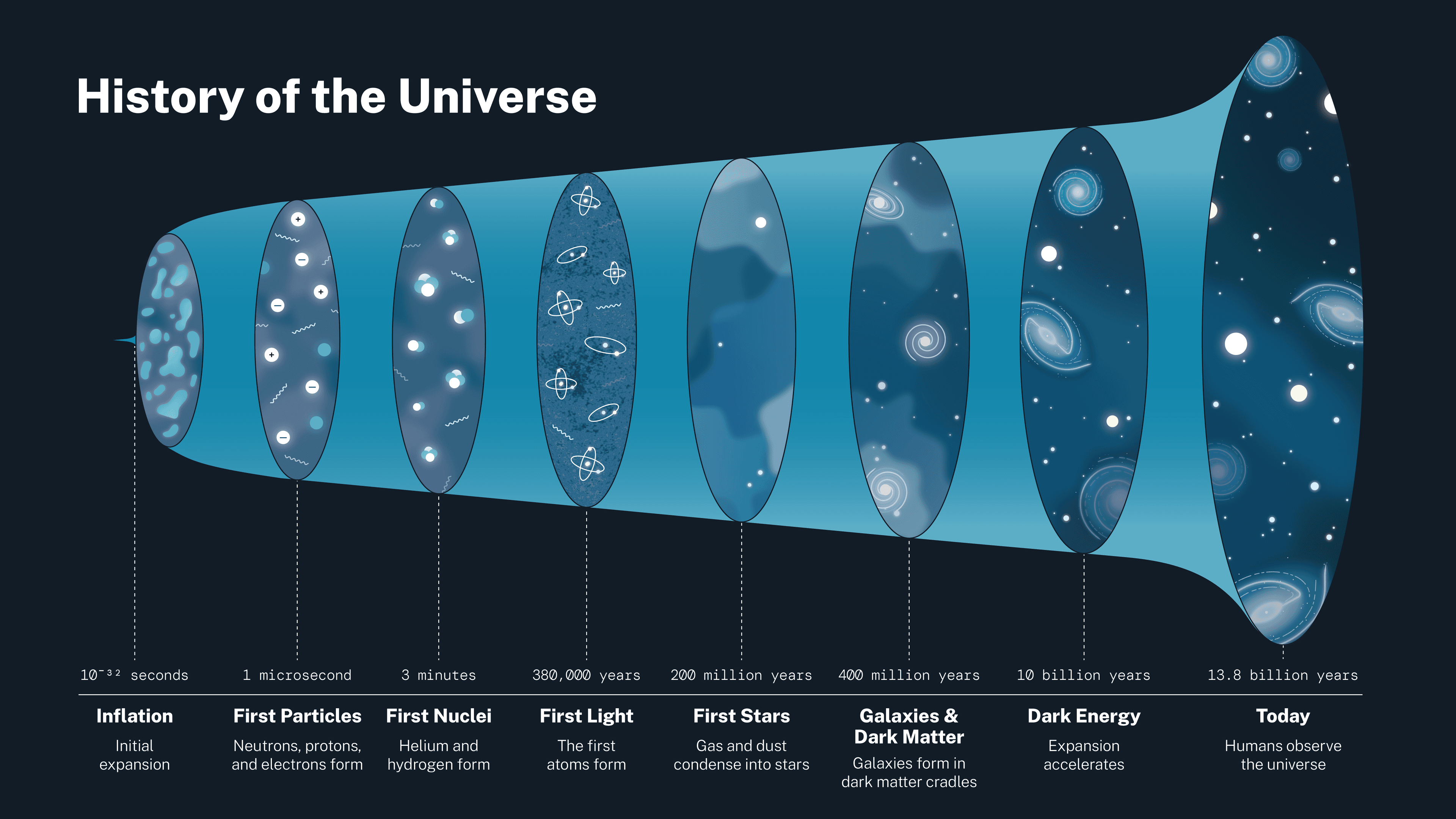
About 380,000 years after the Big Bang, the universe had cooled enough for electrons and protons to combine into neutral atoms. Before this, light could not travel freely because it was constantly scattered by charged particles. A simple analogy is sunlight trying to shine through dense fog: when the fog is thick, the light is scattered in every direction and cannot travel clearly. But once the fog clears, the light can move freely. In a similar way, once the early universe became transparent, that radiation was released to travel through space.2 For some readers, that moment carries a deeper resonance with the ancient words of Genesis 1:33 And God said, “Let there be light,” and there was light.: “And God said, ‘Let there be light,’ and there was light.”
As the universe expanded, that early light was stretched as well. In simple terms, the wavelength of the light, the distance between one wave crest and the next, became longer over time. Longer wavelengths mean lower energy, so the radiation gradually cooled. What was once intense early radiation is now observed as a faint microwave glow filling the universe, with a temperature of approximately 2.725 K, only a few degrees above absolute zero.
🔭 Why Its Discovery Mattered
The discovery of the CMB was so significant because a hot early universe was expected to leave behind exactly this kind of relic radiation. When Arno Penzias and Robert Wilson detected it in 1964 and published the result the following year, it provided powerful observational support for that picture and helped shift modern cosmology away from older steady-state models and toward the Big Bang picture of a universe with a real history and an early hot, dense phase.3
📊 What the Data Shows
The CMB is detectable today because, once the early universe became transparent, the light released at that time began traveling freely through space. Since light takes time to travel, observing the CMB means we are seeing extremely ancient light that has been on its journey ever since that early phase of cosmic history. As the universe expanded, that light was stretched and cooled into microwave wavelengths, but it never disappeared. Instead, it remains observable as a faint background glow, giving us a measurable window into the universe’s early hot phase.
Why This Ancient Light Is Still Visible
A simple analogy is a planet 2,000 light-years away observing Earth. Because light takes time to travel, it would see our world not as it is now, but as it was 2,000 years ago, around the time of the Roman Empire. In the same way, the CMB lets us see ancient light from the early universe. That light has been traveling ever since, while the universe itself continued expanding.
Why Astronomers Know This Is Relic Radiation
Astronomers know this is not ordinary light from stars, dust, or one part of the sky because the CMB appears in every direction as an almost uniform background rather than coming from individual objects. When it was first identified, the signal appeared with essentially the same intensity day and night and across the seasons, which helped show it was not a local or galactic source.3 Its nearly perfect blackbody spectrum also matches what cosmologists would expect from relic thermal radiation from the early universe rather than the mixed light produced by stars and galaxies.4
From Radiation Afterglow to Galaxy Seeding
Although the CMB is remarkably uniform, it is not perfectly smooth. Tiny temperature fluctuations on the order of 1 part in 100,000 (equivalent to temperature differences of a few tens of millionths of a degree) appear across that background, and those slight irregularities later became important for structure formation, as discussed more fully in our Galaxy Seeding article.5
🧠 How This Supports the Broader Case
By itself, the cosmic microwave background does not establish the full cosmological argument. But it does provide one of the strongest observational reasons for thinking that the universe passed through an early hot, dense phase.
While cosmic expansion, discussed in the previous Expanding Universe article, gives us the universe’s history and finite age, the CMB gives us a direct snapshot of the universe when it was about 380,000 years old.2 Together, these are powerful complementary lines of evidence for a real, hot beginning. The CMB shows that this history includes relic radiation from that early phase that can still be observed today, making it part of the broader scientific foundation for the cosmological argument.
📝 Conclusion
The cosmic microwave background is one of the clearest observational traces of the early universe. It preserves direct evidence that the cosmos once existed in a radically different state from the one we observe today.
For that reason, the CMB remains one of the strongest lines of evidence for the Big Bang model and an important part of the broader scientific case that the universe had a beginning. It stands as one of the key scientific pillars supporting the second premise of the cosmological argument: that the universe began to exist.
🧾 References
Image Credits: The COBE Satellite. NASA LAMBDA via NASA.
Comments
No comments yet. Be the first to share your thoughts.