
Galaxy Seeding: The Blueprint for a Habitable Cosmos
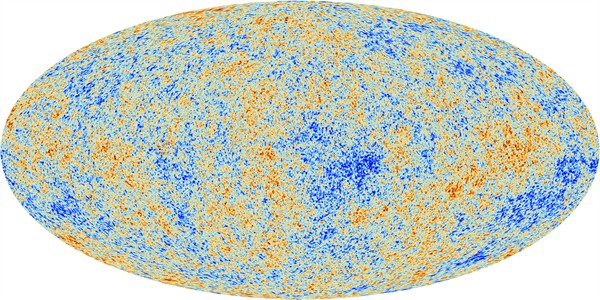
How did a universe that began almost perfectly smooth end up filled with galaxies, stars, and planets?
The answer begins with tiny differences in density present in the early universe. Those irregularities, still visible in the cosmic microwave background, gave gravity something to build on and eventually became the seeds of galaxies and larger cosmic structure.
Their size was extraordinarily small, but their role was fundamental: without the right initial variations, the universe we observe today would have developed very differently.
🌱 What Is Galaxy Seeding?
“Galaxy seeding” refers to the tiny irregularities in the early universe that later grew into galaxies and larger cosmic structure through gravity. We detect those early irregularities in the cosmic microwave background as extremely small temperature differences across the sky. Those temperature variations reflect slight differences in density: some regions of the early universe contained just a little more matter than others. Over time, gravity amplified those denser regions, eventually leading to stars, galaxies, and clusters. NASA describes these fluctuations as varying by only about 1 part in 100,000 from the average temperature, yet they were enough to seed the large-scale structure of the universe.1
A simple way to picture this is to imagine an almost perfectly smooth surface with a few tiny bumps. Those bumps may seem insignificant at first, but over time gravity would pull more matter into the slightly denser regions. In that way, the early universe contained the small irregularities needed for galaxies to form later on.
They were not galaxies yet, but rather the early seeds of galaxies: the initial irregularities from which later cosmic structure developed. Planck mapped those patterns with greater resolution and sensitivity than any mission before it, confirming that the universe was nearly but not perfectly uniform.2
📊 What the Data Shows
One of the most important results from CMB observations is just how small these fluctuations were. The temperature differences are extremely slight, but they are not meaningless noise. They track the early density contrasts that later grew into stars, galaxies, and clusters of galaxies. NASA’s write-up of the WMAP map explicitly describes these temperature differences as the seeds that grew to become the galaxies, from a time when the universe was under 400,000 years old.3
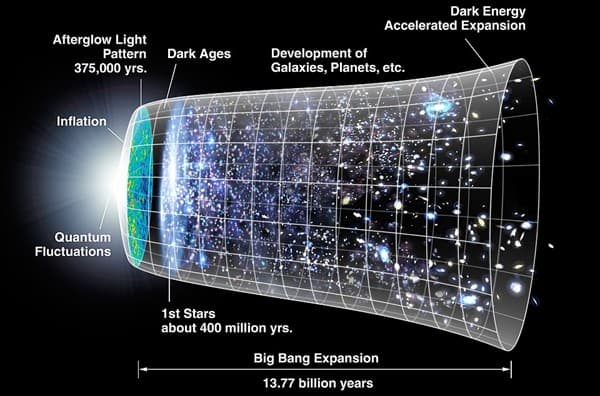
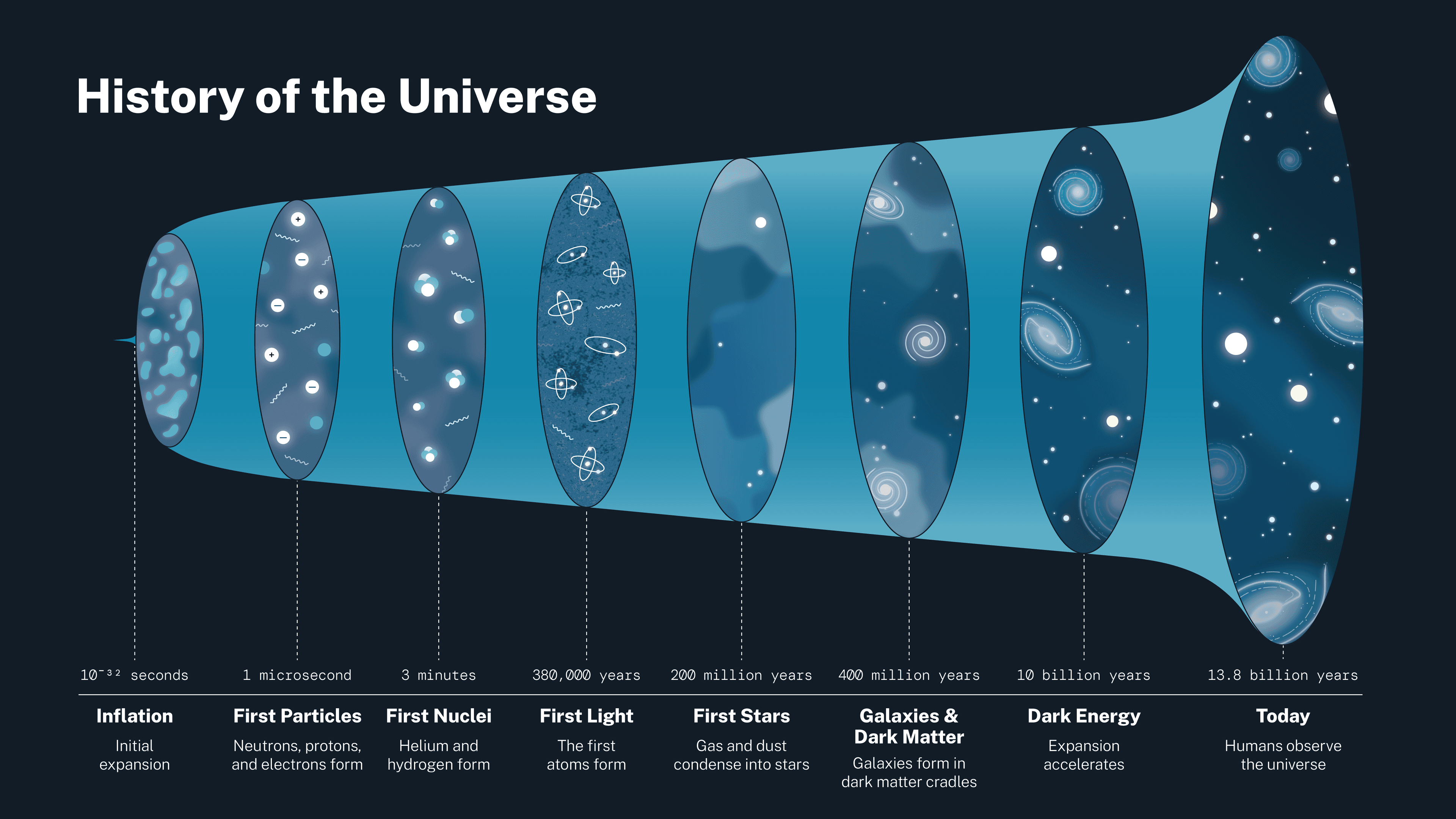
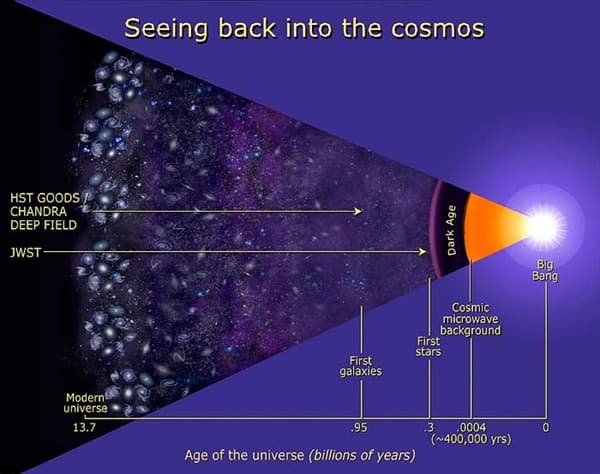
The early universe was not chaotic in a random or structureless way, nor was it already clumped into the galaxies we see today. It occupied a middle ground: highly uniform on large scales, yet marked by tiny fluctuations that allowed gravity to build structure over time. ESA describes the growth of these seed fluctuations into cosmic structure as unfolding in stages, from the early universe to the later formation of stars and galaxies.4
⚖️ Why the Size of the Fluctuations Matters
What matters is not only that these primordial fluctuations existed, but also how large they were. If the early universe had been perfectly smooth, gravity would have had no initial over-densities to amplify into galaxies and galaxy clusters. The fact that the CMB contains these tiny anisotropies is one reason it is so central to modern cosmology.
Cosmologists often summarize the amplitude of these primordial irregularities with the value Q, which Martin Rees highlights as being on the order of 10⁻5. If the fluctuations had been much smaller, matter would have remained too evenly distributed for gravity to build galaxies, as gas would never collapse into stars. If they had been much larger, structure could have formed too rapidly and violently, leading to massive black holes. In that sense, the observed fluctuations were not meaningless noise. Their scale played a vital role in making later cosmic structure possible.5
🔬 Why Structure Formation Matters
Galaxies are the environments in which stars form, heavy elements are produced, and planetary systems eventually emerge.
Without large-scale structure, there would be no obvious pathway to long-lived stars, chemical enrichment, or habitable worlds. That does not mean cosmology by itself explains life, but it does mean the universe had to be structured in a way that made life possible.
🧠 How This Supports the Broader Case
By itself, galaxy seeding does not establish every part of the cosmological argument, but it does contribute one important line of evidence to the broader scientific case: that the universe has a real history and a highly specific early condition.
Expansion shows a universe with a measurable past. The radiation afterglow shows an early hot phase. Galaxy seeding shows that this early universe also contained the slight density variations needed for later structure to form.2 Together, these are not isolated facts, but part of the broader scientific foundation for the cosmological argument, pointing to a universe with a real history and beginning.
📝 Conclusion
Galaxy seeding is not just a colorful way of describing cosmic structure. It refers to a real observational feature of the early universe: tiny fluctuations in the cosmic microwave background that later grew into galaxies and larger structures. Those fluctuations were small, measurable, and crucial.
For that reason, galaxy seeding remains one important part of the broader scientific case that the universe has a real history and a finely structured early state, laying the groundwork for the stars, planets, and habitable world we experience today.
📚 References
Image Credits: Planck CMB. © ESA and the Planck Collaboration, via ESA Multimedia.
Comments
No comments yet. Be the first to share your thoughts.